How do pipe stands make pipe assembly easier?
Posted onDiscover how pipe stands improve alignment, stability, and welding efficiency — and which type suits your job.
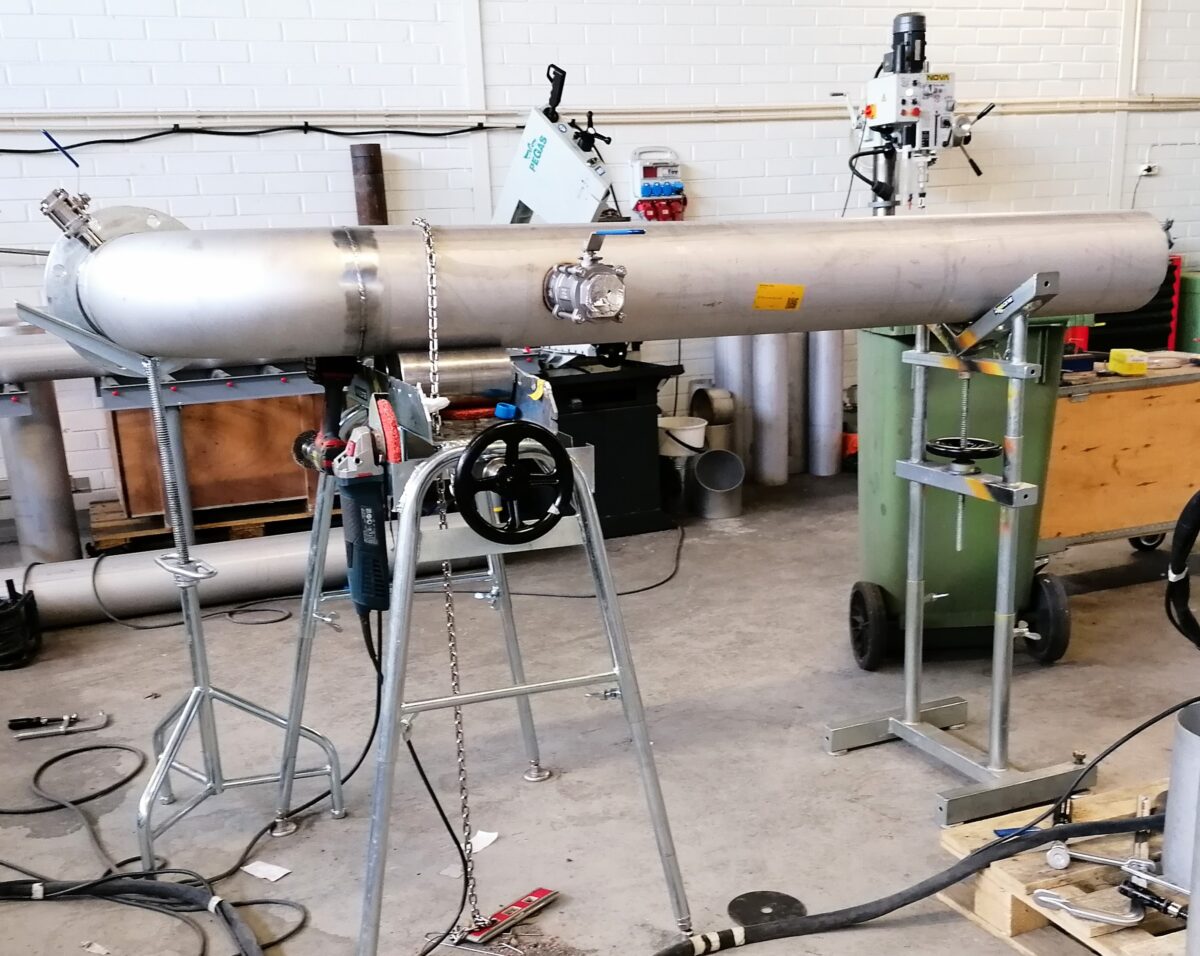
Pipe stands make pipe assembly easier by holding pipes at a stable, adjustable height so you can align, tack weld, and weld without fighting the pipe’s weight or position. Instead of propping pipes on improvised supports or asking a second person to hold the pipe in place, you can work with both hands free and the pipe exactly where you need it. Below, we answer the most common questions about pipe stands and how they fit into professional pipe installation and welding work.
What tasks do pipe stands actually perform during assembly?
Pipe stands support the pipe at a controlled height and angle during every stage of pipe assembly, from initial positioning through tack welding and final welding. They keep the pipe from rolling, sagging, or shifting while you work, which means you spend your time welding rather than repositioning or stabilizing it.
In practical terms, pipe stands take on several roles during a typical pipe installation job:
- Height support: They raise the pipe to an ergonomic working height so the welder does not have to crouch, bend, or kneel on the floor.
- Pipe stabilization: They prevent the pipe from rolling sideways during cutting, grinding, and welding.
- Load distribution: When working with longer pipe sections, multiple stands spread the pipe’s weight evenly and prevent deflection along the length.
- Rotation and movement: Stands fitted with ball rollers or rotating wheels allow you to reposition or rotate the pipe without lifting it, which is especially useful during tack welding and seam preparation.
For welders working in process industry environments, where pipes are often heavy and long, these functions directly affect both the quality of the weld and the pace of the work.
How do pipe stands improve alignment accuracy before welding?
Pipe stands improve alignment accuracy by holding pipe sections at a consistent, adjustable height so the pipe ends meet at the correct angle and level before any welding begins. When both pipe sections rest on stable stands at the same height, it is much easier to check and correct alignment than when the pipe is resting on the floor or on improvised blocks.
Good alignment before welding matters because a misaligned joint puts mechanical stress on the weld from the moment it is made. In process industry piping, where joints must meet strict tolerances, even a small offset can cause problems during inspection or in service.
Pipe stands with height adjustment let you fine-tune the position of each pipe section independently. When you combine adjustable stands with centering tools, such as pipe centering collars, you can bring the pipe ends into precise alignment quickly and hold them there while you tack weld. This reduces the number of corrections needed after tack welding and keeps the finished joint within tolerance.
What types of pipe stands are used in professional pipe work?
Professional pipe work uses several types of pipe stands, each suited to different pipe sizes, weights, and working conditions. The main types are fixed-roller stands, ball-roller stands, and motorized rotator stands.
Fixed-roller and chain stands
These are the standard workhorses of pipe prefabrication and on-site installation. A fixed-roller stand, like the AMA Stand A, uses stainless steel rollers and a chain fastener to hold the pipe securely. The chain wraps around the pipe to prevent it from rolling during welding. These stands handle a wide range of pipe diameters and heavy loads, making them suitable for most professional pipe assembly tasks.
Ball-roller stands
Ball-roller stands use stainless steel ball casters instead of fixed rollers, which allows the pipe to be moved and rotated in any direction with minimal effort. The AMA Stand B is a lighter option in this category, useful as a support stand alongside a primary rotator or chain stand. Ball-roller stands are particularly practical when you need to push or rotate a pipe into position without lifting it.
Motorized pipe rotator stands
These combine a pipe stand with a powered rotation unit. The pipe rests on the rotator’s wheels and turns at a controlled speed, allowing the welder to stay in one ergonomic position while the pipe rotates. This type of stand is especially useful for circumferential welds on pipes of any diameter, and it produces more consistent seams than manual repositioning between weld passes.
How many pipe stands do you need for a pipe assembly job?
The number of pipe stands you need depends on the length and weight of the pipe sections you are working with. As a general rule, you need at least two stands per pipe section to prevent sagging and ensure stable support, and longer or heavier pipes require additional stands spaced along the pipe’s length.
For shorter pipe sections in prefabrication work, two stands are often enough. For longer runs, the spacing between stands matters: if the gap is too wide, the pipe deflects in the middle, which affects alignment and makes rotation harder. Industry practice is to space stands close enough that there is no visible sag in the pipe between supports.
When using a motorized pipe rotator, the rotator itself acts as one of the primary supports. You then add auxiliary stands, such as ball-roller or chain stands, along the pipe’s length to carry the remaining load. The number of auxiliary stands increases with pipe length. For very long pipe sections, three or more support stands alongside the rotator are common.
What’s the difference between pipe stands and pipe rollers?
Pipe stands are static or semi-static supports that hold a pipe at a set height. Pipe rollers are a type of pipe stand that includes rotating wheels or rollers, allowing the pipe to turn or move while it is supported. In everyday use, the terms overlap, but the distinction matters when you are choosing equipment for a specific task.
A basic pipe stand holds the pipe in place. It is the right choice when you need stable support during cutting, grinding, or tack welding where the pipe should not move. A pipe roller stand, on the other hand, is designed to let the pipe rotate or slide, which is useful during full welding passes where repositioning the pipe is part of the process.
Motorized pipe rotators take this further by actively driving the pipe’s rotation at a controlled speed. This removes the need for the welder to stop, reposition, and restart, which improves both weld quality and work speed. The AMA Pipe Stand Set includes both chain stands and ball-roller stands, giving you the flexibility to configure your support setup for the job at hand.
Want to see how the AMA Roller pipe rotator fits into a complete pipe stand setup?
Read more about the AMA Pipe Stand Set and AMA Roller
What should you look for when choosing pipe stands for a project?
When choosing pipe stands for a pipe assembly or welding project, the most important factors are load capacity, height adjustment range, pipe diameter compatibility, and the type of support surface (rollers, ball casters, or chain). Getting these right for your specific pipes and working conditions saves time and avoids problems on site.
Here is what to check before you choose:
- Load capacity: Make sure the stand can handle the weight of the heaviest pipe section you will be working with, including any fittings or flanges attached during assembly.
- Height adjustment range: The stand should adjust to a comfortable working height for your welders and allow fine-tuning for alignment. A range of around 800 to 1100 mm covers most workshop and site conditions.
- Pipe diameter range: Check that the stand works with your pipe sizes. Professional stands like the AMA Stand A handle pipe diameters from 15 mm up to 720 mm, which covers most process industry pipe sizes.
- Support type: Choose chain stands for secure holding during welding, ball-roller stands for easy repositioning, and motorized rotators for continuous rotation during welding passes.
- Portability: If you work on site as well as in a prefabrication workshop, weight and ease of transport matter. Lighter stands with manageable weights are easier to move between jobs.
- Material and durability: Galvanized frames and stainless steel rollers or ball casters hold up well in demanding industrial environments and resist corrosion.
For projects that involve both prefabrication work in the workshop and installation on site, a stand set that covers multiple support types gives you the most flexibility without having to invest in separate equipment for each setting.
At Welner, we design and manufacture pipe handling tools for professional pipe welding and installation work, from compact stands for small-diameter pipes to heavy-duty rotator sets for large industrial pipe assemblies. Our products are built to strict quality standards and made in Finland. Whether you are a project manager specifying equipment for a new job or a welder looking for a better way to work, we are happy to help you find the right setup.
Find your nearest authorized dealer and see our full product range at AMA authorized dealers, or contact us directly if you have questions about which products fit your project.