How do pipe stands reduce pipe movement during welding?
Posted onDiscover how pipe stands prevent rolling, sagging, and shifting to protect weld quality from fit-up to final pass.
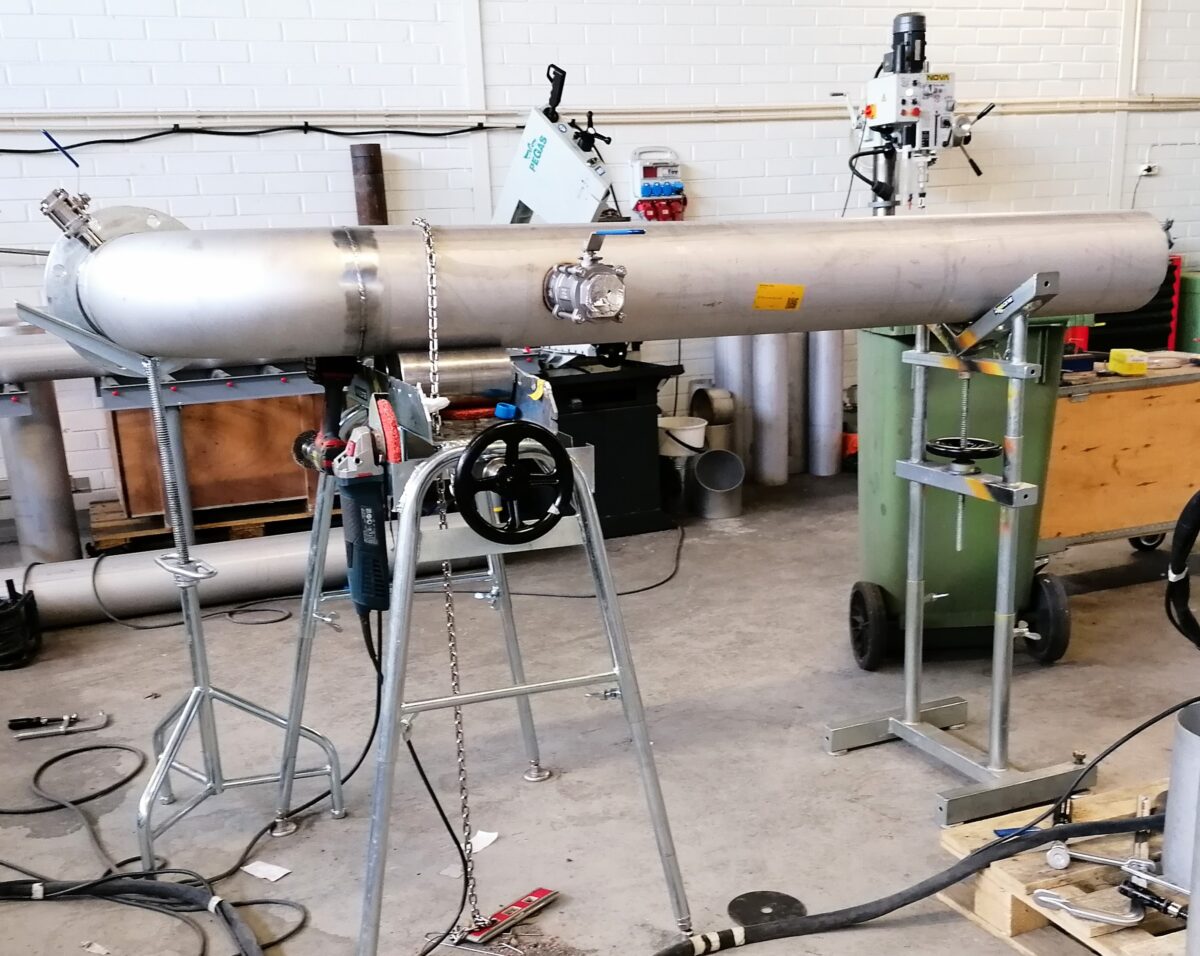
Pipe stands reduce pipe movement during welding by supporting the pipe at multiple points along its length, preventing it from rolling, shifting, or sagging under its own weight. Without proper support, even a small movement mid-weld can misalign the joint, introduce stress into the seam, or force the welder to stop and reposition. The sections below answer the most common questions about how pipe stands work, how many you need, and when to use them.
What types of pipe movement do pipe stands prevent?
Pipe stands prevent three main types of unwanted movement during welding: rolling (rotation around the pipe’s axis), lateral shifting (sideways drift along the support surface), and longitudinal creep (the pipe sliding forward or backward along its own length). Each of these can compromise weld quality if left unchecked.
Rolling is the most common problem, especially with round pipes on flat surfaces. Even a slight rotation mid-pass can move the weld pool out of the ideal position. Lateral shifting tends to happen when pipe sections are being joined and one side is heavier than the other. Longitudinal creep is less obvious but can cause real trouble during tack welding, where precise gap and alignment must be maintained throughout the process.
Pipe stands with chains, fasteners, or fixed cradles address all three movement types simultaneously. The chain and chain tightener on stands like the AMA Stand A secure the pipe against rolling and lateral movement, while the stand’s base keeps everything from sliding.
How do pipe stands physically stabilize a pipe?
Pipe stands stabilize a pipe by cradling it in a V-shaped or roller-based support that distributes the pipe’s weight evenly across two or more contact points. This prevents the pipe from resting on a single unstable point and eliminates the rocking or tipping that would otherwise occur on an uneven surface.
The stabilization works on two levels:
- Vertical support: The stand carries the pipe’s weight so it does not sag between support points, which is important for long pipe runs where unsupported spans create bending stress.
- Rotational restraint: Chains, fastener straps, or fixed cradles wrap around the pipe and lock it against rolling. This is what keeps the pipe in position when the welder applies heat and the material expands slightly.
On job sites and in prefabrication workshops, a stable pipe also means the welder can maintain a consistent arc distance and travel speed without compensating for movement. That consistency directly improves weld quality and reduces rework.
What’s the difference between fixed and roller pipe stands?
Fixed pipe stands hold the pipe stationary in a cradle or V-support and are designed for welding where the pipe must not move at all. Roller pipe stands support the pipe on rotating wheels or ball rollers, allowing the pipe to be turned or repositioned with minimal effort. The right choice depends on what you need to do at each stage of the job.
Fixed stands: stability above all
Fixed stands are the right tool when you are making a joint between two pipe sections and need everything locked in place. They prevent any rotation during welding passes, which is important for positional welding where the welder moves around the pipe rather than rotating it. Chains or fastener straps on fixed stands keep the pipe from rolling even when heat causes slight material expansion.
Roller stands: controlled movement when you need it
Roller stands let you rotate or reposition the pipe easily, which speeds up fit-up, cutting, and cleaning between passes. Ball-roller stands like the AMA Stand B allow smooth rotation in any direction, making them useful as auxiliary supports alongside a pipe rotator. When combined with a motorized pipe rotator, roller stands let the welder stay in one ergonomic position while the pipe turns to bring the weld joint to the optimal angle.
In practice, most welding setups use both types together: roller stands for handling and positioning, and fixed stands with chains for locking the pipe during the actual weld.
How many pipe stands are needed to prevent pipe movement?
As a general rule, you need at least two pipe stands for any welding job, one on each side of the weld joint. For longer pipes or pipe assemblies, add one additional stand for every unsupported span that would otherwise allow the pipe to sag or flex. The exact number depends on pipe length, diameter, and wall thickness.
Short pipe sections of under one meter typically need just two stands placed close to the joint. Longer pipes need intermediate supports to prevent the weight of the pipe itself from creating a bending moment that pulls the joint out of alignment. A good rule of thumb used in professional pipe handling is to keep unsupported spans short enough that the pipe does not visibly deflect under its own weight.
Pipe diameter and material also matter. Thin-wall stainless steel pipes are more prone to deflection than thick-wall carbon steel pipes of the same length, so they may need more frequent support. When in doubt, add a stand rather than leave a long unsupported span.
Explore the full AMA pipe stand range, including Stand A and Stand B, and find the right setup for your work:
AMA Pipe Stand Set
Does pipe stand height adjustment affect weld alignment?
Yes, pipe stand height adjustment directly affects weld alignment. If two stands supporting the same pipe are set to different heights, the pipe will sit at an angle rather than level, which shifts the joint face out of square and can cause misalignment at the weld gap. Getting height consistent across all stands is one of the most important steps in pipe fit-up.
Height adjustment also matters when joining pipes of the same nominal diameter but different wall thicknesses. The outer diameter may match, but the pipe centerlines will only align correctly if the stands are set to the precise height that accounts for both pipes. Even a few millimeters of height difference can show up as a visible step at the weld, which weakens the joint and creates problems in pressure-rated systems.
Quality pipe stands with a wide, fine-adjustable height range make this easier to get right. The AMA Stand A, for example, adjusts between 840 and 1,100 mm, giving you enough range to work at an ergonomic height while still dialing in the exact alignment you need for the joint.
When should pipe stands be used instead of pipe clamps?
Pipe stands should be used instead of pipe clamps when you need to support the full length of a pipe rather than just hold two pipe ends together at a single joint. Pipe clamps are designed to align and hold the joint interface during tack welding. Pipe stands carry the weight of the pipe along its entire run and keep it stable throughout all welding passes.
The two tools serve different purposes and are often used together rather than as alternatives:
- Use pipe stands when you need to support long pipe sections, position pipes at the correct working height, or allow controlled rotation during welding.
- Use pipe clamps or centering collars when you need to align two pipe ends precisely at the joint face and hold them in position for tack welding.
- Use both together on most real jobs: stands carry the pipe weight and provide working height, while clamps or centering collars ensure the joint is square and gapless before you strike the arc.
If you try to use only clamps without stands on a long pipe run, the unsupported weight of the pipe creates leverage that works against the clamp, making alignment harder to maintain and putting stress on the tack welds before the joint is complete.
Pipe stands are the foundation of a stable welding setup. They prevent rolling, sagging, and shifting throughout the entire process, from initial fit-up through final welding passes. Whether you are working in a prefabrication workshop or on a process industry job site, the right number of stands set at the correct height makes a measurable difference in weld quality and working efficiency. At Welner, we design and manufacture the AMA range of pipe handling tools specifically for professional pipe welding, covering pipe stands, pipe rotators, centering collars, and more for pipe diameters from 15 mm to 1,200 mm. Find your nearest stockist and see the full product range through our authorized dealers page, or contact us directly if you have questions about which tools fit your specific application.