What problems can unstable pipe support cause during welding?
Posted onPipe movement during welding causes defects, misalignment, and injuries — here's how to prevent them.
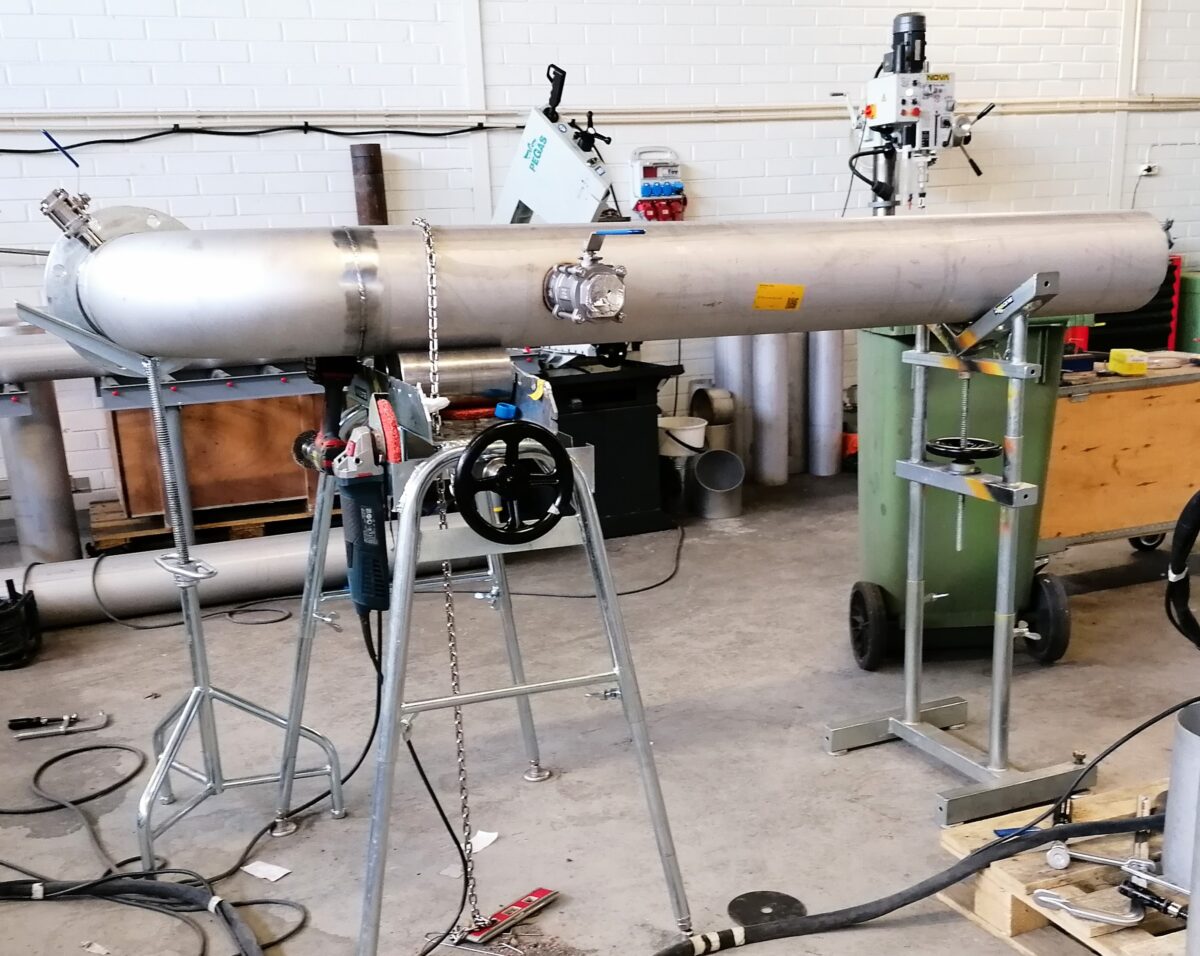
Unstable pipe support causes weld defects, misalignment, and safety hazards that compromise the integrity of the entire joint. When a pipe shifts, vibrates, or rolls during welding, the result is inconsistent heat distribution, poor fusion, and gaps in the weld seam. These problems affect professionals working across process industries, from pipefitters in prefabrication workshops to welders on industrial job sites. Below, we cover the most common questions about pipe support instability and what you can do about it.
How does pipe movement affect weld quality?
Pipe movement during welding directly disrupts the weld pool and heat input, leading to inconsistent penetration and poor fusion. Even small shifts in position change the angle between the electrode or torch and the joint, which alters how the arc behaves. The result is a weld that looks acceptable on the surface but may have internal weaknesses that only show up during pressure testing or inspection.
When a pipe rotates unintentionally or rocks on its support, the welder has to compensate constantly. This breaks the rhythm of the weld pass, creates uneven bead geometry, and increases the risk of the arc going out. In multi-pass welding, these interruptions compound across layers, making each subsequent pass harder to control.
Consistent pipe support during welding is not just about convenience. It directly determines whether the weld meets the required specifications. Professionals working with stainless steel, duplex, or other demanding materials feel this even more, because these materials are less forgiving of variations in heat input and torch angle.
What types of weld defects does poor pipe support cause?
Poor pipe support during welding is linked to several specific weld defects, including lack of fusion, porosity, undercut, and misaligned seams. Each of these results from the pipe moving or shifting at a critical moment in the welding process, causing the welder to lose control of the arc or weld pool.
Lack of fusion and incomplete penetration
When the pipe shifts mid-pass, the torch or electrode moves away from the ideal position relative to the joint. The arc no longer delivers heat where it needs to go, and the weld metal fails to fuse properly with the base material. This is one of the most serious defects because it creates a weak bond that may not be visible from the outside.
Porosity and surface defects
Pipe movement can also introduce porosity. If the pipe rocks on an unstable stand, shielding gas coverage becomes inconsistent. Air can enter the weld pool, leaving small gas pockets trapped in the solidified metal. Undercut, where the base metal is eroded along the weld toe, is another common result of a welder compensating for unexpected pipe movement with excessive arc speed or angle changes.
Why does pipe misalignment happen during welding?
Pipe misalignment during welding happens when pipes are not held in a precise position before or during the weld, allowing thermal expansion, gravity, or physical contact to shift one pipe relative to the other. Even pipes that appear correctly aligned before tack welding can drift as heat builds up and the metal expands unevenly.
Thermal movement is one of the main drivers. As the weld area heats up, the pipe wall expands. If the support system does not hold the pipe firmly, this expansion pushes the joint out of alignment. In longer pipe assemblies, the effect is amplified because there is more material to expand and contract.
Inadequate tack welds are another common cause. If tack welds are too small or placed at poor intervals, they cannot resist the forces generated during the root pass. The joint opens or closes unevenly, making it nearly impossible to achieve a consistent gap around the full circumference of the pipe. Using proper centering tools before welding begins is one of the most effective ways to prevent this.
What safety risks come with unstable pipe support?
Unstable pipe support creates real physical hazards on site, including pipes rolling off stands, sudden shifts during welding, and injuries from falling or swinging pipe sections. These risks increase significantly with heavier pipes or when working at height, but even smaller pipes on poorly secured stands can cause serious accidents.
A pipe that rolls unexpectedly can injure the welder directly or cause them to make sudden movements that lead to secondary accidents, such as contact with hot surfaces or electrical equipment. In prefabrication workshops, where multiple people work close together, an unsecured pipe can endanger nearby colleagues as well.
There is also a fire and burn risk. If a pipe shifts and the torch or electrode makes unintended contact with surrounding materials, it can cause burns or ignite nearby flammable materials. Proper pipe handling tools that hold the pipe securely throughout the welding process reduce all of these risks in a straightforward, practical way.
How do you prevent instability-related welding problems?
You prevent instability-related welding problems by using the right pipe support equipment, securing pipes before welding begins, and controlling pipe rotation in a deliberate and consistent way. The combination of stable stands, accurate centering tools, and controlled rotation eliminates most of the variables that lead to defects and misalignment.
Here are the key steps that make a practical difference:
- Use adjustable pipe stands that hold the pipe at the correct working height and keep it from rolling or shifting during welding.
- Center and align pipes accurately before tack welding using centering collars, so the joint gap is consistent all the way around.
- Control pipe rotation with a pipe rotator so the welder stays in one ergonomic position while the pipe moves at the right speed, rather than the welder constantly repositioning around a stationary pipe.
- Secure long pipe assemblies with additional support stands to prevent deflection and movement along the pipe length.
- Check alignment after tack welding and before starting the full weld pass to catch any drift early.
Controlled rotation is particularly valuable. When the pipe rotates at a steady, adjustable speed, the welder can maintain a consistent torch angle and travel speed throughout the entire circumference. The weld seam becomes uniform, interruptions disappear, and the result is much closer to what a robotic weld achieves. This is exactly what the AMA Pipe Stand Set is designed to support.
Want to see how the right pipe stand setup can change your welding results?
Explore the AMA Pipe Stand Set and AMA Roller pipe rotator
For pipes with elbows or projecting parts, a counterweight system helps balance the load so the pipe sits stably on the rotator without tipping. For work inside pipe bridges, dedicated pipe bridge stands lift the pipe above the brackets so it can be rotated and welded in position without improvised solutions. The right tool for the specific situation makes a measurable difference in both quality and working speed.
Unstable pipe support is one of the most preventable causes of weld defects, misalignment, and on-site injuries in process industry pipe welding. Addressing it means choosing the right pipe handling tools for the job, setting them up correctly, and making controlled rotation part of your standard workflow. At Welner Oy, we design and manufacture AMA pipe handling tools specifically for these challenges, covering everything from pipe stands and centering collars to pipe rotators and bridge stands, for pipe sizes ranging from small-diameter tubing to large industrial pipes. Find your nearest supplier on our authorized dealers page, or contact us directly if you have questions about which tools fit your application.