Why are portable pipe stands valuable on construction sites?
Posted onPortable pipe stands boost safety, speed, and weld quality on site — here's exactly why professionals rely on them.
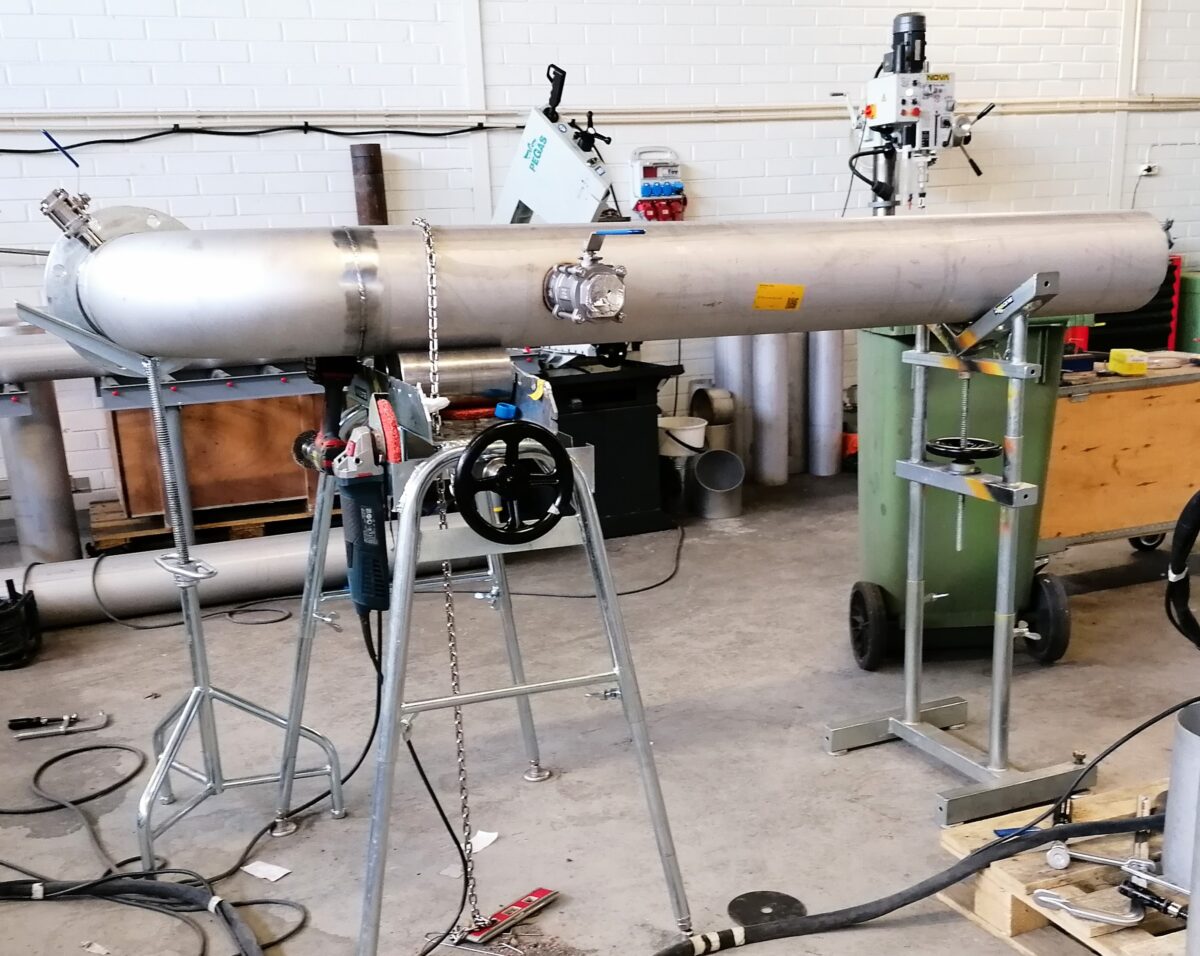
Portable pipe stands are valuable on construction sites because they hold pipes securely at the correct working height, freeing both hands for welding, grinding, and fitting. They reduce physical strain, improve joint alignment, and speed up every stage of pipe installation. Below, we answer the most common questions professionals ask before investing in pipe stands for site work.
What do portable pipe stands actually do on a job site?
Portable pipe stands support pipes at a stable, adjustable height so welders and fitters can work without holding the pipe in place manually. They keep the pipe off the ground, positioned at the right level for cutting, fitting, tacking, and welding, which means both hands stay free for the actual work. On a busy construction site, that freedom directly affects how fast and how accurately the job gets done.
At their most basic, pipe stands are height-adjustable supports with rollers or ball casters that let the pipe rotate or slide smoothly. This matters whether you are aligning a short spool section or handling a longer run that needs to be repositioned between passes. Good pipe stands also make it easier to work with pipes of different diameters without swapping out equipment, since the roller geometry and adjustable height accommodate a wide range of sizes.
On a real job site, pipe stands typically serve multiple roles in sequence. During prefabrication, they hold pipe sections steady while fitters mark cuts and check measurements. During assembly, they support the pipe while centering collars and clamps are applied. During welding, they keep the joint at the right height and allow the pipe to be rotated without interrupting the weld pass. After welding, the same stands support the pipe while it cools and while the welder inspects and cleans the seam.
How do pipe stands improve safety during pipe installation?
Pipe stands improve safety on construction sites by eliminating the need to hold, prop, or balance pipes manually during cutting, fitting, and welding. When pipes are properly supported at working height, the risk of sudden movement, rolling, or dropping is significantly reduced. Stable pipe support also reduces the physical load on workers, which lowers the chance of musculoskeletal injuries over the course of a project.
Unsupported pipes are unpredictable. Even a relatively short section of steel pipe carries enough weight to cause serious injury if it shifts during handling. Pipe stands with fastener chains, like those on the AMA Stand A, lock the pipe in position so it cannot roll away from the welder unexpectedly. Ball-roller stands allow controlled rotation rather than uncontrolled movement.
There is also a quality-safety connection worth noting. When a pipe is unstable, welders compensate by rushing or working in awkward positions. Poor posture and time pressure both increase the chance of mistakes and accidents. A properly supported pipe lets the welder focus entirely on the weld, which produces better seams and a safer working environment at the same time.
How much faster is pipe welding with proper pipe stands?
Using proper pipe stands for welding speeds up the work noticeably because welders spend less time repositioning themselves, less time adjusting the pipe by hand, and less time correcting alignment errors. The time saved depends on the job, but the gains come from multiple stages of the process adding up: faster setup, fewer interruptions during welding, and less rework caused by misalignment.
The biggest time savings come when pipe stands are combined with a pipe rotator. A rotator mounted on a pipe stand turns the pipe at a controlled speed so the welder stays in one ergonomic position throughout the weld. There are no stops to reposition, no need to walk around the pipe, and the weld bead is laid down more consistently as a result. This is especially useful for TIG, MIG, and MAG welding of stainless steel or other demanding materials where interruptions affect weld quality.
Beyond welding itself, pipe stands save time during grinding, brushing, and inspection. When the pipe is at the right height and can be rotated freely, cleaning back welds and brushing seams takes a fraction of the time it would take if the pipe were on the ground or propped against a wall. For project managers and supervisors calculating labor hours per weld, these incremental gains across a full project are significant.
Explore the full AMA pipe stand and rotator range:
AMA Pipe Stand Set and accessories
What types of construction sites benefit most from portable pipe stands?
Portable pipe stands deliver the most value on sites where pipe welding and fitting happen in multiple locations, where conditions change frequently, or where the work involves different pipe sizes across the same project. Process industry sites, industrial plant construction, shipyards, and infrastructure projects all fit this description. Any environment where welders move between work areas rather than staying at a fixed station benefits from stands that are quick to set up and easy to carry.
Process industry and industrial plant construction
Process industry sites, including refineries, chemical plants, power stations, and food processing facilities, typically involve a large volume of pipe joints across different pipe materials, sizes, and pressure classes. Welders on these sites often work on stainless steel, duplex, or other alloys where weld quality requirements are strict. Portable pipe stands allow the same equipment to be used across multiple work areas, and when combined with a rotator, they make it practical to achieve consistent weld quality even on challenging materials without a fixed workshop setup.
Pipe bridge and overhead pipe installation
Pipe bridge work presents a specific challenge because pipes need to be moved, rotated, and positioned above the brackets before final placement. Pipe bridge stands with stainless steel ball rollers lift the pipe above the brackets so it can roll and rotate freely during fitting and welding. This removes the need to lift and lower the pipe repeatedly during the work, which saves both time and physical effort.
Prefabrication workshops supplying site work
Even when the final installation happens on site, a large share of pipe assembly work often takes place in a prefabrication workshop first. Portable pipe stands are equally useful in this setting. The same stands used in the workshop can move to site with the crew, which means no duplicate investment in fixed workshop equipment and mobile site equipment.
What should you look for when choosing a portable pipe stand?
When choosing a portable pipe stand for construction site use, the most important factors are load capacity, height adjustment range, roller type, and how quickly the stand can be set up and moved. The right stand depends on the pipe diameters you work with, the materials involved, and whether you need the stand to support rotation during welding or only to hold the pipe steady.
- Load capacity: Match the stand’s rated capacity to the heaviest pipe you will support. Overloading a stand is a safety risk and damages the equipment. For heavy-duty applications, stands with a capacity of 1,500 kg or more give you the margin to work safely.
- Height adjustment range: A wider adjustment range means fewer compromises on working height. Stands that adjust without tools are faster to set up between jobs.
- Roller type: Stainless steel ball rollers allow smooth rotation in any direction and suit pipes that need to be repositioned frequently. V-rollers or fixed rollers are better for holding the pipe steady during tacking or fitting. Rubber wheels reduce surface damage on finished pipe.
- Pipe diameter compatibility: Check that the stand accommodates the full range of pipe sizes on your project, from smaller instrument lines to larger process pipes. Many professional stands cover diameters from 15 mm up to 720 mm or more.
- Portability: Weight matters when stands need to move around a large site. Stands with rear wheels or compact folding frames are easier to transport without a forklift or trolley.
- Rotator compatibility: If you plan to add a pipe rotator later, check that the stand is designed to accept one. Buying a compatible stand from the start avoids the need to replace equipment when the project grows.
- Material and corrosion resistance: Galvanized frames and stainless steel components hold up better in outdoor and humid environments, which is relevant on most construction sites.
It is also worth thinking about how many stands a job typically requires. Longer pipe sections need more support points to prevent sagging and misalignment. Buying stands as a set, rather than individually, usually gives you a matched system where the height ranges and roller types work together.
We manufacture pipe stands and pipe handling tools for professionals working across a wide range of pipe sizes and applications, from small-diameter instrument piping to large-bore process lines. Our products are designed and made in Finland, and we work with authorized dealers across the Nordic countries and Europe to make sure you get the right equipment and support wherever you are working.
Find your nearest supplier through our authorized dealer network, or contact us directly if you have questions about which pipe stands and tools fit your project best. We are happy to help.