What tools help create repeatable root welds?
Posted onDiscover the essential tools that eliminate root weld variation and help every pipe joint pass inspection.
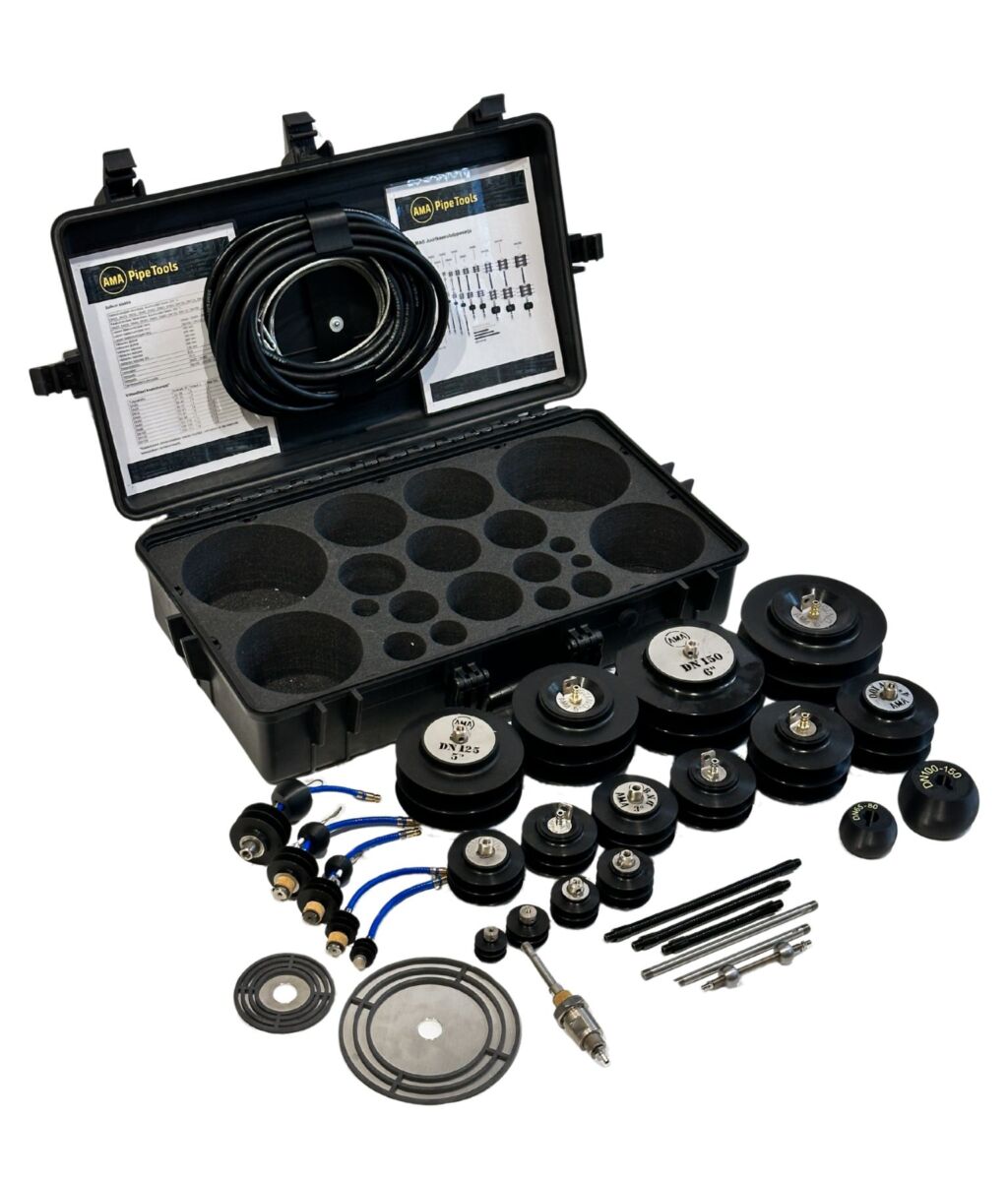
The tools that most reliably produce repeatable root welds are pipe alignment clamps, root gap spacers, and pipe fit-up tools that hold everything in the correct position before and during welding. These tools remove the guesswork from pipe preparation, so each joint starts from the same controlled baseline. Below, we answer the most common questions welders and project managers ask about root pass consistency.
Why is consistency so difficult to achieve in root pass welding?
Root pass consistency is difficult because the root weld is the most demanding part of any pipe joint. It must fuse both pipe walls completely, maintain a precise gap, and stay aligned, all before any filler passes are added. Any variation in gap width, pipe alignment, or fit-up quality directly affects the final weld quality and often cannot be corrected later.
Several factors work against consistency in practice. Pipe ends are rarely perfectly round after cutting. Thermal distortion during tack welding can shift alignment. On busy job sites, welders work under time pressure and in awkward positions, making it hard to hold tolerances by hand. In prefabrication workshops, conditions are better controlled, but even there, manual fit-up introduces human variation.
The root pass also sets the internal profile of the weld. If the root gap is too wide, burn-through becomes a risk. If it is too narrow, full penetration becomes difficult. Because the root pass is the foundation that every subsequent pass builds on, small errors at this stage compound into larger problems in the finished joint. This is why professional pipe welders increasingly rely on dedicated root weld tools rather than manual methods alone.
What are pipe alignment clamps and how do they work?
Pipe alignment clamps are mechanical devices that grip two pipe sections and hold them in precise axial alignment while the welder tacks and roots the joint. They work by applying even radial pressure around the pipe circumference, correcting minor out-of-round distortions and keeping both pipe ends concentric during fit-up.
Most alignment clamps fall into one of two categories: external clamps that wrap around the outside of the pipe, and internal clamps that expand from inside the bore. Both types serve the same purpose, which is to eliminate misalignment before the arc is struck.
In practice, the welder positions the two pipe ends close together, installs the clamp, and adjusts it until the pipe walls are flush and the gap is correct. The clamp holds this position while tack welds are placed at intervals around the joint. Once the tacks are solid, the clamp is removed and the root pass continues. This process produces a repeatable starting condition that a welder holding pipes by hand simply cannot match consistently.
How does root gap control affect weld quality?
Root gap control directly determines whether the root pass achieves full penetration. The gap between pipe ends must be wide enough for the arc to reach the inner wall of both pipes, but narrow enough to prevent burn-through. The correct gap depends on the pipe wall thickness, the welding process, and the filler material, but it must be consistent around the entire joint circumference.
When the root gap varies, the welder must constantly adjust travel speed, heat input, and wire feed to compensate. This produces an uneven internal bead profile, which is a common cause of weld defects and failed inspections. A consistent gap, held in place by fit-up tools, allows the welder to set parameters once and maintain them throughout the pass.
Root gap spacers, sometimes called tacking wedges or gap gauges, are simple but effective tools for this purpose. They are placed between the pipe ends to set the gap before tacking, then removed once the tacks hold the position. For production welding where the same joint configuration repeats across many spools or assemblies, using a fixed spacer tool eliminates one of the most common sources of variation in root pass welding.
What is the difference between internal and external pipe clamps?
The key difference is where the clamping force is applied. External pipe clamps grip the outside surface of the pipe, while internal clamps expand inside the bore to push outward. Each type has specific advantages depending on pipe size, access conditions, and the material being welded.
External pipe clamps
External clamps are easier to install and remove, and they work across a wide range of pipe diameters without requiring access to the pipe interior. They are the most common choice for site work and for pipes where the bore is too small to accept an internal tool. The limitation is that they apply force from outside, which means they are less effective at correcting ovality in thicker-walled or larger-diameter pipes.
Internal pipe clamps
Internal clamps expand from inside the pipe and apply pressure evenly around the full bore circumference. This makes them more effective at correcting out-of-round pipe ends and achieving a flush internal fit. They are widely used in pipeline construction and wherever the internal weld profile must meet strict inspection criteria. The trade-off is that they require bore access and take longer to set up, which makes them less practical for short spools or confined spaces.
For most prefabrication and process piping work, external alignment tools are the practical choice. Internal clamps are typically reserved for larger-diameter pipelines or projects with very tight dimensional tolerances on the internal weld profile.
Which pipe handling tools support repeatable weld preparation?
Repeatable weld preparation depends on tools that position, support, and rotate the pipe consistently throughout the fit-up and welding process. The most useful pipe handling tools for root pass consistency are pipe stands, pipe rotators, and centering collars, each of which removes a different source of variation.
- Pipe stands support the pipe at a fixed working height, preventing sag and keeping the joint in the same position relative to the welder across every joint in a production run.
- Pipe rotators turn the pipe at a controlled speed so the welder can weld in a single ergonomic position rather than moving around the joint. This alone significantly reduces variation between welders and between shifts.
- Centering collars align two pipe sections concentrically before tacking, correcting minor dimensional differences between pipe ends without requiring manual adjustment.
- Purge systems maintain the correct inert gas atmosphere on the inside of the joint during root pass welding, which is particularly important for stainless steel and other materials sensitive to oxidation.
Our AMA Pipe Purge Kit is designed specifically for this last point. It uses triple silicone discs to create an airtight seal inside the pipe, reducing purge gas consumption and setup time significantly compared to traditional methods. It covers pipe sizes from DN20 to DN150, with a flange welding kit included for DN40 to DN150.
Want to learn more about the purge kit and how it fits your workflow?
Read more about the AMA Pipe Purge Kit here.
When all of these tools are used together, the pipe is supported at the right height, aligned concentrically, held at the correct gap, and purged correctly before the first arc is struck. The result is a controlled, repeatable starting condition for every root pass.
When should welders use dedicated fit-up tools versus manual methods?
Welders should use dedicated fit-up tools whenever joint quality, production volume, or inspection requirements make variation unacceptable. Manual fit-up is reasonable for one-off repairs or where access makes tool use impractical, but for production welding in process industries, the case for dedicated tools is straightforward: they save time, reduce rework, and produce more consistent results.
The decision usually comes down to three factors:
- Volume: If you are welding the same joint configuration repeatedly, the time spent setting up fit-up tools pays back quickly across the production run.
- Quality requirements: Joints that require radiographic or ultrasonic inspection leave little room for variation in the root pass. Fit-up tools reduce the risk of failing inspection and the costly rework that follows.
- Welder experience: Even experienced welders produce more consistent results with proper tooling. For teams with mixed skill levels, fit-up tools reduce the gap between individual welders and help less experienced operators meet the same standard as senior staff.
Manual methods are not wrong in the right context. But in process piping, power generation, shipbuilding, and industrial prefabrication, where root weld quality is inspected and documented, relying on manual fit-up alone introduces unnecessary risk. Dedicated tools shift the consistency from the individual to the process, which is where it belongs in any professional welding operation.
We design and manufacture pipe handling and fit-up tools for exactly this kind of professional environment. From centering collars and pipe stands to pipe rotators and purge systems, our AMA product range covers the full preparation and welding workflow for pipes from DN20 up to large industrial diameters. All products are developed and manufactured in Finland to strict quality standards.
If you want to see which tools are available through a distributor near you, find your nearest authorized AMA dealer here. And if you have a specific project or product question, get in touch with us directly and we will help you find the right solution.