Why is consistent root gap important for weld quality?
Posted onPoor root gap control causes costly weld failures — here's what every pipe welder needs to know.
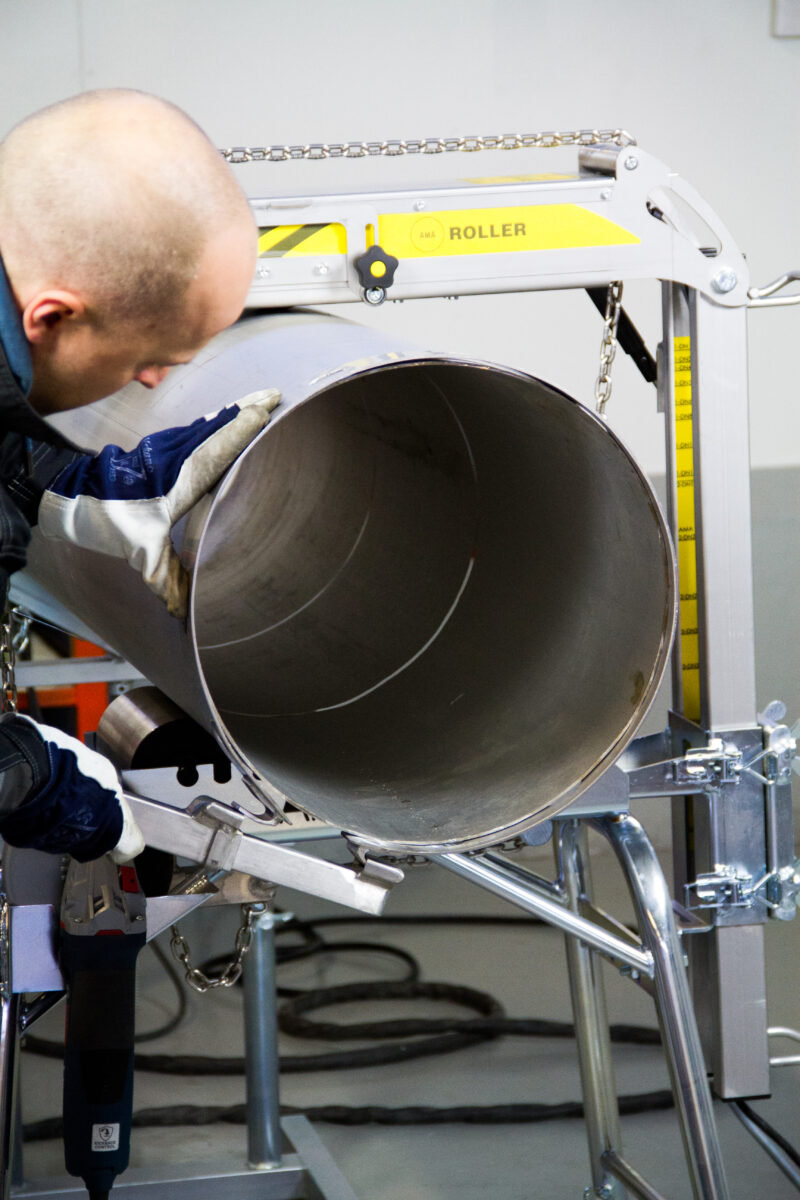
A consistent root gap is important for weld quality because it directly controls how well the weld fusion penetrates through the base material at the joint root. Without a uniform root opening, the weld either fails to achieve full penetration or burns through the pipe wall, both of which compromise the structural integrity of the joint. Below, we answer the most common questions about root gap in pipe welding.
How does root gap affect weld fusion and penetration?
The root gap in pipe welding determines how much space the weld arc has to reach the back side of the joint. A correctly sized root opening allows the heat and filler material to fuse both pipe walls completely, producing full root penetration. Too small a gap restricts access, causing lack of fusion. Too large a gap risks burn-through or excessive drop-through on the inside of the pipe.
In pipe welding, full penetration at the root is not optional. For pressure-bearing systems, process pipelines, and structural pipe spools, the root pass must fuse both pipe walls into a single, continuous weld. The root gap is the primary variable that makes this possible or prevents it.
The relationship between root gap and penetration also changes depending on your welding process. TIG welding, for example, is more sensitive to root gap variation than MIG or MAG welding because it produces a narrower, more focused arc. Even small inconsistencies in the root opening can cause visible defects in the finished weld when using TIG on stainless steel or other demanding materials.
What defects are caused by an inconsistent root gap?
An inconsistent root gap causes a range of weld defects, all of which can result in failed inspections or, worse, joint failure in service. The most common defects include lack of fusion, incomplete penetration, burn-through, and internal weld profile irregularities such as concavity or excessive convexity on the root bead.
- Lack of fusion: Where the root gap is too tight, the arc cannot reach the back of the joint and the weld metal does not bond properly to the base material.
- Incomplete root penetration: A narrow or variable gap leaves unbonded sections along the root, creating stress concentration points that can crack under load or pressure cycling.
- Burn-through: Where the gap is wider than intended, the arc has too much access and melts through the pipe wall, creating a hole or excessive internal bead drop-through.
- Irregular bead profile: Variation in the root opening along the circumference of the joint produces a root bead that changes shape as it travels around the pipe, making it difficult to achieve a consistent internal profile.
- High-low misalignment interaction: When root gap inconsistency combines with high-low (pipe wall offset), the combined effect on the root bead is compounded, increasing the risk of multiple defect types in the same weld.
These defects are not always visible from the outside. Many root defects are only detected during radiographic testing, ultrasonic inspection, or hydrostatic pressure testing, which makes prevention during fit-up far more practical than repair after welding.
What is the correct root gap size for pipe welding?
The correct root gap for pipe welding typically falls between 1.5 mm and 4 mm, depending on the pipe material, wall thickness, welding process, and applicable welding procedure specification (WPS). There is no single universal root gap size. The correct value for your application is defined by your WPS, and deviating from it is a procedural non-conformance.
As a general reference, TIG root welding on stainless steel thin-wall pipe commonly uses a root gap of around 1.5 to 2.5 mm. Thicker-walled carbon steel pipes welded with covered electrode arc welding may require a wider root opening, often 2 to 3.5 mm or more, to allow the electrode to access the root. MIG and MAG root welding parameters vary by procedure.
The root face (the flat land left at the bottom of the bevel) also interacts with the root gap. A larger root face requires a wider root gap to achieve the same level of penetration. Your WPS specifies both dimensions together, and both must be controlled during fit-up.
When in doubt, follow your approved welding procedure exactly. If no procedure exists, consult the applicable welding standard for your industry or region, such as EN ISO 9692 for joint preparation or the relevant ASME or AWS standard.
How do you maintain a consistent root gap during pipe fit-up?
Maintaining a consistent root gap during pipe fit-up requires accurate pipe alignment, controlled tack welding, and the right pipe alignment tools. The root gap must be set and verified around the full circumference of the joint before any welding begins, because movement during tack welding or thermal distortion can close or open the gap unevenly.
Set the gap before tack welding
Use gap spacers or root gap gauges to set the opening at multiple points around the joint. Do not rely on a single measurement at one position. Check the gap at the 12, 3, 6, and 9 o’clock positions as a minimum. Adjust the pipe position and re-check before placing tack welds.
Use centering collars to control pipe alignment
Pipe misalignment and root gap inconsistency often occur together. When two pipe ends are not concentric, the root gap varies as you move around the joint circumference. AMA Centering Collars correct this by pulling both pipe ends into precise concentric alignment before tack welding, which stabilizes the root gap and reduces high-low. Accurate external alignment at the fit-up stage is one of the most effective ways to achieve a consistent root opening.
Tack weld strategically
Place tack welds at evenly spaced intervals around the joint to lock the root gap in position. Tack welds must be strong enough to resist the thermal contraction of the root pass, which tends to pull the gap closed as welding progresses. On larger pipe diameters, more tack welds are needed to maintain gap consistency around the full circumference.
Use a pipe rotator for consistent positioning
When the pipe can be rotated, welding in the flat (1G) position gives you better control over the root pass and makes it easier to maintain a consistent arc length and travel speed. The AMA Roller pipe rotator supports this by rotating the pipe at a controlled speed so you can weld from a fixed position, which reduces variation in the root bead caused by positional changes.
Does root gap consistency affect weld inspection and testing results?
Yes, root gap consistency directly affects weld inspection and testing results. An inconsistent root gap is one of the leading causes of root defects that are detected during radiographic testing (RT), ultrasonic testing (UT), and visual inspection of the internal weld profile. Welds that fail inspection due to root defects almost always trace back to poor fit-up, including inadequate root gap control.
Radiographic testing is particularly effective at revealing root defects such as incomplete penetration, lack of fusion, and burn-through, all of which are associated with root gap variation. A weld that looks acceptable from the outside can still fail RT if the root bead has internal voids or unbonded sections caused by a gap that was too tight or too variable.
For pipe spool assembly in process industries, inspection failure means repair welding or cut-out, both of which are costly and time-consuming. In high-specification applications such as pressure vessels, chemical process pipelines, or food-grade stainless steel systems, weld quality requirements leave no margin for root defects. Controlling the root gap at fit-up is a direct investment in first-pass inspection success.
Consistent root gap also supports repeatable welding procedure qualification. When fit-up parameters are controlled and documented, it becomes easier to demonstrate that the welding procedure is being followed correctly, which matters during third-party audits and quality management reviews.
Getting the root gap right starts at fit-up, and fit-up quality depends on the tools and practices you use before the arc ever strikes. At Welner, we design and manufacture pipe handling tools that help welders and fabricators achieve accurate, repeatable pipe alignment and fit-up across a wide range of pipe sizes. Our AMA Centering Collars are used by welding professionals across the Nordic countries and Europe to control alignment and reduce fit-up errors in both prefabrication workshops and on-site pipe installations. If you want to see where you can get AMA tools near you, find your nearest supplier through our authorized dealers page. You are also welcome to contact us directly if you have questions about which tools fit your application.