How do you improve pipe welding quality without slowing production?
Posted onFix pipe weld defects at the source — alignment, fit-up, and purging tips that boost quality without cutting production speed.
You can improve pipe welding quality without slowing production by using the right preparation tools and consistent fit-up methods before the first arc is struck. The biggest gains come from eliminating misalignment, reducing repositioning time, and keeping welders in an ergonomic position throughout the weld. The sections below walk through the most common quality issues and the practical steps that fix them.
What factors most affect pipe weld quality during production?
The factors that most affect pipe weld quality during production are pipe alignment, joint preparation, material cleanliness, shielding gas coverage, and the welder’s working position. When any one of these is inconsistent, defects follow. In a production environment, the challenge is keeping all of them consistent across multiple joints, operators, and pipe sizes.
Alignment and fit-up are where most problems start. If two pipe ends are not perfectly centered before tacking, the root gap is uneven and the finished weld will show internal misalignment or incomplete fusion. Joint preparation matters just as much: uneven bevel angles, contaminated surfaces, or inconsistent root gaps force the welder to compensate manually, which introduces variability.
Shielding gas coverage is particularly important for stainless steel and other corrosion-resistant alloys. Inadequate purging on the root side causes oxidation that cannot be corrected after welding. Finally, the welder’s position affects arc control. A welder who has to stop, reposition, and restart produces more variable seams than one who can weld continuously in a single ergonomic position.
How does poor pipe alignment cause weld defects?
Poor pipe alignment causes weld defects by creating an uneven root gap and mismatched pipe walls at the joint. When the pipe ends are offset, the welder cannot maintain a consistent arc distance or travel speed around the full circumference, which leads to incomplete fusion, undercut, and uneven bead geometry. These defects often only appear during non-destructive testing, making them costly to discover late.
Even small amounts of misalignment, a millimetre or two of offset between pipe walls, can cause the heat input to distribute unevenly. One side of the joint receives more heat than the other, increasing the risk of burn-through on the thinner side and lack of fusion on the thicker side. In pressure piping for process industry applications, these are not cosmetic issues. They are structural failures waiting to happen.
Misalignment also affects tack welds. If the tacks are placed on a misaligned joint, they lock the misalignment in place. Correcting it afterward requires grinding out the tacks and starting the fit-up again, which loses time and introduces additional heat to the pipe. Getting alignment right before any tacks are placed is always faster than correcting it later.
What’s the difference between manual pipe fit-up and using pipe alignment tools?
Manual pipe fit-up relies on the welder or fitter using clamps, wedges, and visual judgment to align pipe ends before welding. Using pipe alignment tools means relying on purpose-built equipment, such as centering collars, to achieve accurate, repeatable alignment with minimal adjustment. The difference is consistency: manual fit-up varies by operator, while alignment tools produce the same result every time regardless of who is doing the job.
Manual fit-up: where variability enters
Manual fit-up is slow and operator-dependent. An experienced fitter can get a good result, but the process involves multiple adjustments, visual checks, and often re-tacking. In a prefabrication workshop handling a high volume of joints, this variability adds up. Different operators produce different results, and quality control has to catch the differences after the fact.
Pipe alignment tools: consistent results at speed
Pipe alignment tools like AMA Centering Collars remove the guesswork. A stainless steel centering collar is placed over the joint and tightened with a collar tightener, pulling both pipe ends into accurate alignment automatically. The process takes seconds rather than minutes, and the result is the same whether it is the first joint of the day or the fiftieth. This is particularly valuable when working with acid-resistant or stainless steel pipe where weld quality tolerances are tight.
For production environments, the practical benefit is that less skilled fitters can achieve the same alignment quality as experienced ones. This levels out skill differences across the team and reduces the number of joints that need rework.
Which pipe welding tools help maintain quality without adding time?
The pipe welding tools that maintain quality without adding time are those that handle fit-up, rotation, and gas purging faster than manual methods. Pipe rotators, centering collars, and purge systems all reduce the time spent on preparation while improving the consistency of the finished weld. The right combination depends on pipe size, material, and whether you are working in a prefabrication workshop or on site.
Pipe rotators are one of the most effective tools for maintaining quality at speed. The AMA Roller® pipe rotator holds the pipe and rotates it at a controlled speed so the welder stays in one ergonomic position and welds continuously. There are no interruptions to reposition, and the seam quality is more consistent as a result. The AMA Roller® Standard handles pipe diameters from 30 to 508 mm, while the AMA Roller® Premium adds Bluetooth wireless control with a range of up to 25 metres, which is useful on larger job sites where the welder needs to move freely.
Centering collars speed up fit-up without sacrificing accuracy. AMA Centering Collars are available for pipe sizes from DN65 to DN1500, covering the full range of pipe diameters you are likely to encounter in process industry pipework. Tightening the collar takes seconds, and the alignment is accurate enough to minimize rework.
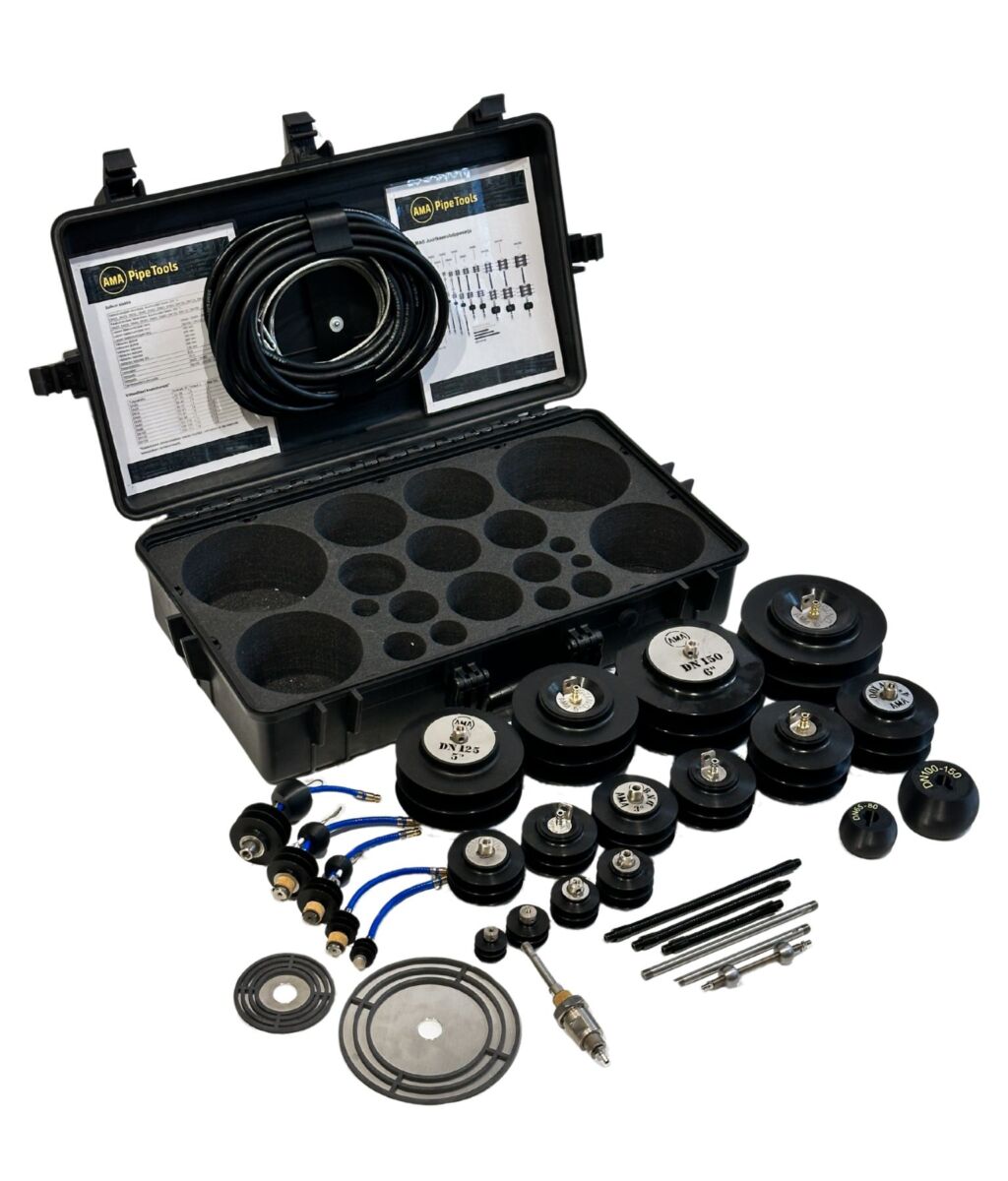
Purge systems protect weld quality on the root side. The AMA Pipe Purge Kit uses triple silicone discs to form an airtight seal, reducing both purging time and inert gas consumption. For stainless steel and other sensitive materials, this is a direct contribution to weld quality, not just a convenience.
👉 Read more about the AMA Pipe Purge Kit and how it reduces purging time and gas use.
When should pipe welding procedures be reviewed to fix recurring quality issues?
Pipe welding procedures should be reviewed when the same type of defect appears repeatedly across multiple joints, operators, or projects. A single defect can be an isolated incident. A pattern of defects points to a systemic problem in the procedure, the equipment, or the preparation steps. Waiting for a failed inspection or a project delay to trigger a review costs more time than addressing it proactively.
Common triggers for a procedure review include a rise in the number of joints failing non-destructive testing, recurring complaints about weld appearance on visible pipework, or a change in pipe material, wall thickness, or supplier. Each of these changes the conditions the original procedure was written for, and the procedure needs to catch up.
It is also worth reviewing procedures when new tools are introduced. If your team starts using pipe rotators or centering collars, the travel speed, heat input, and tacking sequence may all need to be updated to reflect the new working method. Procedures written for manual fit-up and static welding do not automatically transfer to rotator-assisted welding.
A practical approach is to review procedures at the start of each new project type and after any quality incident. Short, structured reviews that focus on preparation steps, fit-up tolerances, and purging requirements catch most recurring issues before they become patterns. Involving welders and fitters in the review is useful because they see the practical problems that do not always appear in inspection reports.
Improving pipe welding quality in production comes down to controlling the variables that cause defects before welding starts: alignment, joint preparation, working position, and gas coverage. We design and manufacture AMA pipe handling tools specifically for this kind of work, from centering collars and pipe rotators to purge kits and pipe stands, all made in Finland and built for professional use across a wide range of pipe sizes and applications. If you want to see which tools are available through a distributor near you, find your nearest authorized AMA dealer here. Or if you have a specific question about your setup, get in touch with us directly and we will help you find the right solution.