How does remote control improve long pipe handling?
Posted onRemote control eliminates costly weld interruptions on long pipes—discover how wireless pipe rotators boost quality and safety.
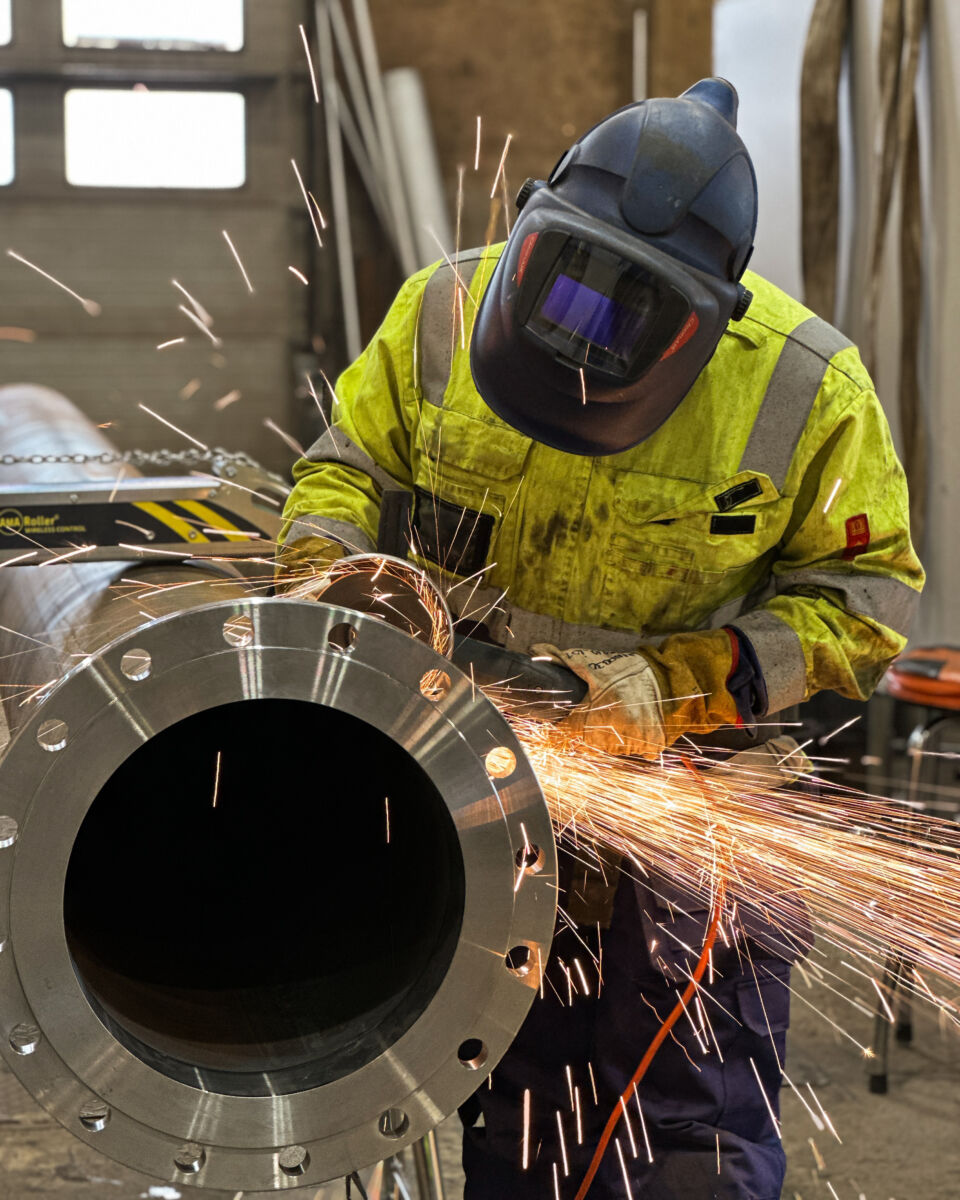
Remote control improves long pipe handling by letting the welder adjust pipe rotation speed and direction from a distance, without leaving the welding position or interrupting the weld. This matters most when working with pipes that extend several meters, where walking back and forth to a control panel would slow down the job and increase the risk of errors. Below, we cover the most common questions professionals ask about remote-controlled pipe handling.
What challenges make long pipe handling difficult without remote control?
Without remote control, handling long pipes means the welder must repeatedly stop welding, walk to the rotator controls, adjust the rotation, and walk back. This breaks the welding rhythm, increases the chance of inconsistent seams, and adds unnecessary physical strain. On busy job sites, it also creates hazards when workers move around heavy, rotating equipment.
Long pipes present a specific set of challenges that shorter sections do not:
- Interrupted welds: Every time the welder leaves the arc to adjust the rotator, the heat input changes. This can affect fusion quality and make the seam visually inconsistent.
- Positioning errors: Returning to the exact welding position after adjusting the rotator is harder than it sounds, especially on large-diameter pipes or when working in tight spaces.
- Cable clutter: Traditional foot pedals and control cables run along the floor, creating trip hazards when the work area stretches across several meters.
- Fatigue: Repeatedly walking the length of a long pipe during a full shift adds up. It slows productivity and tires the welder out before the job is done.
These problems get worse in prefabrication workshops where multiple long pipe assemblies are processed in sequence, and on industrial job sites where space is limited and the pace of work is high.
How does remote control work in pipe handling equipment?
Remote control in pipe handling equipment works through a wireless connection between a handheld or foot-operated control unit and the pipe rotator motor. The welder sends commands to start, stop, or adjust rotation speed without any physical connection to the machine. Modern systems use Bluetooth to maintain a reliable signal over meaningful working distances.
The AMA Roller Premium Pipe Rotator with wireless control is a practical example of how this works in a professional pipe welding context. It uses a Bluetooth connection between the rotator and the control unit, with a working range of up to 25 meters. The welder can choose between a wireless foot pedal or a manual speed control knob on the control unit itself, depending on what suits the task.
Key features that make wireless pipe rotator control practical on site:
- Bluetooth connection removes the need for long control cables on the floor
- The control unit charges via USB-C and runs on a Li-Ion battery, so there is no power cable to manage
- Rotation speed and direction are adjustable from the remote, giving the welder full control without moving from the weld position
- The rotator can be supported by additional pipe stands for longer pipe sections, keeping everything stable during rotation
This kind of setup works for all standard manual welding methods, including MIG, MAG, TIG, and covered electrode arc welding.
Read more about the AMA Roller pipe rotator range
What safety benefits does remote control bring to pipe handling?
Remote control improves safety in pipe handling by keeping the welder away from the rotating pipe and reducing movement around heavy equipment. The welder stays in one position, which means fewer trips past rotating components, less cable on the floor, and a cleaner, more predictable work environment.
On industrial job sites and in prefabrication workshops, the most common safety risks during pipe rotation are:
- Trip hazards from control cables: Wireless control removes floor-level cables between the welder and the rotator, which is one of the most frequent causes of minor incidents in pipe welding areas.
- Proximity to rotating pipes: When the welder does not need to walk to the machine to adjust settings, they spend less time standing near a rotating pipe. This reduces the risk of contact with the pipe or the rotator mechanism.
- Improved situational awareness: A welder who stays in position can monitor the weld pool, the pipe movement, and the surrounding area simultaneously, rather than dividing attention between walking and adjusting controls.
For project managers and supervisors, remote-controlled pipe handling equipment also supports safer site organization. Fewer unnecessary movements around heavy rotating equipment means a tidier, more controlled working environment overall.
Does remote control improve welding quality on long pipes?
Yes, remote control directly improves welding quality on long pipes. When the welder can adjust pipe rotation without stopping the arc, the weld progresses continuously at a consistent speed and heat input. This produces seams that are more uniform, with better fusion and a finish that is closer to what you would expect from automated welding equipment.
The quality improvement comes from two connected factors:
Continuous arc time
Every time a welder stops to walk to the rotator and back, the weld pool cools slightly and the restart point creates a potential weak spot or visual irregularity. With remote control, the welder maintains the arc through the full rotation cycle. The result is a seam with fewer interruptions, more consistent penetration, and a surface appearance that supervisors and quality inspectors find easier to approve.
Consistent working position
Welding quality depends heavily on the welder maintaining the correct angle, distance, and travel speed relative to the joint. On long pipes, walking away and returning to position introduces small but meaningful variations. Staying in one place throughout the weld eliminates that variable. This is especially useful when welding stainless steel, duplex, or other materials where consistency matters for corrosion resistance and mechanical performance.
Industry experience shows that pipe rotators with remote control can produce seams that resemble robot welds in appearance, even when performed manually. This is not just a cosmetic benefit. Uniform seams are easier to inspect, easier to document, and less likely to require rework.
When should professionals choose remote-controlled pipe handling tools?
Professionals should choose remote-controlled pipe handling tools when the pipe length, material, or work environment makes continuous access to the rotator controls impractical. If walking to the control panel interrupts the weld or creates a safety concern, wireless control is the right choice. It is also worth choosing when weld quality standards are high and rework is costly.
Specific situations where remote-controlled pipe tools make a clear difference:
- Long pipe sections in prefabrication: When preparing pipe assemblies in a workshop before site installation, long sections require the welder to be positioned well away from the rotator. Wireless control keeps the process efficient.
- Process industry job sites: In chemical, oil and gas, and energy plants, pipe welding often involves demanding materials and tight quality requirements. Remote control supports the precision these environments require.
- High-volume welding work: When a team is processing many pipe joints in a shift, the time saved by not walking back and forth adds up significantly over the course of a working day.
- Difficult materials: Stainless steel, duplex, and other alloys benefit most from consistent, uninterrupted welds. Remote control makes it easier to maintain that consistency.
- Tight or congested work areas: When the work area is busy or space is limited, reducing movement around rotating equipment improves both safety and efficiency.
For welders who want to make the case to their employer or project manager, the argument is straightforward: remote control reduces interruptions, improves seam quality, and lowers the physical demands of the job. For supervisors and purchasers, it means fewer rework calls and faster throughput per shift.
We manufacture pipe handling tools for professionals across Northern and Western Europe and beyond. Our product range covers pipe sizes from small-diameter tubing to large industrial pipes, and every tool is designed to make the welder’s job more manageable and the result more consistent. Whether you are equipping a prefabrication workshop or a demanding job site, we have the right tool for the task.
Find your nearest supplier through our authorized dealer network, or contact us directly if you have questions about which product fits your specific application.