Common Pipe Welding Mistakes That Reduce Weld Quality in Industrial Fabrication
Posted on
Introduction
Pipe welding quality issues are often not caused by welding skill itself, but by small mistakes in setup, handling, and workflow.
In industrial fabrication, even minor issues in pipe positioning or preparation can lead to inconsistent weld seams, unnecessary rework, and lower productivity.
The good news is that most of these problems are easy to prevent once they are understood.
1. Unstable pipe support
One of the most common problems in pipe welding is unstable or poorly adjusted pipe support.
When a pipe moves during welding, it becomes difficult to maintain:
- consistent arc distance
- stable welding speed
- accurate seam alignment
Even small movements can reduce weld quality and increase post-processing work.
Stable pipe positioning is the foundation of consistent welding results.
2. Inconsistent pipe rotation
Manual pipe rotation often leads to uneven movement during welding.
This can result in:
- irregular weld bead shape
- inconsistent heat distribution
- variations in weld penetration
Controlled rotation helps improve repeatability and reduces differences between welders and shifts.
3. Poor ergonomics during welding
Incorrect working height or awkward positioning forces welders to constantly adjust their posture.
This can lead to:
- reduced control over the welding arc
- faster fatigue during long welds
- increased risk of small errors
Ergonomics has a direct impact on both weld quality and productivity.
4. Interruptions in the welding process
Long pipe welds often include unnecessary interruptions such as:
- repositioning the pipe
- adjusting supports
- manual handling between weld sections
Each interruption increases the risk of inconsistencies when welding continues.
A smooth, continuous workflow improves both quality and efficiency.
5. Insufficient preparation before welding
Many welding problems originate before the actual welding begins.
Common issues include:
- inaccurate pipe alignment
- unstable support setup
- lack of planning for welding sequence
Proper preparation reduces variation and improves final weld consistency.
How to improve pipe welding quality and efficiency
Improving weld quality is often about removing small inefficiencies rather than changing welding technique itself.
Key improvements include:
- stable pipe support
- controlled pipe rotation
- consistent working height
- fewer interruptions
- better pre-welding preparation
These improvements lead to more consistent welds and higher productivity.
Supporting tools for better pipe welding setups
Stable and controlled pipe handling systems play an important role in professional welding environments.
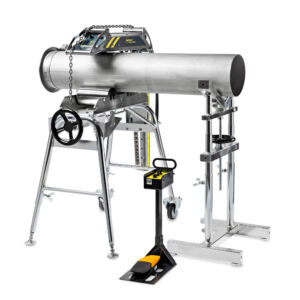
The AMA® Pipe Stand Set helps improve pipe stability and alignment during welding.
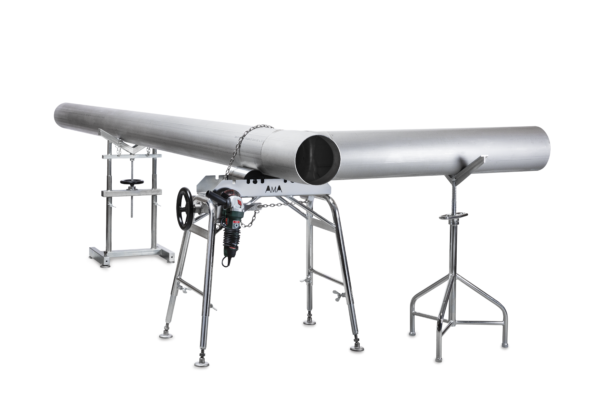
For controlled pipe rotation and smoother workflow, the AMA Roller® pipe rotator provides consistent rotation and improved welding ergonomics.