Why is airtight purging important in TIG welding?
Posted onOxygen destroys TIG weld roots from the inside — discover why airtight purging is non-negotiable for stainless pipe systems.
If you work with stainless steel, duplex, or other high-purity pipe systems, you already know that TIG welding demands precision at every stage. One step that separates a clean, code-compliant weld from a rejected one is airtight purging. Done properly, weld purging protects the back side of the weld from atmospheric contamination while the joint is still molten. Done poorly, it quietly ruins the weld from the inside out, often without any visible sign until testing or failure in service.
This article walks through what actually happens inside a pipe during TIG welding, why oxygen is such a damaging presence, and what makes a purge setup genuinely airtight. Whether you are a welder on the shop floor, a supervisor overseeing pipe work, or a project manager signing off on welding quality, understanding these fundamentals helps you make better decisions at every stage of the job.
What happens inside a pipe during TIG welding
When you strike an arc during TIG welding, the weld pool reaches temperatures well above 1,000 degrees Celsius. At that temperature, the back side of the weld joint — the root — is exposed and highly reactive. Any gas present inside the pipe at that moment comes into direct contact with the molten metal.
In normal atmospheric air, roughly 21% of the gas is oxygen and about 78% is nitrogen. Both are harmful to reactive metals at welding temperatures. The inside of the pipe acts like a sealed chamber during welding, and without deliberate gas management, that chamber is simply full of air. The root of the weld is then exposed to exactly the conditions it should never encounter.
Back purging replaces that atmospheric air with an inert shielding gas, typically argon, before and during welding. The inert gas displaces oxygen and nitrogen, creating a protective atmosphere on the inside of the joint. The goal is to maintain that atmosphere continuously from the start of the weld until the root has cooled below the temperature at which oxidation can occur.
How oxygen contamination damages weld integrity
Oxygen reacts with chromium in stainless steel and other alloying elements at high temperatures, forming oxides on the weld root surface. This is commonly called sugaring or oxidation, and it is one of the most recognizable signs of inadequate purging. The surface takes on a rough, granular appearance, often dark brown or black in color.
But the damage goes beyond appearance. Oxidation at the root reduces corrosion resistance significantly. In process industry pipework, this matters directly. Pipes carrying aggressive media — whether chemical, pharmaceutical, or food-grade — rely on the chromium oxide passive layer to resist corrosion. Sugaring breaks that layer at the most vulnerable point in the pipe, the weld root, and creates surface irregularities that trap bacteria, accelerate pitting corrosion, and weaken the joint structurally.
What oxidation looks like in practice
- Silver or bright metallic root: Correct purge — full corrosion resistance maintained
- Light straw or gold color: Minor oxidation — acceptable in some lower-grade applications but a warning sign
- Blue or purple discoloration: Moderate oxidation — reduced corrosion resistance, borderline for most process applications
- Dark brown or black granular surface (sugaring): Severe oxidation — the weld root must be rejected and reworked
Nitrogen contamination causes a different but equally serious problem. Nitrogen porosity appears as small voids within the weld metal, reducing tensile strength and creating leak paths in pressurized systems. Unlike surface oxidation, nitrogen porosity is not always visible without radiographic or ultrasonic testing, which means it can pass visual inspection and still cause failure in service.
What makes a purge truly airtight
The word “airtight” is used loosely in many welding environments, but in pipe welding purging it has a specific and demanding meaning. A truly airtight purge system isolates a defined volume inside the pipe, fills it with inert gas, and maintains that atmosphere with no ingress of air throughout the entire welding cycle.
Three conditions must be met simultaneously:
Complete volume isolation
Purge plugs or dams must seal the pipe bore on both sides of the weld joint, creating a defined purge zone. If the plugs allow any bypass, air will continuously enter the zone even while inert gas flows through it. The seal must hold against the slight positive pressure created by the purge gas flow.
This is where plug design matters. A triple silicone disc system, for example, provides layered sealing that compensates for minor bore irregularities and maintains contact under pressure.
Adequate gas displacement before welding
You need to displace the air within the purge zone before striking the arc. The volume of inert gas required depends on the purge zone volume and the efficiency of the seal. A tighter, smaller purge zone means faster displacement and lower gas consumption. Purge systems that minimize the zone volume between plugs reduce both purging time and argon use significantly.
Maintained positive pressure during welding
Once the arc starts, the purge gas must continue flowing at a low, steady rate to maintain positive pressure inside the zone. This prevents atmospheric air from being drawn in through the weld pool opening as it forms.
Too low a flow rate risks contamination. Too high a flow rate can cause turbulence that draws air into the zone or disturbs the weld pool from the outside. Finding the right balance is part of setting up a reliable purge.
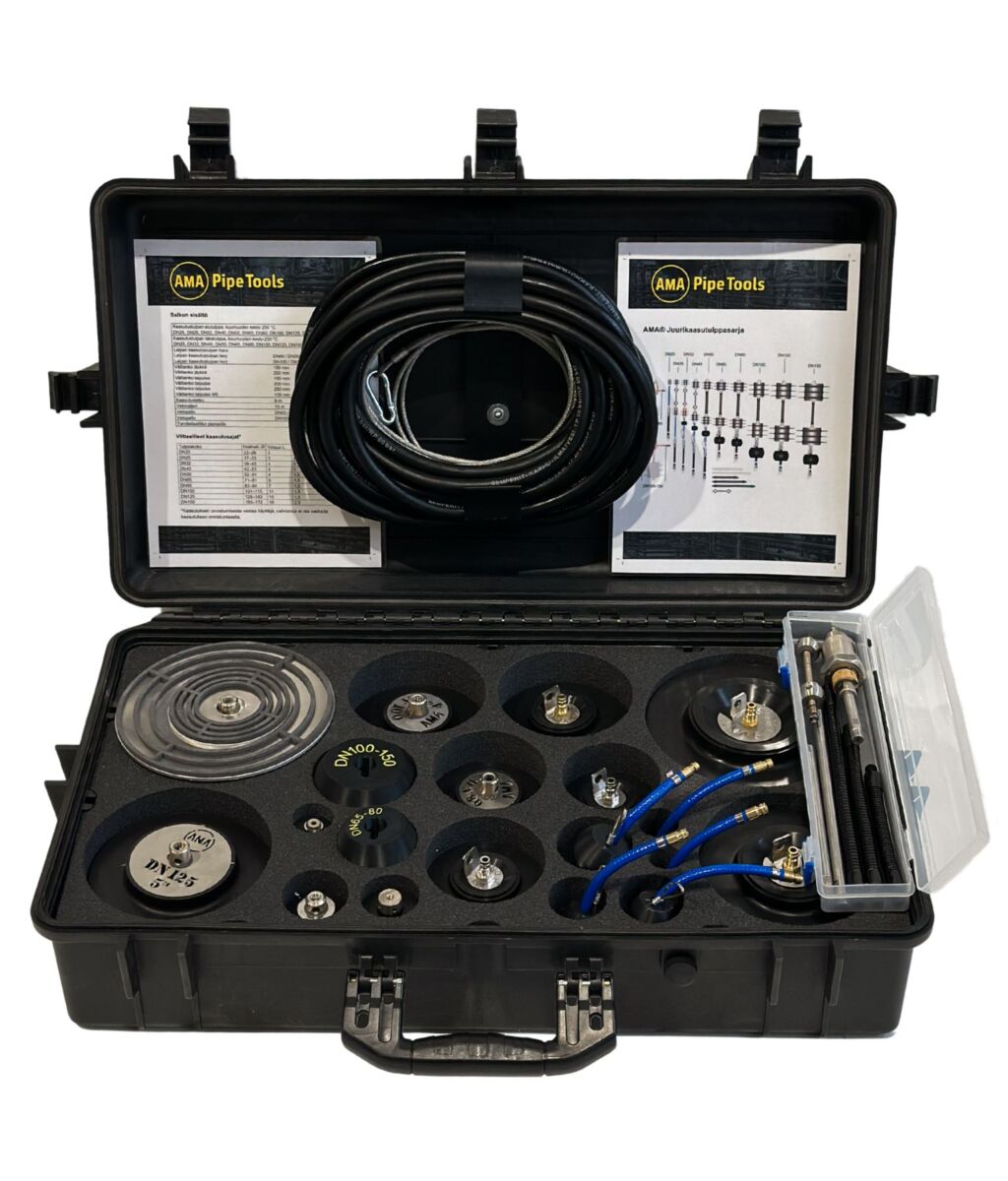
The AMA Pipe Purge Kit is designed around exactly these principles, using triple silicone discs to form a reliable airtight seal. The kit covers a wide range of pipe sizes, with pulling balls that make it practical to position plugs through pipe bends on real job sites.
Key factors in selecting the right purging method
Pipe welding purging is not one-size-fits-all. The right approach depends on several variables that interact with each other, and choosing incorrectly adds cost, time, or risk to the job.
Pipe material and application
Stainless steel and duplex stainless require a more controlled purge than carbon steel, which is generally less sensitive to root oxidation. For pharmaceutical, food processing, or chemical process pipework, the purge standard is typically higher because the passive layer on the weld root is a functional requirement, not just a quality preference.
High-alloy materials such as titanium or nickel alloys are even more sensitive and may require oxygen monitoring to verify purge quality before welding begins.
Pipe diameter and geometry
Larger diameter pipes contain more volume to displace, which increases gas consumption and purging time if the full pipe bore is used as the purge zone. Using close-fitting plugs to isolate a small zone around the weld joint is far more efficient than flooding the entire pipe length.
Pipe bends, tees, and reducers add complexity to plug placement, which is why purpose-designed pulling systems make a practical difference on site — regardless of whether you are working on small-bore instrument lines or larger process pipework.
Workshop prefabrication versus site welding
Purging requirements differ depending on where welding takes place. In workshop prefabrication — where pipe assemblies are prepared before delivery to site — conditions are more controlled and purge setups can be planned carefully in advance. On site, access is often more limited, positions are fixed, and improvisation is common.
For site welding, especially in fixed positions where the welder moves around the pipe, the purge setup must remain stable throughout the full weld cycle. When a pipe rotator is used to keep welding in the flat position, the purge system must also accommodate continuous rotation without disturbing the seal or the gas connection. This is worth planning before the job starts rather than solving on the fly.
Oxygen content verification
For critical applications, purge quality should be verified with an oxygen analyzer before welding starts. The target oxygen level for stainless steel is typically below 0.1% (1,000 ppm), though some specifications require even lower levels. Monitoring oxygen content removes guesswork and provides documented evidence that the purge was adequate — useful for quality records and project sign-off.
Quick checklist for a reliable purge setup
- Plugs are correctly sized and seated firmly in the pipe bore on both sides of the joint
- The purge zone volume is as small as practically possible to reduce displacement time and gas use
- Inert gas flow is set to achieve displacement before welding begins
- Oxygen level is verified with an analyzer for critical applications
- Flow rate is maintained at a low, steady level throughout the weld
- The purge remains undisturbed until the root has cooled below the oxidation threshold
Get in touch
We design and manufacture pipe welding tools for professionals working in exactly these demanding environments. Our product range covers the full pipe welding workflow — from centering and positioning to purging and rotation — across a wide range of pipe sizes and applications.
If you want to learn more about how the AMA Pipe Purge Kit works in practice, or if you have a question about your specific application, contact us directly and we will help you find the right solution.
Airtight purging is one of the most important steps in producing high-quality TIG welds on stainless and high-alloy pipe systems. When you understand what is happening inside the pipe at welding temperature, why oxygen causes the damage it does, and what a proper purge setup actually requires, you are in a much stronger position to get consistent results. We build tools that make this process faster, more reliable, and repeatable across different pipe sizes and site conditions.
Find your nearest dealer and see our full product range through our authorized dealers page.