How do centering collars improve pipe alignment?
Posted onCentering collars deliver consistent pipe alignment before welding — here's how they work and why they matter.
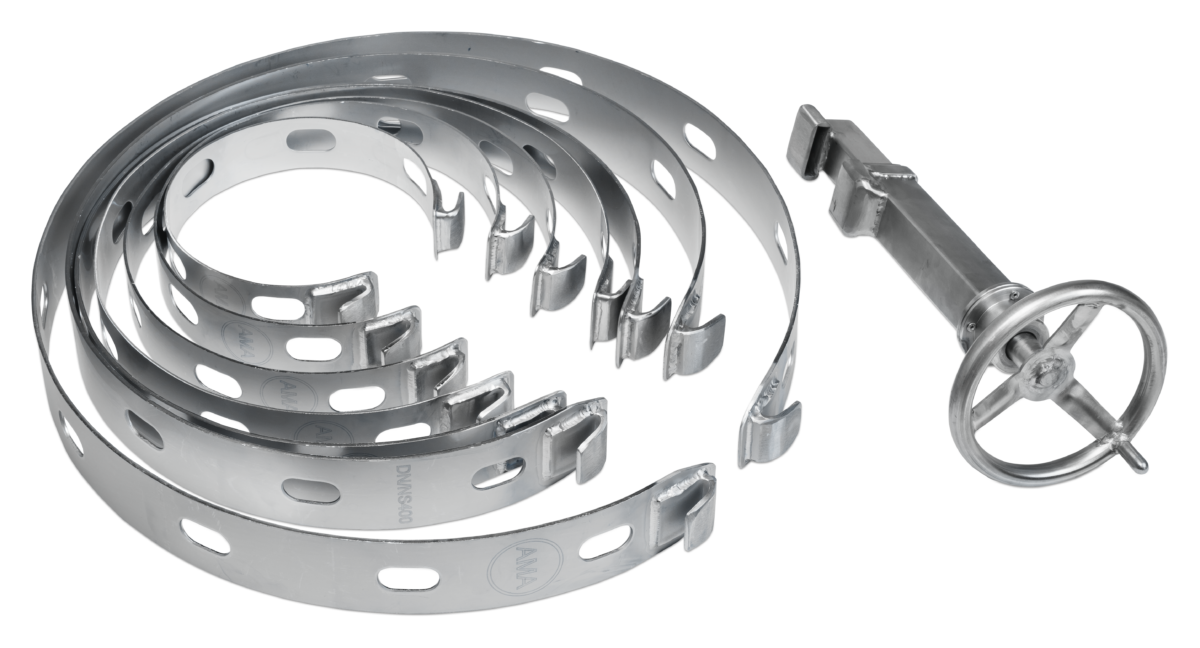
Getting pipe alignment right before welding is one of those things that separates a clean, professional installation from one that causes problems down the line. Whether you are working in a process plant, a shipyard, or a prefabrication workshop, even a small misalignment at the joint can lead to uneven weld beads, stress concentrations, and costly rework. Centering collars are a straightforward tool that directly addresses this challenge, helping welders and installation teams achieve accurate pipe fitting alignment quickly and consistently. This article walks through why alignment matters, how centering collars work in practice, and how to build them into a professional pipe workflow.
What makes precise pipe alignment critical in welding
When two pipe ends meet at a joint, the goal is a uniform root gap and flush inner surfaces. Even a fraction of a millimeter of offset between the pipe walls creates what is called high-low misalignment, which forces the welder to compensate with technique rather than letting the weld geometry do its job. The result is often inconsistent penetration, weak root passes, and joints that may fail inspection or require grinding and re-welding.
In process industry piping, the consequences go beyond weld quality. Misaligned joints can create turbulence points inside the pipe, which accelerate corrosion and wear in certain media. For stainless steel and acid-resistant piping in particular, a poor root pass can compromise the corrosion resistance of the entire joint. Proper pipe alignment during weld preparation is therefore not just about aesthetics or inspection compliance — it directly affects the long-term performance of the installation.
The challenge is that pipes are rarely perfectly round, and pipe ends that have been cut or beveled can have slight variations in diameter. Holding two pipe ends in exact alignment by hand or with improvised methods introduces human error at every tack weld. Systematic alignment tools remove that variable from the equation.
How centering collars work in pipe preparation
A centering collar is a stainless steel band that wraps around the outside of two pipe ends at a joint. When tightened with a collar tightener, it pulls both pipes into coaxial alignment, evening out any offset between the outer walls. The collar holds the pipes in position during tack welding so the welder can work without a second person holding the joint steady.
The tightening mechanism
The collar tightener is fitted with thrust bearings, which allow you to apply consistent tightening force without the tool twisting or binding. This matters because uneven tightening can actually introduce a new misalignment while trying to correct one. The bearing-equipped tightener lets you apply controlled, even pressure around the collar so the pipe ends draw together uniformly.
Size range and compatibility
AMA Pipe Tools centering collars are designed for a wide range of pipe sizes. The stainless steel range covers DN65 up to DN1500 in DN-dimensioned sizes, and NS100 to NS1500 in NS-dimensioned sizes. Collar sizes from DN/NS 350 upward are compatible with both dimension standards, which simplifies tool selection on projects that mix European and Nordic pipe specifications. For diameters from DN/NS 600 upward, the collars come in two parts and require two tighteners to achieve accurate centering across the full circumference.
Three tightener sizes cover the full collar range:
- Mini Tightener — for DN65 to DN125
- Basic Tightener — for DN150 to DN/NS500
- Large Tightener — for DN/NS600 and above
The Large Tightener has a 50 mm longer span and provides more torsional force, making it better suited for thicker-walled pipes where more clamping force is needed to pull the joint into alignment.
Want to see the full product range and find the right collar set for your work?
Browse AMA Centering Collar Sets
Key factors in selecting the right centering collar
Pipe diameter is the obvious starting point, but wall thickness matters just as much. Thicker walls require more clamping force to draw the joint into alignment, which is why the Large Tightener is recommended for DN/NS 600 and above even when the collar itself might technically fit with a smaller tightener. Using a tightener that cannot generate enough force means you get partial alignment at best.
Material compatibility
For stainless steel and acid-resistant piping, the collar material is important. AMA centering collars are made from stainless steel, which means they will not contaminate the pipe surface or introduce rust marks that can compromise a clean stainless steel installation. This is a practical detail that matters in food processing, pharmaceutical, and chemical plant environments where surface contamination is a real concern.
Dimension standard
Projects in Northern and Western Europe often mix DN and NS pipe standards, especially when working with a combination of imported and locally sourced pipe materials. Selecting collars that are compatible with both standards from DN/NS 350 upward reduces the number of different tools you need to carry and minimizes the risk of reaching for the wrong collar on site.
For smaller diameter work, the AMA Centering Collar Miniset covers DN65 through DN125 and includes a Mini Tightener and a collar holder for toolbox storage. For the mid-range DN150 to DN500, the Basic Centering Collar Set provides the most commonly used sizes in one package. Having the right set ready means less time searching for the right tool and more time on the weld itself.
Common alignment mistakes in pipe welding preparation
One of the most frequent mistakes is tack welding before alignment is confirmed. Once tacks are in place, correcting misalignment requires grinding them out and starting over. The correct sequence is:
- Use the centering collar to achieve alignment first.
- Confirm the root gap and inner wall flush.
- Apply tack welds with the collar still in place holding the joint.
Over-relying on fit-up by eye
Experienced welders can often get close to correct alignment by eye, but close is not the same as accurate. For high-quality welds in process piping, the tolerance on misalignment is tight — often less than 1 mm. Systematic use of a centering collar removes the guesswork and produces repeatable results regardless of who is doing the fit-up.
Wrong tightener for the collar size
Using a tightener that is too small for the collar size is a common error, particularly when teams share tools across different pipe diameter ranges. The result is that the collar cannot be tightened enough to fully correct the misalignment, and the joint looks aligned on the outside while still having a slight offset. Always match the tightener to the collar size using the collar selection table to confirm the correct combination.
Skipping alignment on short spools
Short pipe spools and prefabricated sections are sometimes fitted by hand because they seem easy to hold in position. In practice, short sections are harder to hold steady during tack welding than longer pipes. Skipping the centering collar on these joints is a common source of misalignment errors in prefabrication work.
Integrating centering collars into a professional pipe workflow
A well-organized pipe welding workflow treats alignment as a discrete step with its own tools and checkpoints — not something that happens informally between cutting and welding. This means having the right collar sizes staged and accessible at the work area before pipe fit-up begins, rather than searching for the right size mid-job.
In the prefabrication workshop
Centering collars work well alongside pipe stands and pipe rotators. Used together, this combination delivers a controlled, efficient workflow:
- The pipe stand holds the pipe at the correct working height.
- The centering collar ensures alignment at the joint.
- The pipe rotator allows the welder to stay in one ergonomic position while rotating the pipe for each pass.
This combination reduces the physical effort of welding and improves consistency across multiple joints in a single shift.
On site
On site, the workflow is similar but the conditions are less controlled. Pipes may be supported on temporary brackets or pipe bridges, and the welder often has less room to maneuver. In these conditions, the centering collar is even more valuable because it holds the joint in alignment without needing a second person to steady the pipe. One person can set the collar, tighten it, confirm alignment, and tack weld independently.
Building a complete collar set into your standard tool kit
For teams working across a range of pipe diameters, having a complete collar set as part of the standard tool kit means alignment is always handled systematically rather than improvised. The time saved on rework and re-welding misaligned joints quickly justifies carrying the full range of collar sizes.
Accurate pipe alignment is a foundation of quality pipe welding, and centering collars are one of the most direct ways to achieve it consistently. At AMA Pipe Tools, we design and manufacture pipe handling tools for professional pipe installation and welding, including the full range of stainless steel centering collars and tighteners described in this article. Our tools are developed with strict quality criteria and are used by welding professionals across the Nordic countries and wider Europe.
Find your nearest supplier on our authorized dealers page, or contact us directly if you have questions about which collar set is right for your application.