Why is proper pipe fit-up important before welding?
Posted onPoor pipe fit-up leads to weld defects and costly rework. Discover what really controls fit-up quality.
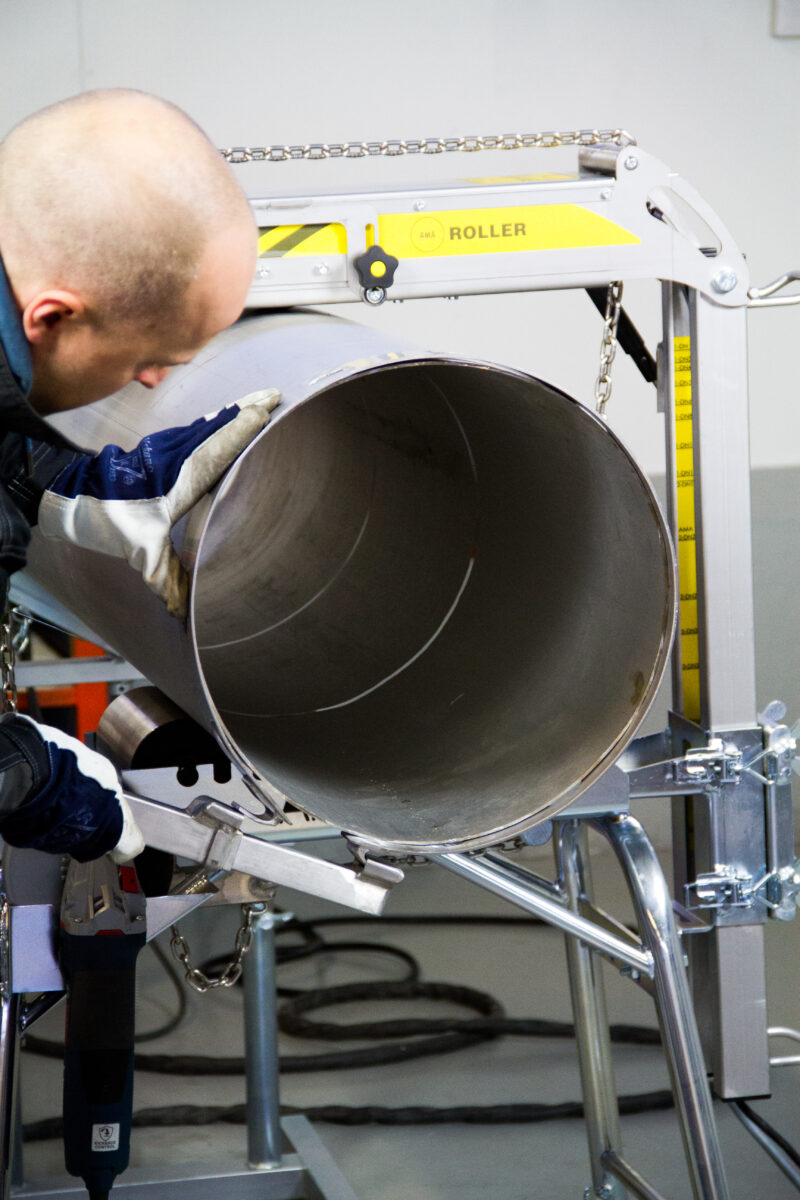
Getting pipe fit-up right before welding is one of those things that separates a smooth, productive job from one that drags on with rework, failed inspections, and frustrated crews. Whether you are working in a process plant, a prefabrication workshop, or on a pipeline installation site, the quality of your fit-up directly determines the quality of the weld you can achieve. No amount of skill at the torch will fully compensate for poor preparation at the joint. This article walks through why pipe fit-up matters so much, what actually controls its quality, and how the right tools and habits make a measurable difference in your daily work.
What poor pipe fit-up actually costs in the field
When fit-up is off, the consequences show up quickly and in multiple places at once. A gap that is too wide forces the welder to bridge excess material, increasing the risk of burn-through, incomplete fusion, and weld porosity. Misalignment between pipe ends creates uneven stress distribution at the joint, which matters enormously in pressurised systems where the weld must perform reliably over years of service. In process industry applications, where piping carries aggressive media or operates at high temperatures, these are not minor cosmetic issues.
The practical cost of poor fit-up goes beyond the weld itself. Rework is expensive in both time and materials. Failed non-destructive testing means cut-outs, re-welding, and re-inspection, all of which eat into project schedules and budgets. On larger projects, a pattern of fit-up problems also creates tension between welders, inspectors, and project managers, since each group ends up spending time managing failures rather than progressing the work. Getting fit-up right the first time is simply the more efficient path.
Common consequences of poor fit-up
- Weld defects such as incomplete fusion, porosity, and undercut
- Failed radiographic or ultrasonic weld inspection
- Increased rework hours and material waste
- Stress concentrations that reduce joint service life
- Delays to project handover and commissioning
Key variables that determine fit-up quality
Fit-up quality is not a single measurement. It is the combined result of several variables, all of which need to be within tolerance at the same time. The most important of these are:
- Root gap — controls heat input and penetration during the root pass
- Pipe alignment — both angular and axial positioning of the two pipe ends
- Internal bore alignment — also called high-low or mismatch, this is where the inner surfaces must sit flush with each other
- Pipe end condition — the quality of the bevel and cleanliness of the joint face
Each variable affects the weld differently, and together they define whether the joint is weldable to the required standard.
Root gap that is too small risks lack of fusion at the root; too large and you increase the risk of burn-through or require additional filler passes. Angular misalignment changes the bevel geometry and makes consistent torch travel difficult, particularly in positional welding. Internal bore mismatch creates a step at the root that is difficult to weld out cleanly and is a common source of rejectable defects in high-integrity applications.
Pipe end condition
The condition of the pipe end face is often underestimated. Damage, contamination, or an inconsistent bevel angle will affect how well the joint closes and how the root gap behaves during tacking. Proper bevelling and cleaning before fit-up are not optional steps — they are the foundation that everything else depends on.
How pipe material and diameter affect fit-up demands
Pipe material plays a significant role in how demanding the fit-up process becomes. Stainless steel and duplex grades are less forgiving than carbon steel because they have lower thermal conductivity and higher sensitivity to heat input variation. Any misalignment that forces the welder to compensate with extra heat creates a higher risk of sensitisation, distortion, or discolouration in the heat-affected zone. For these materials, precision at the fit-up stage is not a preference — it is a technical requirement driven by the material’s metallurgical behaviour.
Pipe diameter introduces its own set of challenges across the full size range:
- Small-diameter pipes are harder to align accurately because there is less surface area to work with, and small errors translate into larger angular deviations.
- Medium-diameter pipes are common in process piping and prefabrication work, where consistent fit-up quality across many joints directly affects overall project efficiency.
- Large-diameter pipes are physically difficult to handle and rotate. Maintaining alignment during tacking requires either significant manual effort or purpose-built support equipment. The weight of the pipe itself can cause sag between supports, introducing misalignment that was not present when the joint was initially set up.
What makes fit-up preparation a skilled trade discipline
Experienced pipe fitters understand that fit-up is a discipline, not just a checklist. It requires reading the pipe, understanding how it will move when heat is applied, and anticipating how tack weld placement will affect the final joint geometry. A skilled fitter plans the sequence of tacks to control distortion, sets the root gap to suit the welding procedure specification, and checks internal alignment before committing to the first tack. These decisions draw on both technical knowledge and hands-on experience.
The interaction between fit-up and the welding procedure is also important. Welding procedure specifications define tolerances for root gap, bevel angle, and mismatch, and these tolerances are qualified through testing. When fit-up falls outside those tolerances, the welder is technically working outside the qualified procedure — which has implications for quality assurance and certification. This is why fit-up inspection is a formal step in many quality management systems for pipe welding, not just an informal check before striking the arc.
Tack welding as part of fit-up
Tack welds are structural elements of the joint, not just temporary fixtures. They must be placed symmetrically, meet minimum size requirements, and be free of defects. A tack that cracks during welding can introduce a defect directly into the root of the finished weld. This is why tack welding is typically carried out by qualified welders using the same procedure as the root pass.
Using a pipe rotator during tack welding makes it significantly easier to place tacks consistently around the circumference without repositioning the welder or the pipe. Tools like the AMA Centering Collar Set help achieve and hold accurate alignment while tacks are placed, reducing the chance of the joint shifting between tacks.
Want to see how centering collars work in practice?
Read more about the AMA Centering Collar Set
Choosing the right pipe handling tools for accurate fit-up
The tools you use for pipe handling and alignment directly affect how achievable accurate fit-up is in practice. The right equipment reduces setup time, lowers the physical demands on the crew, and helps deliver consistent results across the full range of pipe sizes.
Key tools for fit-up work include:
- Adjustable pipe stands — hold the pipe at the correct working height and allow fine height adjustment, making it much easier to align two pipe ends precisely
- Centering collars — wrap around the outside of the joint to hold both pipes in axial alignment during tacking, removing the need to manually hold or wedge the joint in position
- Pipe rotators — allow the pipe to be rotated smoothly during tacking and welding, improving access and consistency around the full circumference
- Roller tables and hydraulic support equipment — essential for heavier pipes, enabling positioning and rotation without manual lifting or wedging
These are not luxury items. They are practical tools that reduce the time and effort required to achieve correct fit-up consistently — on any pipe size, in any working environment.
Matching the tool to the task
- Small-diameter pipes (DN15 to DN125): Compact centering collar sets and lightweight pipe stands are sufficient for most workshop and site applications
- Medium-diameter pipes (DN150 to DN500): Standard pipe stands with stainless steel rollers, centering collars, and a pipe rotator for tacking and welding
- Large-diameter pipes (DN500 to DN1000+): Heavy-duty rotator sets with hydraulic height adjustment and roller tables to support the pipe during alignment and welding
Choosing the right combination of tools for your pipe diameter range and working environment is a practical decision that pays back quickly in reduced setup time, fewer alignment errors, and more consistent weld quality across the team.
At AMA Pipe Tools, we design and manufacture pipe handling tools specifically for professionals working in pipe welding and installation. Our product range covers everything from centering collars and pipe stands to pipe rotators and purge systems — all developed with input from the field and built to strict quality standards in Finland. Whether you are a welder identifying the right equipment for your work, a supervisor looking to improve team efficiency, or a purchaser specifying tools for a new project, we are here to help. If you are not sure which tools suit your application best, contact us directly and we will help you find the right solution.
Proper pipe fit-up is the foundation of every quality weld, and it relies on the right combination of skills, procedures, and tools working together. From controlling root gap and bore alignment to managing pipes of all sizes safely and efficiently, every step of fit-up preparation has a direct impact on the weld you produce. We build tools that make this preparation faster, more accurate, and more consistent for welding professionals across Europe.
Find your nearest supplier and see our full product range through our authorised dealer network.