How do pipe welders use centering collars for large pipes?
Posted onMisaligned large-diameter pipe joints cause costly rework — discover how centering collars deliver precision fit-up every time.
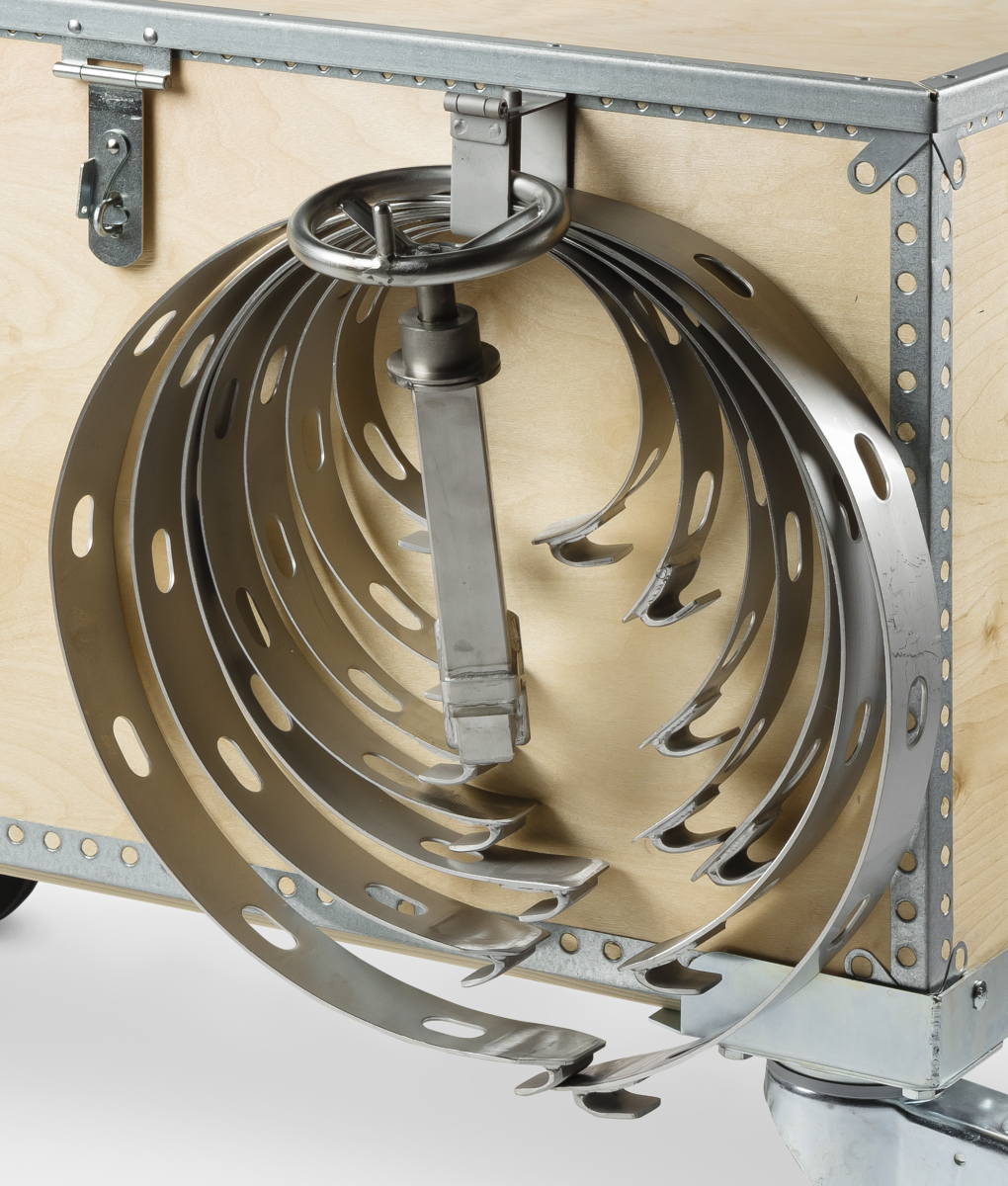
Pipe welding in the process industry demands precision at every stage — and joint fit-up is where that precision begins. Even a small misalignment at the joint can compound into significant weld defects, rework costs, and project delays. Getting two pipe sections to sit perfectly concentric before you strike an arc is not just a preparation step — it directly determines the quality of everything that follows. This is where centering collars earn their place in a professional pipe welder’s toolkit.
Whether you are working in a prefabrication workshop or fitting pipework on an industrial site, understanding how to align pipes correctly — and which pipe centering tools make that process faster and more reliable — is knowledge that pays off on every joint.
Alignment challenges in pipe welding
Smaller pipes are manageable by hand. Once you move into larger diameters, the weight, wall thickness, and surface area of each pipe section create a different category of problem. Two pipes resting on stands or rollers will almost never sit in perfect axial alignment on their own. Gravity pulls each section according to its own weight distribution, and slight variations in pipe ovality — common even in quality-manufactured pipe — mean the ends rarely match up without active correction.
In process industry applications, pipe misalignment is not just an aesthetic concern. Offset joints create stress concentrations, reduce flow efficiency, and can compromise weld integrity in ways that only become visible during pressure testing or, worse, in service. For stainless steel and acid-resistant pipework in particular, any lack of root fusion caused by poor fit-up can be difficult and expensive to repair after the fact.
Why pipe alignment is harder to eyeball than it looks
With smaller pipes, an experienced welder can often assess alignment visually and make quick manual adjustments. As pipe diameter increases, the sheer scale makes visual assessment unreliable. A 3 mm offset on a DN500 joint is nearly invisible to the eye but is well outside acceptable tolerance for most process piping standards. Mechanical alignment tools remove the guesswork and give you a measurable, repeatable result.
What makes centering collars critical for weld quality
A centering collar wraps around the outside of two pipe ends at the joint and holds them in precise concentric alignment while tack welding takes place. The collar does the mechanical work of correcting any radial offset between the two pipe ends, so the welder can focus entirely on the tack weld rather than simultaneously managing fit-up by hand or with improvised wedges.
The practical impact on weld quality is direct. When both pipe ends sit flush and concentric:
- The root gap is consistent around the full circumference of the joint.
- The welder can maintain a steady travel speed and heat input.
- The root pass is more uniform and easier to control.
- The risk of lack-of-fusion defects is significantly reduced.
This matters especially for TIG welding of stainless steel, where inconsistent fit-up leads to variable penetration and potential weld defects that are costly to repair.
Reducing rework and installation errors
In a busy prefabrication or site environment, rework is one of the biggest hidden costs. Misaligned joints that fail inspection require grinding, re-beveling, and rewelding — all time-consuming and material-intensive. Using a proper pipe centering tool at the fit-up stage is far faster than correcting a poor joint after welding. Investment in fit-up tooling pays back quickly through reduced rework rates.
Explore AMA Pipe Tools centering collar sets and find the right size for your pipe dimensions.
How centering collars work
On pipe sizes up to around DN500, a single-piece collar wraps around the joint and a collar tightener is used to draw it tight. The tightener applies controlled torque around the collar, pulling both pipe ends into alignment as it cinches down. The result is a mechanically enforced concentricity that holds steady while tack welds are placed.
For larger pipe diameters — DN600 and above — the collar comes in two parts. This is a practical necessity: a single-piece collar of that circumference would be too unwieldy to handle efficiently on site. The two-part design requires two collar tighteners to achieve even clamping force around the full joint. A larger tightener with a 50 mm longer span is recommended for these sizes, as it provides the additional torsional force needed to pull heavier-walled pipe into alignment.
The AMA centering collar range covers sizes from DN65 up to DN1500, with both DN and NS dimensioning available from size 350 upward — making it suitable for a wide range of pipe sizes across different project types.
The role of the collar tightener
The tightener is not an afterthought — it is what converts the collar from a loose ring into a precision alignment tool. Thrust bearings in a quality tightener allow smooth, consistent torque application without binding or slipping. This matters across all pipe sizes, because you need to apply controlled force to overcome the weight and stiffness of the pipe sections while maintaining accuracy throughout the clamping process.
Key factors in selecting the right collar for the job
Pipe dimension is the obvious starting point, but it is not the only variable. Consider the following when selecting a collar and tightener:
- Wall thickness: Thicker-walled pipe is stiffer and requires more clamping force. The large tightener is better suited for these situations, not just for larger diameters.
- Material: Stainless steel and acid-resistant pipework requires tools that will not contaminate the pipe surface. Centering collars made from stainless steel are the correct choice — carbon steel tools can leave iron deposits that lead to corrosion, which is a serious concern in process industry applications.
- Dimensioning standard: Confirm whether your project uses DN or NS dimensioning before selecting collars. These standards differ, and using the wrong one will result in a collar that does not seat correctly on the pipe.
Collar sets versus individual collars
For workshops handling a range of pipe sizes, a collar set covering the most common dimensions is more practical than buying individual collars. A set covering DN150 through DN500, for example, covers a large proportion of the pipe sizes encountered in typical process industry prefabrication work. For site-based work where mobility matters, a miniset covering smaller dimensions is easier to transport and still handles the majority of smaller-bore joints efficiently.
Best practices for centering collar use in the field
Getting the most from your centering collars comes down to a few consistent habits:
- Position the collar centrally over the joint, with equal coverage on both pipe ends.
- Pre-align the pipes first. The collar corrects small deviations — it is not designed to pull severely misaligned heavy pipes into position on its own. Use pipe stands or a pipe rotator to get the sections into approximate alignment before applying the collar.
- Tighten progressively and evenly. On larger pipe with two tighteners, alternate between them rather than fully tightening one side first. This keeps clamping force balanced and avoids introducing angular misalignment while correcting radial offset.
- Wait before removing the collar. Once tack welds are in place, allow them to cool slightly before releasing the collar. Do not remove it before the tacks have enough strength to hold the joint geometry.
Keeping collars in working condition
Stainless steel collars are durable, but they need regular attention to perform correctly:
- Keep collars clean and free from weld spatter buildup, which can prevent them from seating correctly on the pipe surface.
- After each use, inspect the collar for deformation — a bent or distorted collar will not produce accurate alignment no matter how tightly it is clamped.
- Store collars on a dedicated holder rather than loose in a toolbox to prevent the incidental damage that shortens tool life on busy sites.
Pipe welding demands precision at every stage, and fit-up is where that precision starts. Using the right centering collars and tighteners for your pipe size and material takes the uncertainty out of joint alignment and gives every weld the best possible foundation.
AMA centering collars are designed and manufactured in Finland, built to the quality standards that process industry pipe welding requires — from compact minisets for smaller bore work up to collars for pipe up to DN1500.
If you want to see which products are available through a distributor near you, find your nearest authorized AMA Pipe Tools dealer and get advice from someone who knows the local market.
You are also welcome to contact us directly if you have questions about the right collar size or tightener for your specific application!