How do pipe stands improve pipe welding safety?
Posted onUnsupported pipes cause weld defects and injuries — discover how pipe stands make welding safer and more precise.
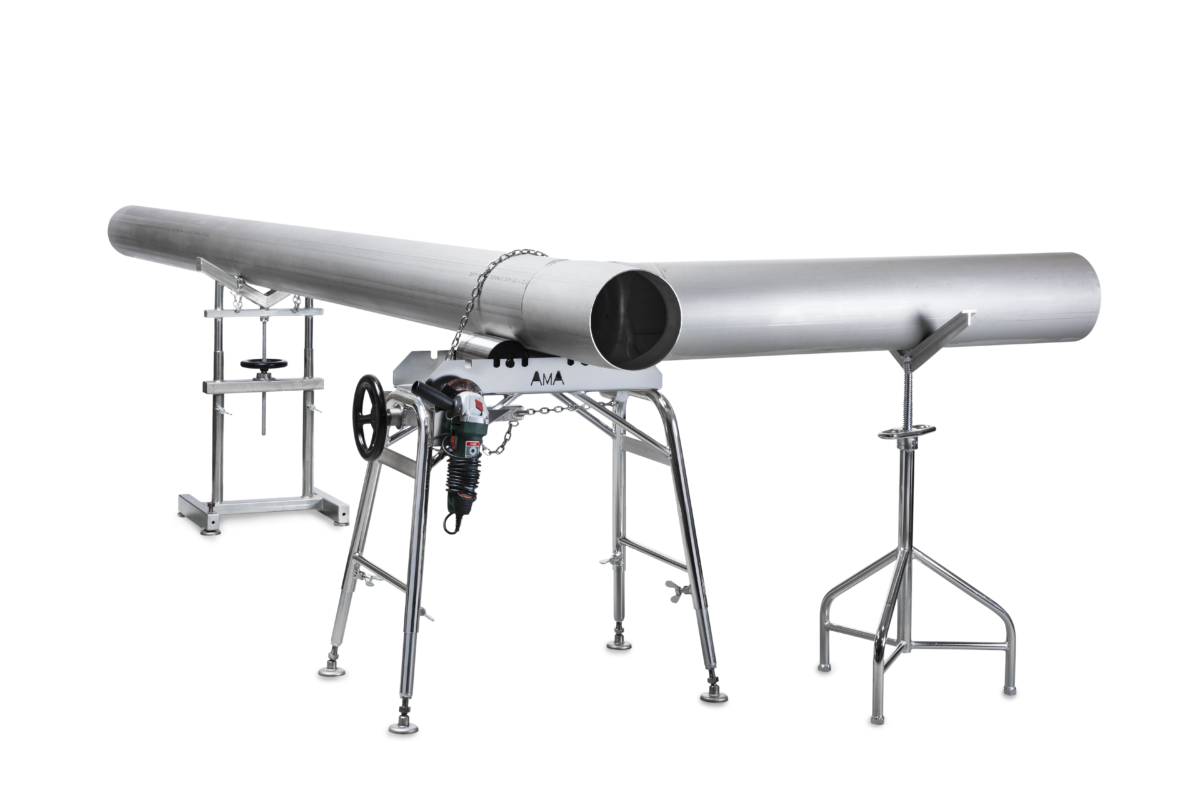
Pipe welding in process industries involves more than just skill at the torch. Before a single weld is laid, pipes need to be positioned, supported, and held steady in ways that protect both the welder and the quality of the joint. That preparation phase is where many of the most preventable incidents and rework situations occur. Understanding how pipe stands contribute to welding safety gives you a practical foundation for making better decisions on the shop floor or job site.
The real safety risks in pipe welding preparation
Unsupported or poorly supported pipes create a range of hazards that are easy to underestimate until something goes wrong. A pipe that shifts during tack welding can cause arc instability, inconsistent penetration, and joints that fail inspection. More immediately, a rolling or falling pipe puts welders and nearby workers at direct physical risk.
In process industry environments, pipes are often heavy, long, and sometimes pressurized during testing phases. Even a short section of stainless steel pipe can weigh significantly more than expected. Without proper pipe support stands in place, moving or repositioning that pipe requires additional manual handling, which increases the chance of strain injuries and dropped loads.
Where preparation errors lead to welding failures
Misalignment at the joint is one of the most common root causes of weld defects. When pipes are not held in a consistent position throughout the tacking and welding sequence, the gap and fit-up change as the pipe flexes or shifts under its own weight. This leads to:
- Uneven weld beads and incomplete fusion
- Joints that require grinding and re-welding
- Additional exposure to welding fumes and arc radiation during rework
- Increased time and cost per joint
Ergonomics also play a direct role in welding safety. Welders who constantly change body position to follow a stationary pipe accumulate fatigue faster, which reduces precision and increases the likelihood of contact injuries. Controlled pipe positioning removes much of that physical strain from the equation.
What makes pipe stands essential for controlled positioning
Pipe stands give you a stable, adjustable base that holds the pipe at a consistent working height and prevents lateral movement during welding. That stability is what allows the welder to focus on the weld pool rather than compensating for a shifting workpiece. For pipe welding safety, this is one of the most direct improvements you can make to the work setup.
A well-designed pipe stand set typically includes multiple stand types for different functions. A primary stand, like the AMA Stand A, handles the main load and supports a wide range of pipe diameters — from small-bore tubing up to large industrial pipe — with a maximum load capacity of 1,500 kg. Secondary stands support longer pipe runs and prevent sagging, which would otherwise distort the joint alignment as welding heat is applied.
Height adjustment and load capacity
Height adjustability matters more than it might seem. When a pipe stand can be set to the correct working height for the specific task, the welder maintains a natural posture throughout the job. That reduces fatigue over a full shift and keeps the weld torch at the optimal angle without awkward compensation. Stands with a height range of around 800 to 1,100 mm cover most workshop and site scenarios comfortably.
Rollers and rotation support
Stainless steel rollers and ball-roller designs allow the pipe to rotate smoothly while staying securely supported. This is particularly useful when welding circumferential seams, as the pipe can be turned to bring the weld position to the welder rather than requiring the welder to move around the pipe.
Combining a pipe stand with a motorized pipe rotator takes this further, keeping the weld in the flat position throughout the full circumference and producing more consistent results with less physical effort.
Key factors in selecting pipe stands for your working environment
Not all pipe stands suit every working environment. The right choice depends on several practical factors:
- The pipe diameters you work with most often
- The weight of the pipes involved
- Whether you work primarily in a prefabrication workshop or on-site
- How frequently you need to move the equipment between locations
Prefabrication workshop versus on-site use
In a prefabrication workshop, you have the advantage of a controlled environment and a permanent setup. Heavier, more feature-rich stands make sense here because they stay in place and get used repeatedly.
On a job site, portability becomes a priority. Stands that are compact, lightweight relative to their load capacity, and easy to set up without additional tools reduce setup time and the risk of improvised solutions that compromise safety.
Pipe diameter range and material considerations
Stainless steel and acid-resistant pipes used in process industry applications require stands with stainless steel contact surfaces to avoid contamination. Carbon steel or galvanized rollers can introduce contaminants that cause weld defects in stainless applications. Checking the roller material specification before selecting a stand is a straightforward step that prevents quality problems downstream.
Stability and load ratings
Always match the stand’s rated load capacity to the actual weight of the pipes you handle. Using multiple stands along the pipe length distributes the load and prevents deflection — which is both a safety measure and a quality measure. Never use a stand beyond its rated capacity, regardless of pipe size.
Want to see the full range of pipe stand options? Explore the AMA Pipe Stand Set and find the configuration that fits your working environment.
How professional-grade pipe handling tools raise the safety standard
The difference between basic pipe support and professional-grade pipe handling tools shows up in the details:
- The quality of the roller bearings
- The precision of the height adjustment mechanism
- The durability of the frame under repeated loading
- The compatibility between different components in the same system
These details determine whether the equipment performs reliably over years of use or creates new hazards through wear and instability.
Professional pipe handling tools are also designed with the full workflow in mind. A pipe stand that integrates with a pipe rotator, a centering collar system, and a purge gas setup creates a coherent work environment where each tool supports the others. That integration reduces the number of manual handling steps between operations, which is one of the most effective ways to reduce injury risk in industrial welding.
The role of pipe rotators in welding safety
Motorized pipe rotators mounted on pipe stands allow the welder to stay in one ergonomic position while the pipe moves. This eliminates the need to reposition around the pipe, reduces the time spent in awkward postures, and keeps the weld consistently in the flat or slightly inclined position.
For stainless steel and other demanding materials, this kind of controlled rotation produces weld seams that are more uniform and easier to inspect, reducing the need for repair work.
Certifications and build quality as safety indicators
CE marking and country-of-manufacture standards are practical indicators of build quality and safety compliance. Equipment manufactured to European standards and tested against defined load and performance criteria gives you a documented basis for use in regulated industrial environments. This matters when you are working on projects with formal quality management requirements or third-party inspections.
Getting the preparation phase right
Pipe welding safety in process industries depends on getting the preparation phase right. Stable, correctly rated pipe support stands reduce physical hazards, improve joint alignment, and give welders the ergonomic conditions they need to work accurately over a full shift.
Whether you are setting up a prefabrication workshop or supporting welding work on-site, selecting stands that match your pipe dimensions, material requirements, and working environment is a practical decision that affects both safety outcomes and weld quality.
At AMA Pipe Tools, we design and manufacture pipe handling tools for professional welding applications — from adjustable pipe stand sets to motorized rotators and centering systems, all made in Finland to strict quality standards. Find your nearest authorized AMA dealer to see the products in person or get local support.
You can also contact us directly if you have questions about which tools fit your specific application!