Why do welders use adjustable pipe stands?
Posted onAdjustable pipe stands boost weld quality and reduce rework — here's why professionals rely on them.
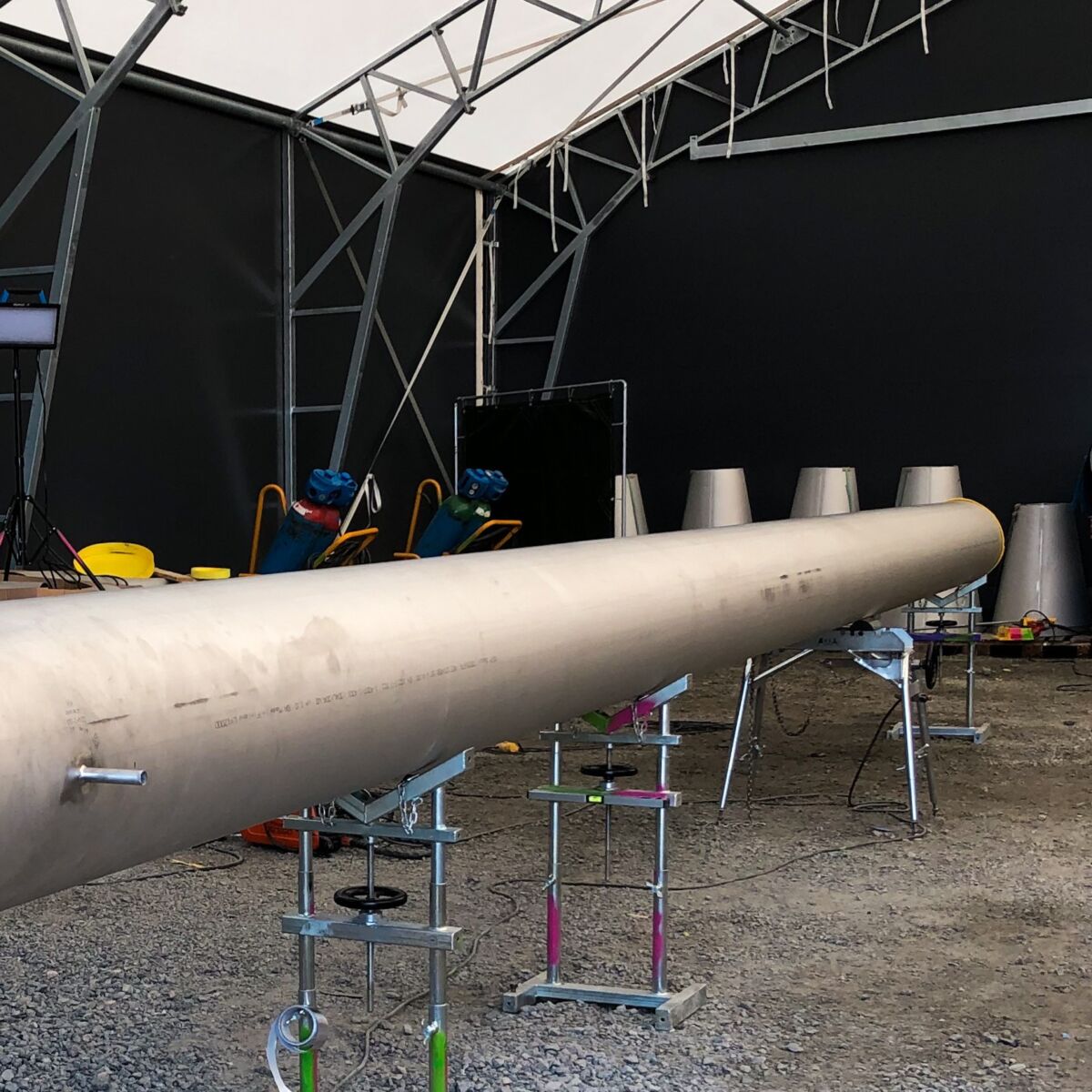
Pipe welding is a precision trade. Whether you work in process piping, industrial construction, or prefabrication, the quality of your weld depends heavily on what happens before the arc even starts. Getting a pipe into the right position, holding it steady, and keeping it at a comfortable working height are not minor details. They directly affect weld quality, working speed, and how much physical strain a welder absorbs over a full shift. Adjustable pipe stands sit at the center of all of this, and understanding why welders rely on them helps you make smarter decisions about your own pipe handling setup.
The real demands of pipe welding preparation
Pipe welding preparation covers everything from fitting and tack welding to alignment, purging, and final positioning before the root pass. Each of these steps places different demands on how a pipe is supported. A pipe that shifts even a few millimeters during tack welding creates misalignment that carries through to the finished weld. A pipe held at the wrong height forces the welder into awkward postures that slow them down and increase the risk of inconsistent technique.
In process industry environments, pipes are rarely identical. You work with different diameters, wall thicknesses, and materials, often within the same project. Stainless steel and acid-resistant piping require especially careful handling because surface contamination from improper contact or rough steel supports can compromise the material. This is why pipe welding preparation demands support equipment that adapts to the pipe rather than the other way around.
The challenge of variable pipe dimensions
A single piping project might involve pipe diameters ranging from small instrument lines to large process headers. Fixed-height supports simply cannot handle this range effectively. When a welder has to improvise with wooden blocks, makeshift shims, or poorly matched stands, the result is unstable support and wasted time. The preparation phase becomes a problem to manage rather than a foundation to build on.
Working at the right height matters more than most people think
Ergonomics in welding is a practical issue, not just a comfort consideration. A welder who works at the wrong height produces less consistent welds, tires faster, and makes more corrections. Proper working height keeps the weld pool visible, the torch angle consistent, and the welder in control. Welding pipe support that adjusts to the right height for each job is one of the simplest ways to protect weld quality across a full working day.
What adjustability actually solves in pipe handling
Adjustable pipe stands solve a specific set of problems that fixed supports cannot address. Height adjustment lets you match the support to the pipe diameter and the welder’s working position simultaneously. This sounds straightforward, but in practice it eliminates a significant amount of repositioning, re-shimming, and physical compensation that adds up over a project. Adjustable pipe stands let you set the pipe once and work from a stable, ergonomic position from the start.
The second thing adjustability solves is compatibility across pipe sizes. A stand that handles a wide range of pipe diameters covers the vast majority of process piping work without requiring you to switch equipment or adapt your setup. This matters both in prefabrication workshops, where efficiency depends on fast changeovers, and on job sites, where carrying multiple specialized stands is impractical.
Stability under load
Adjustability is only useful when it comes with genuine structural stability. A stand that flexes or shifts under the weight of a pipe creates exactly the kind of instability that preparation work is trying to eliminate. Well-designed pipe handling tools combine a wide adjustment range with a rigid, load-rated frame. Professional-grade stands used in process piping are typically rated to handle loads well above 500 kg, with heavy-duty versions handling up to 1,500 kg.
Rotation and positioning combined
Many pipe welding setups benefit from combining height-adjustable stands with a pipe rotation function. When a pipe rotates at a controlled speed, the welder stays in one position while the seam moves through the weld zone. This produces more consistent welds, reduces physical strain, and makes it practical to use MIG/MAG methods on pipe that would otherwise require constant repositioning. Stands designed to accept a pipe rotator as an accessory give you this capability without needing a separate, purpose-built machine.
Explore the AMA Pipe Stand Set to see how adjustable stands and compatible accessories work together in a professional pipe welding setup.
Key factors in choosing the right pipe stand
Choosing a pipe welding stand comes down to matching the tool to your actual working conditions. The right stand for a prefabrication workshop handling stainless steel process piping is not necessarily the same as the right stand for a field installation crew. Thinking through a few key factors before you buy saves you from equipment that works in theory but creates friction in practice.
Diameter range and roller type
Check that the stand covers the full range of pipe diameters you regularly work with. AMA pipe stands are designed to support pipes across a broad size range, from small-diameter tubing to larger process piping. Consider the following when selecting roller type:
- Stainless steel rollers suit most applications and are easy to keep clean, which matters when you work with acid-resistant or food-grade piping where contamination is a concern.
- Ball-roller designs allow the pipe to move freely in multiple directions, which is useful for positioning and rotation.
- V-roller designs provide more stable cradle support for heavier pipes.
Height adjustment range and load rating
A useful height adjustment range for most process piping work falls between approximately 800 mm and 1,100 mm from the floor to the pipe centerline. This covers the majority of standing work positions for welders of different heights.
Load rating should comfortably exceed the heaviest pipe assembly you expect to handle. Remember that you are often supporting not just the pipe itself but a partially assembled spool with fittings attached.
Portability and site conditions
On construction sites and industrial job sites, stands need to move easily between positions. A stand that is too heavy to reposition without lifting equipment becomes an obstacle rather than a tool. Key features to look for include:
- Galvanized frames that hold up well in outdoor and industrial environments
- Integrated wheels or a design that allows tipping and rolling for one-person repositioning
- A weight and footprint that suits the working conditions on your site
Compatibility with accessories
A pipe stand that accepts accessories like pipe rotators, purge gas turntables, or counterweight systems gives you a platform that grows with your needs. This is especially relevant for workshops that handle a wide variety of work. Buying stands that are compatible with a broader system of pipe alignment tools and handling equipment means you invest in a setup rather than a collection of unrelated tools.
How pipe stands integrate into a professional welding workflow
In a well-organized pipe welding workflow, stands do more than hold pipes off the floor. They define the working positions for each phase of preparation:
- During fit-up, stands position two pipe sections at the same height so that alignment collars can be applied accurately.
- During tack welding, they hold the assembly stable while the welder moves around it.
- During final welding, they either hold the pipe fixed or, when combined with a rotator, keep it turning at the right speed for the weld method being used.
The efficiency gains from a properly organized stand setup are cumulative. Each phase of preparation goes faster when the pipe is already at the right height and does not need to be repositioned. Tack welds go in cleanly because the pipe is stable. Alignment is easier because the stands hold both sections at the same level. By the time the welder starts the root pass, the pipe is in exactly the right position and the setup has done its job.
Workflow in prefabrication versus on-site
In a prefabrication workshop, you can invest in a more complete stand setup because the equipment stays in one place. Multiple stands positioned along a work bay let you handle long pipe spools, support heavy assemblies, and rotate pipes for welding without moving equipment between jobs.
On a job site, the priority shifts toward portability and fast setup. Fewer stands, a wider adjustment range, and quick-release accessories keep the workflow moving even when conditions change between positions.
Reducing rework through better preparation
One of the most direct arguments for investing in quality pipe welding stands is the reduction in rework. Misalignment caught during preparation costs minutes to fix. Misalignment discovered after welding costs hours. Stands that hold pipes accurately and stably during fit-up reduce the number of times a welder has to stop, adjust, and restart. Over a full project, this adds up to a measurable difference in throughput and finished quality.
We design our AMA pipe stands specifically for professional pipe welding in process industry environments. The stand set includes three stand types covering different use cases, all built with galvanized frames, stainless steel contact surfaces, and load ratings suited for serious industrial work. If you want to talk through which setup fits your specific situation, get in touch with us directly and we will help you find the right solution.
Adjustable pipe stands are one of those tools that quietly define how well everything else in a pipe welding workflow performs. When the support is right, preparation is faster, alignment is more accurate, and the welder can focus on the weld itself rather than fighting the setup. We build pipe handling tools for exactly this kind of professional environment, from compact stand sets for workshop use to heavy-duty rotator systems for demanding process piping applications.
If you are ready to put the right equipment in place, find your nearest authorized dealer and see what we have available in your region.