How do pipe stands reduce downtime during welding projects?
Posted onPipe stands eliminate costly welding delays — discover how the right support setup saves time, crew, and rework.
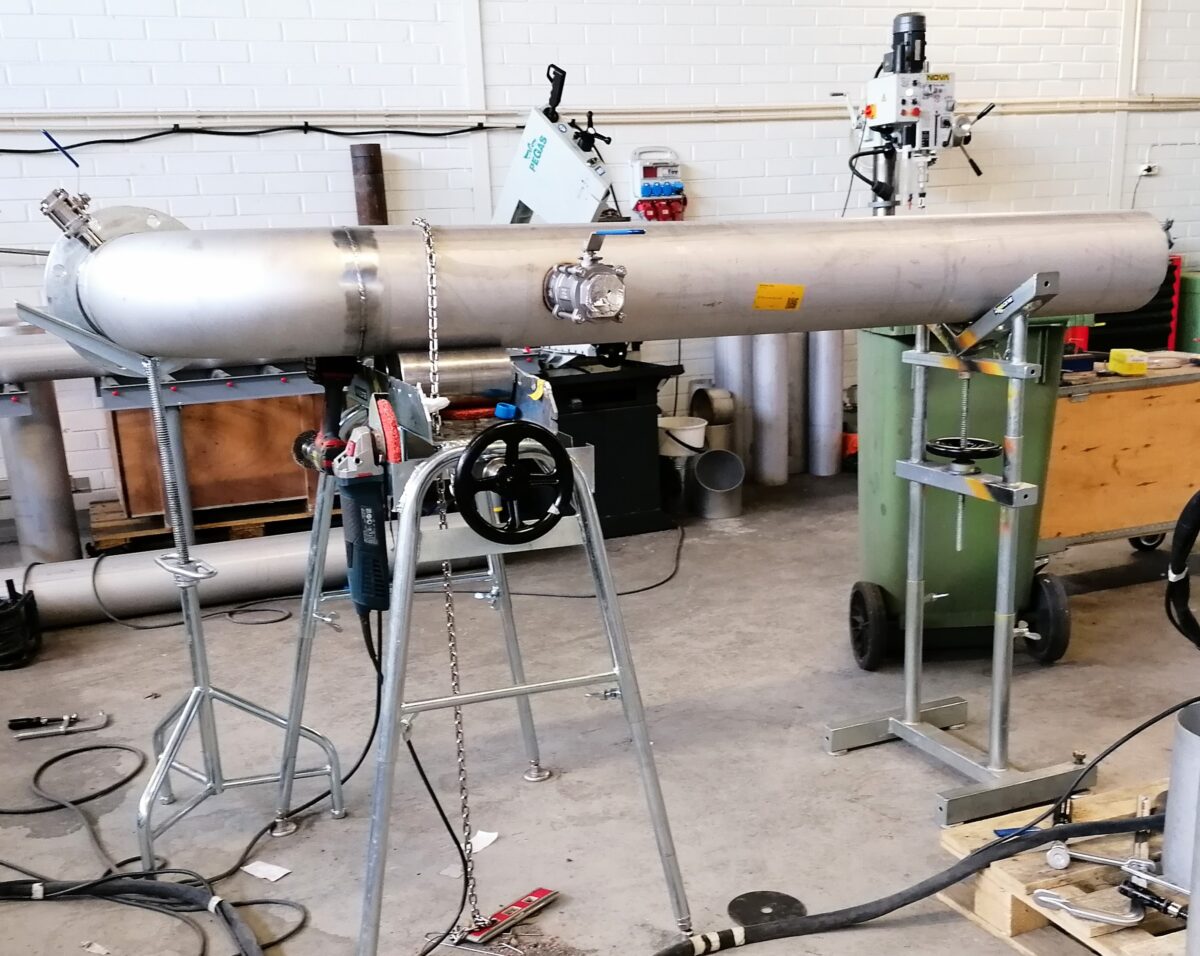
Pipe stands reduce welding project downtime by keeping pipes securely positioned and at the correct working height, so welders spend less time repositioning, adjusting, and waiting. Instead of stopping work to rebalance or realign a pipe, the welder can focus entirely on the weld itself. The sections below cover the specific ways pipe stands save time, what types are available, and how to choose the right one for your work.
What tasks during welding projects cause the most downtime?
The biggest sources of downtime in pipe welding projects are repositioning pipes between passes, waiting for alignment to be corrected, and managing pipes without enough support. When a pipe shifts mid-weld or needs to be manually held in place, work stops completely. These interruptions add up quickly across a full project.
In practice, the time lost rarely comes from the welding itself. It comes from everything around it:
- Manually rolling or rotating pipes to reach the next weld position
- Realigning pipes that have moved during tacking or root passes
- Waiting for a second person to hold or stabilize a pipe
- Adjusting working height to avoid awkward welding positions
- Stopping to clean up weld spatter caused by inconsistent pipe movement
For project managers and supervisors, these interruptions are often invisible in planning but highly visible on the final timeline. Addressing them with the right pipe handling equipment is one of the most direct ways to improve welding productivity without changing the welding process itself.
How do pipe stands keep pipes stable during welding?
Pipe stands keep pipes stable by supporting them at a fixed, adjustable height using rollers or ball casters that hold the pipe in place while still allowing controlled movement. The pipe rests securely in the stand without being clamped rigidly, which means it stays put during welding but can be rotated smoothly when needed.
Good pipe stands use stainless steel rollers or ball rollers that distribute the pipe’s weight evenly and prevent unwanted lateral movement. A pipe chain or fastener keeps the pipe from rolling off the stand unexpectedly. The height adjustment allows the welder to position the pipe at a comfortable working level, which reduces fatigue and improves weld quality.
When multiple stands support a single pipe, the combined stability is significantly better than any single point of support. This matters especially for longer pipes where unsupported sections can flex, shift, or sag during welding, creating alignment problems that are difficult to correct after tacking.
What types of pipe stands are used in professional welding?
Professional pipe welding uses several types of pipe stands depending on pipe size, weight, and the type of work being done. The main categories are fixed roller stands, pipe rotators, heavy-duty rotator sets, and specialised stands for environments like pipe bridges.
Roller stands and adjustable pipe stands
Standard roller stands, like the AMA Stand A and Stand B, support pipes during both prefabrication and on-site installation. They handle a wide range of pipe diameters and adjust in height so the welder always works at an ergonomic level. Stand A is the heavier-duty option with a maximum load of 1,500 kg, while Stand B is lighter and more portable at 14 kg.
Pipe rotators
Pipe rotators are motorised stands that rotate the pipe at a controlled speed so the welder stays in one position while the pipe turns. This is useful for circumferential welds where the welder would otherwise need to constantly reposition. The AMA Roller® pipe rotator, for example, handles pipe diameters from 30 to 508 mm and supports MIG, MAG, TIG, and covered electrode welding.
Heavy-duty rotator sets
For larger and heavier pipes, heavy-duty rotator sets combine a motorised rotator with a manual roller table and a support stand. The AMA HD Rotator Set handles pipes up to 1,000 mm in diameter with a maximum load of 1,500 kg, making it suitable for industrial pipeline work where standard stands are not enough.
Pipe bridge stands
Pipe bridge stands attach to the beams of a pipe bridge and lift the pipe above its brackets using stainless steel ball rollers. This allows the pipe to be pushed, rotated, and positioned inside the pipe bridge without lifting equipment. They are a practical solution for installation work in confined or elevated structures.
How do pipe stands reduce the need for additional crew?
Pipe stands reduce the need for additional crew by taking over the support and stabilisation tasks that would otherwise require a second or third worker. When a pipe is properly supported on stands, one welder can position, rotate, and weld without needing someone else to hold, balance, or guide the pipe.
This has a direct impact on labour costs and project scheduling. In smaller workshops and on-site jobs, it is common for welders to wait for a colleague to assist with pipe handling before they can start welding. Pipe stands remove that dependency.
Motorised pipe rotators go further. Because the pipe rotates at a controlled speed, the welder does not need to stop, move around the pipe, or ask for help to reach the next weld position. The AMA Roller® Premium, for example, includes Bluetooth wireless control so the welder can adjust rotation speed from up to 25 metres away, eliminating the need for a second person to operate the controls. This is especially useful on larger job sites where wires and extra personnel create logistical problems.
For project managers, needing fewer crew members per weld station means more stations can run simultaneously with the same team, or the same number of stations can run at a lower cost.
Explore the full AMA pipe stand range and rotator options:
View the AMA Pipe Stand Set
When should pipe stands be used versus other pipe support methods?
Pipe stands are the right choice when you need adjustable, repositionable support during active welding or pipe assembly. They are more practical than fixed supports or trestles when pipe height, diameter, or position changes between tasks, and they outperform improvised supports in terms of stability, safety, and weld quality.
Use pipe stands when:
- You are welding multiple pipes of different diameters in the same session
- The work involves both prefabrication in a workshop and on-site installation
- You need to rotate the pipe during welding rather than repositioning the welder
- The pipe is too long or heavy to hold by hand or with basic trestles
- Weld quality requirements are high and consistent pipe position is important
Fixed structural supports or pipe brackets are appropriate for permanent installation after welding is complete, not during the welding process itself. Improvised supports like wooden blocks or sawhorses can work for very light, short pipes, but they do not offer height adjustment, rotation, or load capacity, and they introduce alignment risk.
For pipe bridge work specifically, standard floor stands are not usable inside the structure. Pipe bridge stands designed to clamp onto beam flanges solve this problem directly without requiring the pipe to be removed from the bridge for welding.
What features should professionals look for in a pipe stand?
The most important features in a professional pipe stand are height adjustability, roller type, load capacity, and compatibility with add-on equipment like pipe rotators. The right combination depends on the pipe sizes you work with, the environment you work in, and how often the stand needs to be moved.
- Height adjustment range: A good stand should cover the working heights relevant to your team. Stands that adjust while a pipe is loaded save time during setup and between tasks.
- Roller type: Stainless steel rollers are durable and suitable for most pipe materials. Ball rollers allow free rotation in any direction, which is useful for positioning. Rubber wheels reduce marking on sensitive pipe surfaces and help when the pipe surface is uneven or the longitudinal seam is raised.
- Load capacity: Match the stand’s rated load to the heaviest pipes you handle. Overloading a stand affects stability and shortens its service life.
- Pipe diameter range: Check that the stand supports the full range of pipe sizes in your work, from small-diameter process pipes to larger structural pipes.
- Portability: For on-site use, weight matters. Lighter stands are easier to move between work areas without equipment. Some heavy-duty stands include wheels for easier repositioning.
- Compatibility with rotators and accessories: If you plan to use a pipe rotator, check that the stand is designed to accept it. The AMA Stand A, for example, is built to mount the AMA Roller® pipe rotator directly, and the two are sold together as an integrated system.
- Material and finish: Galvanised frames resist corrosion on outdoor sites. Stainless steel components are important when working with acid-resistant or stainless steel pipes where contamination from other metals is a concern.
For teams that weld stainless or acid-resistant thin-wall pipes, the combination of material-appropriate rollers and precise height adjustment is especially important. A stand that marks or contaminates the pipe surface creates extra work and can compromise the weld.
Pipe stands pay for themselves in time saved
Proper pipe handling equipment is one of the most straightforward ways to reduce downtime, improve weld quality, and make your team’s work easier on every project. From basic adjustable stands to motorised rotators for heavy industrial pipes, the right setup means less waiting, less repositioning, and fewer people needed per weld station.
At Welner, we design and manufacture the AMA range of pipe welding tools for professional use across a wide range of pipe sizes and applications. Our products are used in workshops and on job sites across Northern and Western Europe, and they are built to the quality standards that process industry welding demands.
If you want to see what AMA pipe tools are available in your region, find your nearest authorised dealer and get advice from someone who knows the local market. Or if you have a specific project or product question, contact us directly and we will help you find the right solution.