How do you reduce fit-up time in pipe fabrication?
Posted onSlow pipe fit-up? Discover the tools and techniques that eliminate alignment delays and boost fabrication throughput.
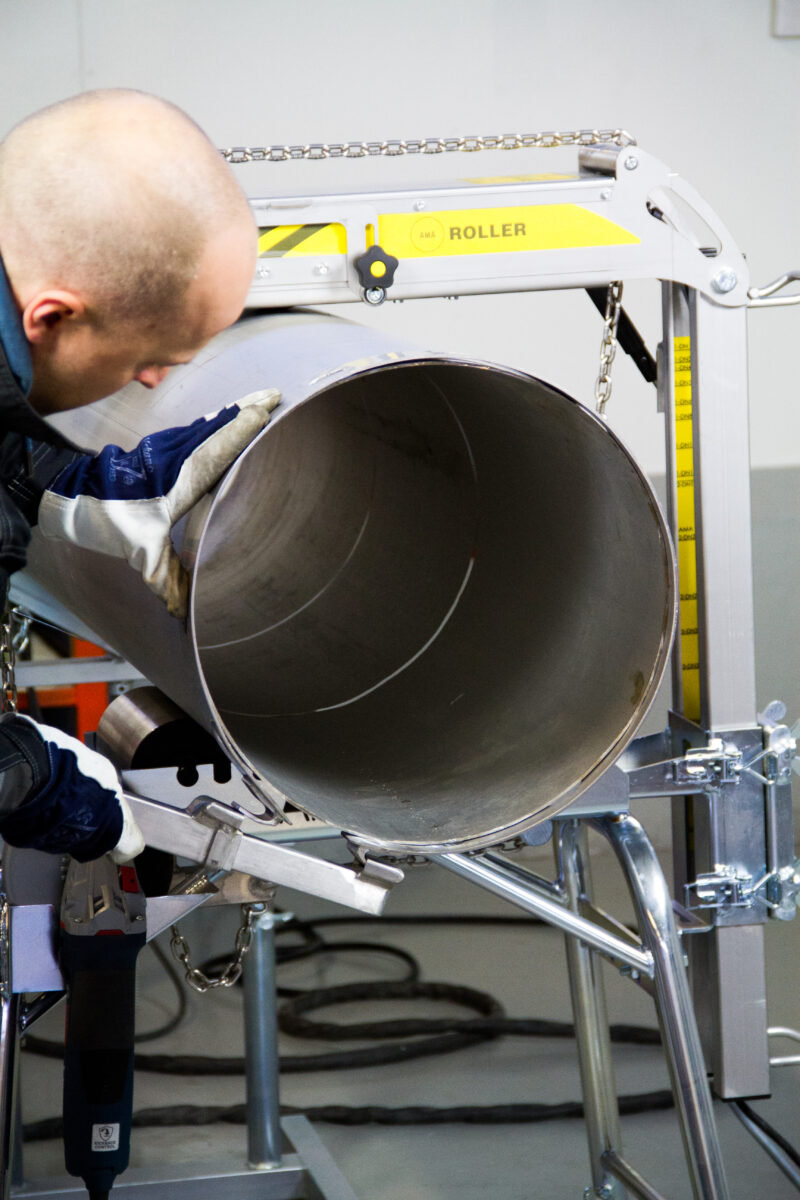
You reduce fit-up time in pipe fabrication by eliminating the steps that slow down alignment: poor pipe-end preparation, inconsistent root gaps, and manual adjustments that should be handled by the right tools. The biggest gains come from using purpose-built alignment and clamping tools that hold pipes accurately in position before and during tack welding. This article walks through the most common questions welders, supervisors, and project managers ask about fit-up efficiency.
What causes delays during pipe fit-up?
Most fit-up delays come down to three things: poor pipe-end condition, misaligned pipe supports, and the absence of proper alignment tools. When pipe ends are not square, clean, or correctly beveled, welders spend time compensating manually instead of moving forward with tack welding. Each manual correction adds time and introduces the risk of inconsistent joints.
In pipe spool assembly work, delays compound quickly. A single misaligned joint early in a spool run can throw off every subsequent connection. Common causes include:
- Pipe ends that are out of round or have uneven bevels
- Pipe stands set at inconsistent heights, causing high-low misalignment
- Root gaps that close or open as the pipe shifts during tacking
- Relying on manual wedges or improvised spacers instead of dedicated fit-up tools
- Poor communication between the welder and the fitter about acceptable tolerances
In prefabrication workshops, these delays are especially costly because the environment is controlled and throughput targets are higher. On site, the same issues are harder to fix because access and space are limited. Identifying the root cause of your specific delays is the first step toward fixing them.
What tools are used to speed up pipe alignment?
The tools most commonly used to speed up pipe alignment are centering collars, pipe clamps, pipe stands, and pipe rotators. Each tool addresses a specific part of the fit-up process. Used together, they reduce manual handling, improve joint accuracy, and let welders focus on welding rather than adjusting.
Centering collars
AMA Centering Collars are stainless steel alignment tools that wrap around the outside of two pipe ends to hold them concentric before tack welding. They are available in sizes from DN65 to DN1500, covering a wide range of pipe diameters. A collar tightener with thrust bearings applies even clamping force, which keeps the collar tight and the alignment accurate. This removes the need for manual checking and repositioning between tacks.
Pipe stands and pipe rotators
Adjustable pipe stands hold pipes at the correct working height, which directly affects how well two pipe ends meet. When stands are set inconsistently, high-low misalignment is almost unavoidable. Pipe rotators like the AMA Roller Premium with wireless control let the welder rotate the pipe continuously without changing position, which speeds up tack welding and produces more consistent seams around the full circumference.
How does pipe-end preparation affect fit-up time?
Pipe-end preparation has a direct effect on fit-up time. A pipe end that is square, correctly beveled, and free of burrs or oxidation will align faster and hold its position more reliably than one that has not been properly prepared. Poor preparation forces the fitter to compensate during fit-up, which adds time and reduces joint quality.
The key preparation steps that affect fit-up speed are:
- Squareness: A pipe end that is not cut square creates an uneven gap around the joint, making consistent root gap control difficult.
- Bevel accuracy: An inconsistent bevel angle changes the effective root gap and fusion area, which the welder then has to compensate for.
- Surface cleanliness: Oxidation, mill scale, and coatings near the weld zone slow down tacking and can cause defects.
- Out-of-roundness: Pipes that are not perfectly round are harder to align and clamp, especially with external alignment tools.
Investing time in correct pipe-end preparation pays back quickly. A well-prepared pipe end fits up faster, holds alignment better, and produces a cleaner weld with less rework.
What’s the difference between internal and external pipe clamps?
Internal pipe clamps expand from inside the pipe bore to hold two pipe ends in alignment, while external pipe clamps or centering collars wrap around the outside of the pipe. The right choice depends on pipe diameter, wall thickness, access conditions, and the level of alignment accuracy required.
Internal clamps are well suited to larger diameter pipes where there is enough bore space to insert and operate the tool. They apply force from inside, which can be useful when the outside of the pipe is difficult to access or when you need to hold the root gap open precisely. However, they are generally more complex to set up and remove, and they may not be practical for smaller pipe sizes or thin-walled pipes.
External alignment tools such as centering collars are faster to apply and remove, work across a wide range of pipe diameters, and do not require access to the pipe bore. They are a practical choice for both prefabrication workshops and on-site work. For pipes from DN65 upward, external centering collars offer a reliable and repeatable alignment method that fits into a fast-moving workflow.
When should you use fit-up tools versus manual tacking?
You should use fit-up tools whenever alignment accuracy, joint consistency, or throughput matters. Manual tacking without dedicated tools is only practical for occasional, low-volume work where tolerances are wide and rework is acceptable. In any professional pipe welding context, fit-up tools consistently outperform manual methods on speed, accuracy, and repeatability.
Manual tacking relies on the welder’s skill and experience to hold pipes in position while applying tacks. This works in simple situations, but it introduces variation between joints and between welders. It also puts physical strain on the welder, particularly with heavier pipes.
Fit-up tools become clearly worth using when:
- You are working to tight dimensional tolerances, such as in process piping or stainless steel systems
- You are assembling pipe spools where errors accumulate across multiple joints
- You want consistent results regardless of which welder is doing the work
- You are working with pipes that are heavy, awkward, or difficult to hold manually
- You need to reduce rework and non-conformances on quality-critical welds
For project managers and supervisors, the argument for fit-up tools is straightforward: they reduce the time each joint takes, reduce variation, and reduce the chance of costly rework.
How do you maintain consistent root gaps across multiple joints?
You maintain consistent root gaps by using the same setup method and the same tools on every joint. Root gap consistency depends on three things: how the pipe ends are prepared, how the pipes are supported during fit-up, and how the gap is set and held before and during tack welding.
The most reliable approach combines accurate pipe-end preparation with external alignment tools that hold the pipes concentric while you set the gap. Centering collars keep the pipe ends aligned radially, which prevents high-low and angular misalignment from affecting the gap. You then set the root gap using a consistent spacer or root gap gauge before applying tacks.
Practical steps that help maintain root gap consistency across a spool or a production run:
- Use the same pipe-end preparation method and tooling throughout the job
- Check and adjust pipe stand heights before each fit-up, not just at the start of the day
- Apply centering collars before setting the root gap, not after
- Use a root gap gauge or dedicated spacer rather than estimating by eye
- Apply tacks at evenly spaced positions around the circumference to prevent the gap from closing unevenly as the pipe cools
- Check the root gap at multiple positions around the joint before completing tacking
In prefabrication settings where multiple welders work on the same spool, documenting the setup procedure and using the same tools across the team is the most effective way to keep root gaps consistent from joint to joint.
Reducing fit-up time in pipe welding is not about working faster. It is about removing the steps that slow you down: poor preparation, inconsistent supports, and manual adjustments that proper tools handle automatically. At Welner, we develop and manufacture pipe handling tools designed specifically for professional pipe welding environments, from centering collars and pipe stands to pipe rotators for prefabrication and on-site use. Our products cover pipe diameters from small-bore to large industrial sizes, and we sell through authorized distributors across the Nordic countries and wider Europe. Find your nearest supplier on our authorized dealers page, or contact us directly if you have questions about which tools fit your application.