Why is accurate pipe alignment important before welding?
Posted onMisaligned pipes by even a few millimetres can compromise weld integrity, structural strength, and system safety — here's what to do about it.
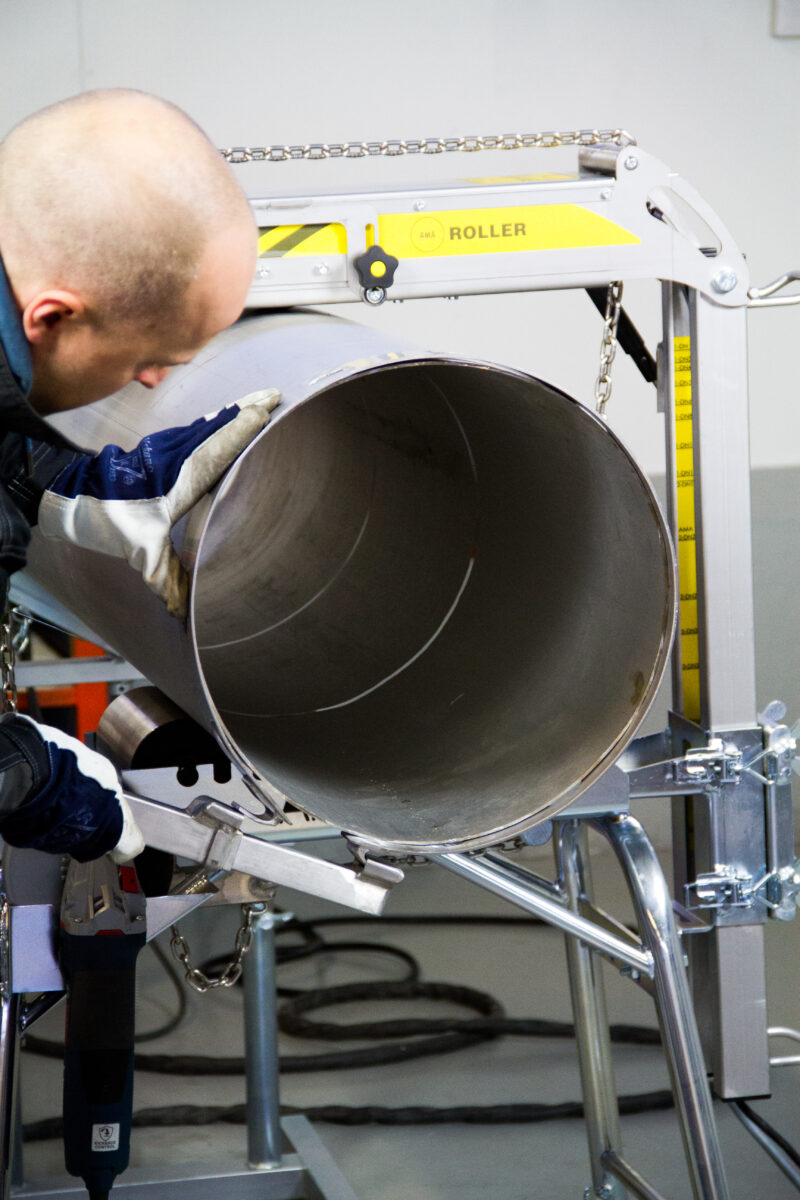
Accurate pipe alignment before welding directly affects the quality, strength, and safety of the finished joint. When pipes are properly aligned, the weld fuses evenly across the full cross-section, the root gap stays consistent, and the finished assembly meets the dimensional tolerances required by the project specification. Poor alignment, even by a few millimetres, can compromise everything from weld integrity to long-term system performance. The sections below walk through the most common questions welders, supervisors, and project managers ask about pipe alignment before welding.
What happens to a weld when pipes are misaligned?
When pipes are misaligned before welding, the weld bead cannot fuse the joint evenly. The welder is forced to compensate by adding extra filler material on one side, which creates an uneven weld profile, inconsistent penetration, and a joint that behaves differently under load than the design intended. Even a small offset changes the geometry of the root gap and affects how heat is distributed during the weld pass.
In practice, pipe misalignment welding problems show up in several ways:
- Uneven root penetration — one side of the joint gets full fusion while the other side is under-penetrated or left with a cold lap
- Excess weld reinforcement — the welder adds extra passes to fill the gap, increasing heat input and distortion
- Angular distortion — the finished pipe spool assembly pulls out of line as it cools
- Failed inspection — radiographic or ultrasonic testing reveals internal defects that require costly repairs or full cut-outs
The higher the pipe wall thickness and the stricter the welding code, the less tolerance there is for misalignment going into the first tack weld. Getting the fit-up right before you strike an arc is far cheaper than repairing a rejected weld after the fact.
How does pipe misalignment affect structural integrity?
Pipe misalignment reduces the structural integrity of a welded joint by creating stress concentrations at the offset. When a pipe carries pressure, flow, or mechanical load, that stress concentrates at the thinnest or most irregular part of the weld. A joint with a significant high-low condition behaves like a notch under cyclic loading, which is exactly the type of condition that leads to fatigue cracking over time.
In process piping, the consequences are particularly serious. Systems carrying high-pressure fluids, steam, or corrosive media rely on the full cross-sectional strength of every weld. A misaligned joint that passes a basic visual inspection may still have hidden lack-of-fusion defects that only appear under pressure or after years of thermal cycling.
The high-low condition — where the inside surfaces of two pipes are not flush — is one of the most common alignment defects in pipe fabrication. Even a 1 to 2 mm internal offset creates a flow disturbance and a stress riser at the same location. In stainless steel and duplex alloy piping, where corrosion resistance depends on a smooth, undisturbed internal surface, this matters even more.
What are the safety risks of poor pipe alignment in welding?
Poor pipe alignment before welding creates safety risks that extend well beyond the weld itself. A structurally weak joint in a pressurised system can fail suddenly, releasing fluid, steam, or gas at high energy. In industrial environments, this type of failure is a serious hazard for personnel and equipment. Misaligned joints also increase the likelihood of leaks, which in process plants carrying flammable or toxic media can have severe consequences.
From a practical safety standpoint, poor pipe fit-up welding also creates risks during the welding process itself:
- Inconsistent root gaps force the welder into awkward positions, increasing the chance of burn-through or arc flash exposure
- Excessive heat input from compensating for misalignment can warp adjacent fittings, valves, or supports
- Rejected welds require grinding and re-welding, which adds cutting, grinding, and re-inspection hazards
In industries such as oil and gas, pharmaceuticals, and food processing, welded pipe systems are subject to strict pressure testing and regulatory inspection. A weld that fails because of misalignment does not just create a repair cost — it can delay a project, trigger a safety review, or result in a non-conformance record that affects the contractor’s standing with the client.
How do pipe alignment clamps and fit-up tools work?
Pipe alignment clamps and fit-up tools hold two pipe ends in the correct position relative to each other so the welder can tack weld the joint before removing the tooling. They work by applying controlled, even clamping force around the outside of the pipe, pulling both ends into a concentric, flush position and maintaining the specified root gap while tack welds are placed.
External alignment tools, such as centering collars, are the most common type used in pipe spool assembly and prefabrication work. A centering collar wraps around the outside of both pipe ends at the joint and is tightened with a collar tightener equipped with thrust bearings. The thrust bearings allow the tightener to apply high clamping force smoothly and without damaging the pipe surface.
The AMA Centering Collars are a good example of how this works in practice. The stainless steel collar fits around the joint, and the collar tightener draws it tight so both pipe ends align concentrically. This removes the high-low condition and holds the root gap at the correct dimension while tack welds are placed. Once the tacks are secure, the collar is removed and welding continues.
Read more about AMA Centering Collars and find the right size for your pipe work:AMA Centering Collar Set
For pipe sizes from DN65 up to DN1500, the collar system scales accordingly. Smaller sizes use a Mini Tightener, while larger collars from DN600 upward use a Large Tightener with an extended span for greater torsional force. This makes the system practical across the full range of pipe diameters you encounter in process piping, not just large-bore applications.
What standards define acceptable pipe alignment tolerances?
Acceptable pipe alignment tolerances before welding are defined by the applicable welding code or piping standard for the project. The most widely referenced standards in industrial pipe welding are ASME B31.3 (Process Piping), EN 13480 (European Metallic Industrial Piping), and AWS D10.12 for structural and general pipe welding. Each standard specifies the maximum permitted high-low offset at a butt weld joint, typically expressed as a fraction of the wall thickness or an absolute dimension in millimetres.
In general terms, most process piping standards limit the internal misalignment at a butt joint to no more than 1.5 mm, or a defined percentage of the nominal wall thickness, whichever is smaller. For thin-wall stainless steel or high-alloy piping, the tolerance is often tighter because internal surface irregularities affect both corrosion resistance and flow characteristics.
It is important to check the specific standard and the project’s welding procedure specification (WPS) before starting fit-up. The WPS will define the root gap, the permitted high-low, and any preheat or interpass temperature requirements that affect how you approach alignment. If you are working to a client specification, that document may impose tighter tolerances than the base standard.
When should pipe alignment be checked during installation?
Pipe alignment should be checked at three points during installation: before fit-up, after fit-up and tack welding, and after the completed weld has cooled. Checking alignment only once is not enough because tack welding and thermal contraction during cooling can both shift the joint position slightly, particularly on longer pipe spool assemblies.
Before fit-up
Check that pipe ends are cut square and that any bevel preparation is consistent around the full circumference. Pipes that are not cut perpendicular to the centreline will not align correctly regardless of how well the fit-up tool is applied. Also verify that the pipe ends are clean and free from distortion caused by previous handling or cutting.
After tack welding
Once the centering collar or alignment clamp is in place and tack welds are placed, check the joint again before removing the tooling. Measure the root gap at multiple points around the circumference and confirm the high-low is within the tolerance specified by the applicable standard. If the tack welds have pulled one side out of position, correct it before proceeding.
After welding and cooling
On prefabricated pipe spools, check the overall assembly dimensions after the weld has cooled fully. Thermal contraction during cooling can introduce angular deviation across the spool, which compounds over multiple joints. Catching this early, before the spool is transported to site, avoids costly rework during installation.
In workshop prefabrication, pipe stands and rotators that hold the pipe at a consistent height and allow controlled rotation also help maintain alignment through the welding process. Consistent support reduces the chance of the pipe sagging or shifting between tack welding and the completion of the root pass.
Getting pipe alignment right, every time
Accurate pipe alignment before welding is not just a quality checkpoint — it directly determines whether the finished joint is safe, inspectable, and fit for service. From controlling the root gap and eliminating high-low to meeting the tolerances set by ASME, EN, or your project WPS, every step of the fit-up process matters.
At Welner, we design and manufacture professional pipe handling tools, including the AMA Centering Collars, pipe stands, and pipe rotators, specifically to help welders and prefabrication teams get alignment right before the first arc is struck. Our tools are used across the Nordic countries and Europe in process industry pipe welding, from small-bore stainless work to large-diameter spool assemblies.
If you want to see our products through a local supplier, find your nearest distributor on our authorized dealers page. Or if you have a question about which tool fits your application, contact us directly and we will help you find the right solution.