What should you look for in a pipe alignment tool?
Posted onChoosing a pipe alignment tool? Learn what accuracy, clamping, and build quality really mean for weld results.
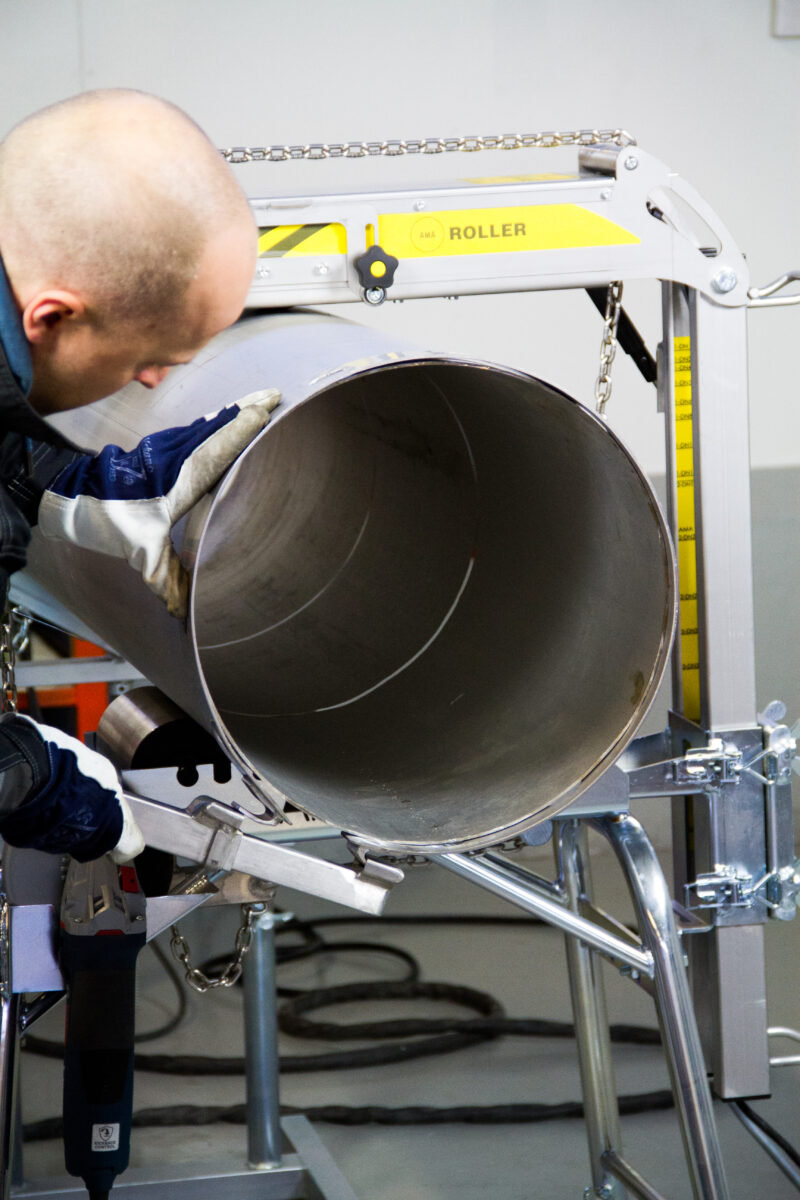
When choosing a pipe alignment tool, look for accurate centering geometry, a secure clamping mechanism, compatibility with your pipe sizes and materials, and build quality that holds up in real working conditions. The right tool reduces misalignment before welding, which directly affects weld quality, rework rates, and overall productivity. Below, we answer the questions that matter most when evaluating your options.
What features make a pipe alignment tool accurate?
A pipe alignment tool is accurate when it holds pipes in true concentricity and maintains a consistent root gap across the full circumference of the joint. Accuracy comes from the tool’s geometry, the quality of its contact surfaces, and how evenly it distributes clamping force. Without these, even small deviations in fit-up lead to high-low conditions, uneven root gaps, and welds that require correction.
The most important accuracy-related features to look for include:
- Rigid, dimensionally stable construction so the tool does not flex under load
- Precision-machined contact surfaces that make even contact around the pipe circumference
- Consistent collar geometry that centers both pipes on the same axis
- A reliable tightening mechanism with thrust bearings to apply even force without twisting or distorting the collar
For external alignment tools such as centering collars, the collar tightener plays a significant role in accuracy. A tightener fitted with thrust bearings applies torque cleanly, which means the collar seats evenly rather than pulling to one side. This is the difference between a collar that genuinely centers the joint and one that only appears to.
Which pipe materials and sizes does the tool need to support?
The tool you choose must match both the pipe diameter range and the material properties of the pipes you work with. Stainless steel and acid-resistant pipes require tools made from compatible materials to avoid contamination, while carbon steel pipes allow more flexibility. Size compatibility is straightforward: the tool must physically fit your pipe dimensions, from small-bore lines to larger process pipework.
For pipe spool assembly and prefabrication work, you often handle a range of sizes within a single project. A tool system that covers multiple diameters, rather than a single fixed size, gives you far more flexibility on site and in the workshop.
Material compatibility
If you weld stainless steel or acid-resistant pipe, the alignment tool itself should be made from stainless steel or a non-contaminating material. Contact between carbon steel tools and stainless pipe surfaces can introduce iron particles that compromise corrosion resistance. This is a practical concern in process industry applications where material purity matters.
Size range
Check the stated diameter range carefully and make sure it covers your actual pipe sizes, not just the most common ones. For example, the AMA Centering Collars are available from DN65 up to DN1500, which covers a wide span of pipe spool assembly work. Tools that only cover a narrow range force you to carry multiple solutions or compromise on fit-up accuracy at the edges of their stated range.
How does clamping force affect weld preparation quality?
Clamping force directly determines how well the alignment tool holds pipe ends in position during tack welding. Too little force and the pipes shift during fit-up, creating high-low misalignment or an inconsistent root gap. Too much uneven force and the tool can distort thin-wall pipe or cause the collar to seat off-center. The goal is firm, even pressure distributed around the full joint circumference.
A well-designed collar tightener with thrust bearings lets you apply the right amount of torque without introducing rotational stress that would pull the collar out of alignment. This is especially relevant for thinner-walled pipes, where the clamping force needs to be sufficient to hold position without deforming the pipe end.
In practice, consistent clamping force means your tack welds go in at the correct position the first time. This reduces the need for grinding, repositioning, or re-tacking, which saves time and protects the integrity of the root pass. Good pipe fit-up at this stage sets the quality baseline for the entire weld.
What should you look for in a pipe alignment tool for field use?
For field use, portability, speed of setup, and durability under variable conditions are the priorities. A tool that works well in a controlled prefabrication workshop may be impractical on a construction site where space is limited, surfaces are uneven, and time pressure is constant. Look for tools that are lightweight enough to move without lifting equipment, quick to fit and remove, and resistant to the kind of physical wear that field conditions produce.
Specific features that make a pipe alignment clamp or centering collar practical in the field include:
- Fast attachment and removal so the tool does not slow down the welding cycle
- Compact storage that fits in a toolbox or carry case
- Stainless steel construction that resists corrosion from outdoor exposure
- A tightening system that works reliably without special equipment or setup time
For pipe bridge and overhead work, the alignment tool also needs to be manageable in awkward positions. A lighter collar set with a compact tightener is far more practical than a heavy external clamp when you are working at height or in confined spaces.
How do you assess the build quality of a pipe alignment tool?
Build quality in a pipe alignment tool shows up in the choice of materials, the precision of machining, and the durability of the moving parts. A well-built tool maintains its accuracy over repeated use, whereas a poorly made one drifts out of tolerance as components wear. You can assess build quality by examining the contact surfaces, the tightening mechanism, and the overall rigidity of the tool under load.
Key indicators of good build quality include:
- Stainless steel or high-grade material throughout, not just at contact points
- Thrust bearings in the tightener, which extend service life and maintain consistent torque application
- Tight tolerances on collar geometry so the tool centers accurately from the first use and continues to do so over time
- No play or flex in the structure when the tool is under clamping load
Country of manufacture and quality standards are also worth considering. Tools made under strict quality criteria and tested against industrial performance requirements tend to hold up better than lower-cost alternatives. We design and manufacture our pipe handling tools in Finland to meet the demands of professional pipe welding preparation work, which means every component is specified for real working conditions rather than laboratory conditions.
When should you replace or recalibrate a pipe alignment tool?
Replace or recalibrate a pipe alignment tool when it no longer holds pipes in true concentricity, when the collar geometry shows visible wear or deformation, or when the tightening mechanism no longer applies even force. In practice, this means checking alignment accuracy periodically, especially after heavy use, drops, or exposure to high heat. A tool that looks intact but produces inconsistent fit-up is already past its useful service life for precision work.
Practical signs that a tool needs replacement or inspection include:
- Visible high-low misalignment after tightening that was not present when the tool was new
- Uneven root gap around the joint circumference
- The collar tightener requiring significantly more or less torque than usual to seat the collar
- Physical damage to contact surfaces, collar edges, or the tightener body
- Corrosion or pitting that affects the contact geometry
Some components, such as individual silicone seals in purge systems or worn collar tightener parts, can be replaced separately rather than replacing the entire tool. This is worth checking with the manufacturer before writing off a tool that is otherwise in good condition. Replacing individual components where possible reduces cost and waste without compromising performance.
Choosing the right pipe alignment tool comes down to accuracy, material compatibility, clamping consistency, and durability in the conditions where you actually work. We manufacture pipe handling tools at Welner Oy in Oulu, Finland, including AMA Centering Collars for pipe fit-up and alignment across a wide range of pipe sizes and materials. Our products are built for professional pipe welding preparation in process industry environments, from prefabrication workshops to on-site installation. To find the nearest supplier, visit our authorized dealers page and locate a dealer in your region. If you have questions about which tool fits your application, contact us directly and we will help you find the right solution.