How do you simplify pipe assembly before final welding?
Posted onMaster pipe fit-up with the right tools and sequence — and weld right the first time.
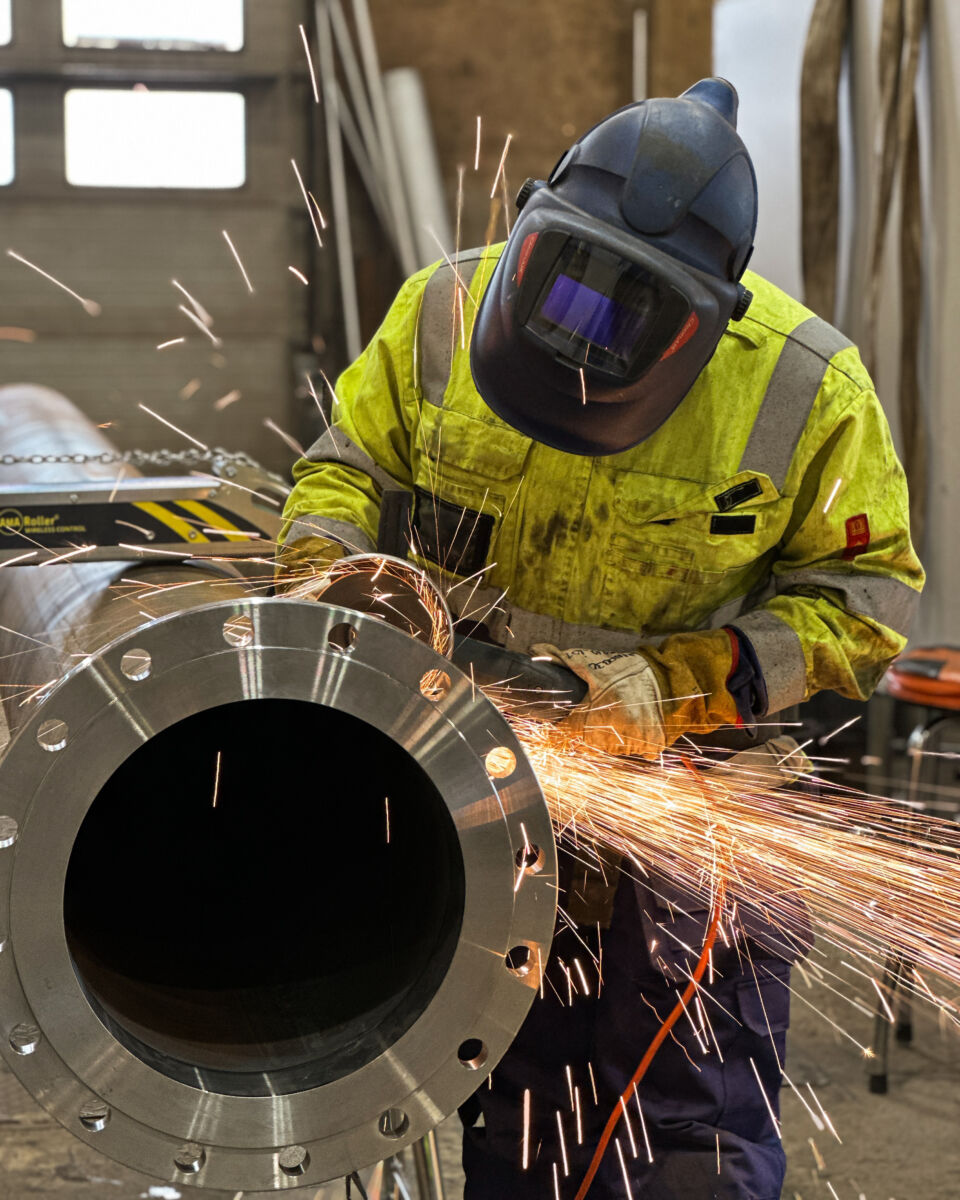
You simplify pipe assembly before final welding by using the right combination of alignment tools, controlled fit-up methods, and a clear sequence of preparation steps. The goal is to position pipes accurately, set gaps consistently, and hold joints securely before any arc is struck. The sections below walk through the most common challenges, the tools that solve them, and the practical decisions that save time on every job.
What are the most common challenges in pipe fit-up before welding?
The most common challenges in pipe fit-up before welding are misalignment between pipe ends, inconsistent root gaps, and pipes that shift position during tack welding. These problems appear across all pipe sizes and materials, from small-diameter stainless steel lines to large-bore process piping, and they directly affect weld quality and rework rates.
Misalignment is the most frequent issue. Even small deviations between two pipe ends create an uneven weld bevel, which forces the welder to compensate with technique rather than letting the joint geometry do the work. The result is inconsistent penetration, especially on root passes.
Inconsistent root gaps are equally problematic. Too narrow a gap restricts penetration; too wide a gap risks burn-through or requires excessive filler. Getting this right manually, without dedicated tooling, takes time and depends heavily on individual skill.
A third challenge is pipe movement during assembly. Pipes that are not properly supported or secured tend to rotate or shift when the welder applies tack welds, which undoes the alignment work already done. This is especially common on job sites where stable, level work surfaces are not always available.
What tools are used to align pipes before welding?
The main tools used to align pipes before welding are centering collars, pipe stands, and pipe rotators. These tools work together to hold pipes at the correct height, center the pipe ends relative to each other, and keep the assembly stable throughout the fit-up and tack welding process.
Centering collars
Centering collars are among the most direct solutions for pipe alignment. They wrap around the outside of the joint and pull both pipe ends into concentricity, eliminating the offset that causes weld defects. AMA Centering Collars are made from stainless steel and are available in a wide range of sizes, from DN65 up to DN1500, making them suitable for everything from small process lines to large-diameter industrial piping. A dedicated collar tightener ensures the collar seats firmly and centers accurately without distorting the pipe wall.
Pipe stands and support systems
Pipe stands keep pipes at a consistent working height and prevent sagging, which is a real problem with longer pipe sections. Adjustable stands like the AMA Stand A and Stand B let you set the height precisely and support pipes from DN15 up to DN720. Proper support at multiple points along a pipe run is important for maintaining alignment across the full length of the assembly, not just at the weld joint.
Pipe rotators
A pipe rotator adds another dimension to alignment work by letting you rotate the pipe smoothly to any position. This is useful during fit-up because you can bring the bevel into the best visual position for checking alignment, and it becomes even more valuable once tack welding begins. The AMA Roller pipe rotator is compatible with pipe diameters from 30 to 508 mm and works with all common manual welding methods.
How do you achieve a consistent root gap for pipe welding?
You achieve a consistent root gap for pipe welding by using mechanical spacers or centering collars that hold the gap open at a fixed distance while you apply tack welds. Setting the gap by eye or with improvised shims leads to variation around the circumference, which creates uneven penetration and complicates the root pass.
The correct root gap depends on the welding process, the material, and the wall thickness. For TIG root passes on stainless steel process piping, a gap of 2 to 3 mm is typical, but always follow the applicable welding procedure specification for your job. What matters most is that the gap stays uniform all the way around the joint, not just at the point where you set it.
Centering collars help here because they hold both pipe ends in a fixed relationship to each other. Once the collar is tightened, the pipes cannot shift laterally, which means the gap you set at one point stays consistent as you work around the joint. After placing tack welds at even intervals, the collar can be removed and the gap will hold.
On larger diameter pipes, check the gap at multiple clock positions before committing to tack welds. Pipe ends that look parallel can still have slight ovality or bevel inconsistencies that only show up when you measure around the full circumference.
When should you use tack welds versus mechanical clamps during assembly?
Use tack welds when the joint will stay in position for welding and the material allows it without cracking risk. Use mechanical clamps or centering collars when you need to reposition the assembly, when the material is sensitive to heat input during fit-up, or when the joint needs to be adjusted after the initial alignment.
Tack welds become part of the finished weld, so they need to meet the same quality standard as the root pass. On materials like duplex stainless steel or high-alloy process piping, a poor tack weld can introduce a defect that carries through to the final joint. In these cases, mechanical clamping during fit-up keeps heat out of the joint until the welder is ready to weld properly.
Mechanical clamps and centering collars are also the better choice during prefabrication, where pipe spools are assembled in a workshop before being transported to site. In prefabrication, you often need to fit up, check, adjust, and re-check before welding. Mechanical tools let you do this without committing to a tack weld that may need to be ground out later.
When tack welds are appropriate, space them evenly around the circumference and make sure each one is fully fused. Tack welds that are too short or too cold can crack when the pipe is rotated or when thermal expansion occurs during welding.
How does proper pipe preparation reduce overall welding time?
Proper pipe preparation reduces overall welding time by eliminating the corrections and rework that result from poor fit-up. When pipes are aligned correctly, gaps are consistent, and joints are stable, the welder can focus on running the weld rather than compensating for fit-up problems. This directly reduces arc time, filler consumption, and the likelihood of repairs.
The time savings compound across a project. A single joint that requires rework because of misalignment costs not just the grinding and re-welding time, but also the time for inspection, documentation, and any required re-testing. On a large process piping project with hundreds of joints, reducing the rework rate even slightly has a significant effect on the overall schedule.
Pipe rotators contribute to this efficiency in a specific way. When a welder can rotate the pipe to the most comfortable welding position rather than repositioning themselves around a fixed joint, they maintain a consistent technique throughout the weld. The AMA Roller pipe rotator makes this possible for pipe diameters from 30 to 508 mm, and the weld quality is noticeably more consistent as a result. For larger pipe diameters, the AMA HD Rotator Set handles pipes up to 1,000 mm with motorized rotation and hydraulic height adjustment.
For wireless flexibility on site, the AMA Roller Premium with wireless Bluetooth control lets the welder operate the rotator from up to 25 meters away, removing the need for extra wiring on busy job sites and keeping the workflow moving without interruptions.
Read more about the AMA Roller pipe rotator:
AMA Roller Standard Pipe Rotator
What safety considerations apply during pipe assembly and fit-up?
During pipe assembly and fit-up, the main safety considerations are pipe stability, manual handling risks, and the hazards associated with tack welding. Pipes that are not properly supported can roll, tip, or shift unexpectedly, creating serious crush and fall hazards for anyone working nearby.
- Support pipes at multiple points. A single support point under a long pipe section creates a lever effect. Use at least two pipe stands, spaced to prevent sagging and rolling. Pipe stand chains and securing straps add an extra layer of stability.
- Use mechanical lifting aids for heavy pipes. Manual handling of large or heavy pipe sections causes musculoskeletal injuries. Equipment like the AMA HD Rotator Set includes hydraulic height adjustment specifically to reduce manual lifting during positioning.
- Secure pipes before working on them. Before applying any force with a collar tightener or alignment tool, make sure the pipe cannot move. A pipe that rolls while a collar is being tightened can cause hand and finger injuries.
- Follow welding safety procedures for tack welds. Tack welding during fit-up involves the same hazards as regular welding: UV radiation, fume exposure, and spatter. Use appropriate PPE even for short tack welds, and ensure adequate ventilation, particularly when working on stainless steel or coated pipe.
- Check load ratings on all equipment. Pipe stands, rotators, and support systems all have maximum load ratings. Exceeding these ratings does not always cause immediate failure, but it increases the risk of unexpected collapse. Always verify that the equipment is rated for the pipe weight you are handling.
On elevated work or inside pipe bridges, additional fall protection and securing measures apply. The AMA Pipe Bridge Stand, for example, includes a mandatory safety strap that must be used to secure the stand to the beam before lifting any pipe.
Getting your pipe assembly workflow right
Pipe assembly before welding is not complicated, but it does require the right tools and a consistent approach. Align pipes properly, set your root gap with mechanical aids, support the assembly throughout, and your welder can focus on producing a quality weld rather than fixing fit-up problems. That is where the real time and cost savings come from.
We design and manufacture pipe handling tools for exactly this kind of work. From centering collars and pipe stands to motorized pipe rotators for both workshop prefabrication and on-site use, our AMA product range covers the full pipe assembly process for professionals working in process industries across Northern Europe and beyond.
To find the right tools for your next project, find your nearest authorized AMA dealer or contact us directly and we will help you choose the right solution for your pipe sizes, materials, and working environment.