How do pipe stands improve pipe handling on site?
Posted onPipe stands prevent costly weld defects — discover which types, how many, and what to look for.
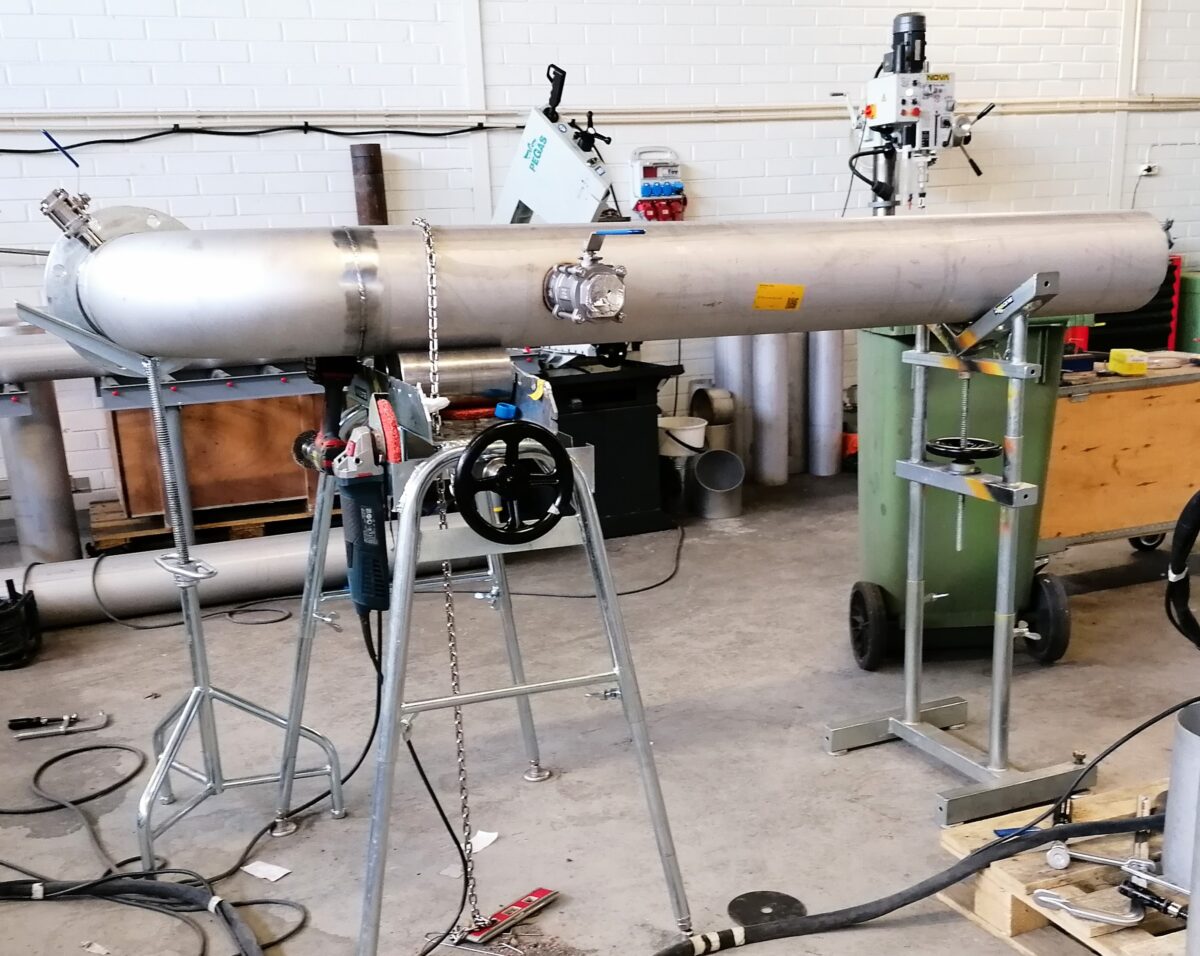
Pipe stands improve pipe handling on site by giving pipes a stable, adjustable support point during positioning, alignment, and welding. Without proper support, pipes shift, sag, or roll, making accurate alignment nearly impossible and increasing the risk of weld defects. The sections below cover the most common questions about pipe stands, from the types available to how many you need for a given job.
What types of pipe stands are used on construction sites?
The most common pipe stands used on construction sites are roller stands, ball-roller stands, and fixed-height or adjustable-height support stands. Roller stands let the pipe rotate freely during welding, while ball-roller stands allow movement in any direction, which helps when pushing or positioning longer pipe sections. Adjustable stands are the standard choice when working across uneven terrain or when different pipe heights need to be matched.
On industrial construction sites and in prefabrication workshops, you will typically see a combination of stand types working together. A motorized pipe rotator mounted on a primary stand handles the rotation during welding, while additional support stands keep the rest of the pipe run level and stable.
Our AMA Pipe Stand Set includes three stand types: Stand A, Stand B, and Stand C. Stand A is the main stand, compatible with the AMA Roller pipe rotator and suitable for pipe diameters from 15 to 720 mm. Stand B is a lighter auxiliary stand with stainless steel ball-rollers. Both are height-adjustable and built for use in both prefabrication and on-site conditions.
For larger pipes and heavier loads, hydraulic roller tables and heavy-duty rotator sets handle diameters up to 1,000 mm or more, with load capacities that match industrial-scale pipe work.
How do pipe stands keep pipes aligned during welding?
Pipe stands keep pipes aligned during welding by holding each section at a consistent, adjustable height so that pipe ends meet flush and stay in position throughout the weld. Height adjustment on the stands lets you level the pipe run precisely, and the rollers or ball-rollers prevent the pipe from shifting sideways or rotating unintentionally during tack welding.
Accurate alignment before welding starts is one of the biggest factors in weld quality. If a pipe shifts even slightly between tack welds, the final joint will be misaligned, which can cause stress concentrations and inspection failures. Pipe stands remove that risk by keeping the pipe locked at the right height and angle.
For even greater precision, centering collars are used alongside pipe stands to align pipe ends concentrically before welding. The AMA Centering Collars fit directly onto the pipe ends and tighten with a collar tightener, reducing alignment errors to a minimum across a wide range of pipe sizes from DN65 to DN1500.
When a pipe rotator is added to the main stand, alignment becomes even easier to maintain. The pipe rotates at a controlled speed, letting the welder work from a single ergonomic position rather than moving around the joint. This produces a more consistent weld seam and reduces the chance of errors caused by awkward positioning.
What are the main safety benefits of using pipe stands?
The main safety benefits of using pipe stands are preventing pipe roll, reducing manual handling strain, and keeping pipes at a stable working height where they are less likely to fall or shift unexpectedly. Unsupported pipes on the ground create trip hazards and require workers to crouch or bend into uncomfortable positions, increasing both injury risk and fatigue over a long shift.
- Prevents uncontrolled pipe movement: Rollers and ball-rollers hold the pipe in place while still allowing controlled rotation, so the pipe does not roll away during positioning.
- Reduces manual handling injuries: Adjustable height means the pipe is always at a comfortable working level, cutting down on the lifting and bending that cause back strain.
- Keeps the work area organized: Pipes supported on stands are off the ground and in a predictable position, which reduces trip hazards and makes the site easier to navigate.
- Supports heavy loads safely: Quality pipe stands have clearly rated load capacities, so you know the stand will hold the pipe without risk of collapse. The AMA Stand A, for example, carries up to 1,500 kg.
- Allows secure fastening: Chain fasteners on the stand keep the pipe from rolling off during setup, which is particularly important when working with larger or heavier pipe sections.
In process industry welding, where pipes often carry hazardous media, a misaligned or poorly supported weld is not just a quality problem. It is a safety risk for the entire installation. Getting the support right from the start protects both the workers on site and the long-term integrity of the system.
How many pipe stands do you need for a pipe run?
As a general rule, you need one pipe stand for every 2 to 3 metres of pipe, though the exact number depends on the pipe diameter, wall thickness, and the weight of the pipe material. Heavier pipes sag more between support points, so they need stands placed closer together. Lighter thin-wall pipes can span a greater distance without significant deflection.
For a typical welding setup, you need at least two stands: one primary stand under or near the weld joint, and one or more auxiliary stands to support the rest of the pipe run. When using a pipe rotator, the rotator sits on the primary stand and the additional stands keep the pipe level and rotating smoothly without binding.
Pipe length matters as much as weight. A short spool piece of 1 to 2 metres may need only one or two stands, while a long pipe run of 6 metres or more will need three or four. The goal is to prevent the pipe from sagging between supports, which would misalign the weld joint and put unnecessary stress on the rotator mechanism.
For pipe bridge work, the number of stands depends on the span of the bridge and the pipe diameter. AMA Pipe Bridge Stands attach directly to the bridge beams and allow the pipe to be pushed and rotated on stainless steel ball-rollers, with each stand rated to a 380 kg load capacity.
What should you look for when choosing a pipe stand?
When choosing a pipe stand, the most important factors are height adjustability, load capacity, roller type, and compatibility with any rotator or accessory tools you plan to use. A stand that fits your pipe diameter range but cannot handle the pipe weight, or one that is not compatible with your rotator, will slow down the job rather than speed it up.
Height range and adjustability
Check that the stand’s height range covers the working height you need for your site or workshop setup. Stands that adjust without tools save time when you are moving between different pipe sizes or working on uneven ground. The AMA Stand A adjusts between 840 and 1,100 mm, and the Stand B between 800 and 1,100 mm, covering most standard working heights for pipe welding.
Roller type and pipe diameter range
Roller stands with V-shaped stainless steel rollers grip the pipe firmly and are the right choice when you need the pipe to stay in one rotational position. Ball-roller stands allow the pipe to move in any direction, which is useful when you need to push or reposition longer sections. Make sure the stand’s diameter range covers the pipes you work with. AMA stands handle pipes from 15 mm up to 720 mm, making them suitable for a wide range of pipe installations, not just large-diameter work.
Load capacity and build quality
Always check the rated load capacity against the heaviest pipe you expect to support. A stand that is underloaded works safely and lasts longer. Look for galvanized frames and stainless steel rollers if you are working in wet environments or with acid-resistant and stainless steel pipe materials, where corrosion resistance matters.
Compatibility with rotators and accessories
If you plan to add a pipe rotator, confirm that the stand is designed to accept one. The AMA Stand A is built to mount the AMA Roller pipe rotator directly, using a quick-release fastener for easy attachment and removal. This compatibility matters because a mismatched stand and rotator combination creates instability and can limit the pipe diameter range you can work with.
Explore the full AMA Pipe Stand Set and rotator options:
View the AMA Pipe Stand Set
Pipe stands that work as hard as you do
Good pipe stands do more than hold a pipe off the ground. They give you a stable, accurate starting point for every weld, reduce the physical strain on your team, and make the whole pipe handling process faster and more predictable. Whether you are setting up a prefabrication workshop or working on a process industry installation site, the right combination of stands, rotators, and centering tools makes a real difference to both weld quality and daily productivity.
At Welner, we design and manufacture AMA pipe handling tools for professional pipe welding across a wide range of pipe sizes and applications. Our products are made in Finland and available through authorized dealers across the Nordic countries and Europe.
Find your nearest dealer and see where to buy AMA tools locally: AMA authorized dealers
Have a question about which pipe stands fit your application? Contact us and we will help you find the right setup.