Which pipe diameters benefit most from powered rotation?
Posted onPipes over 150mm are where powered rotation pays off — here's exactly why and what to look for.
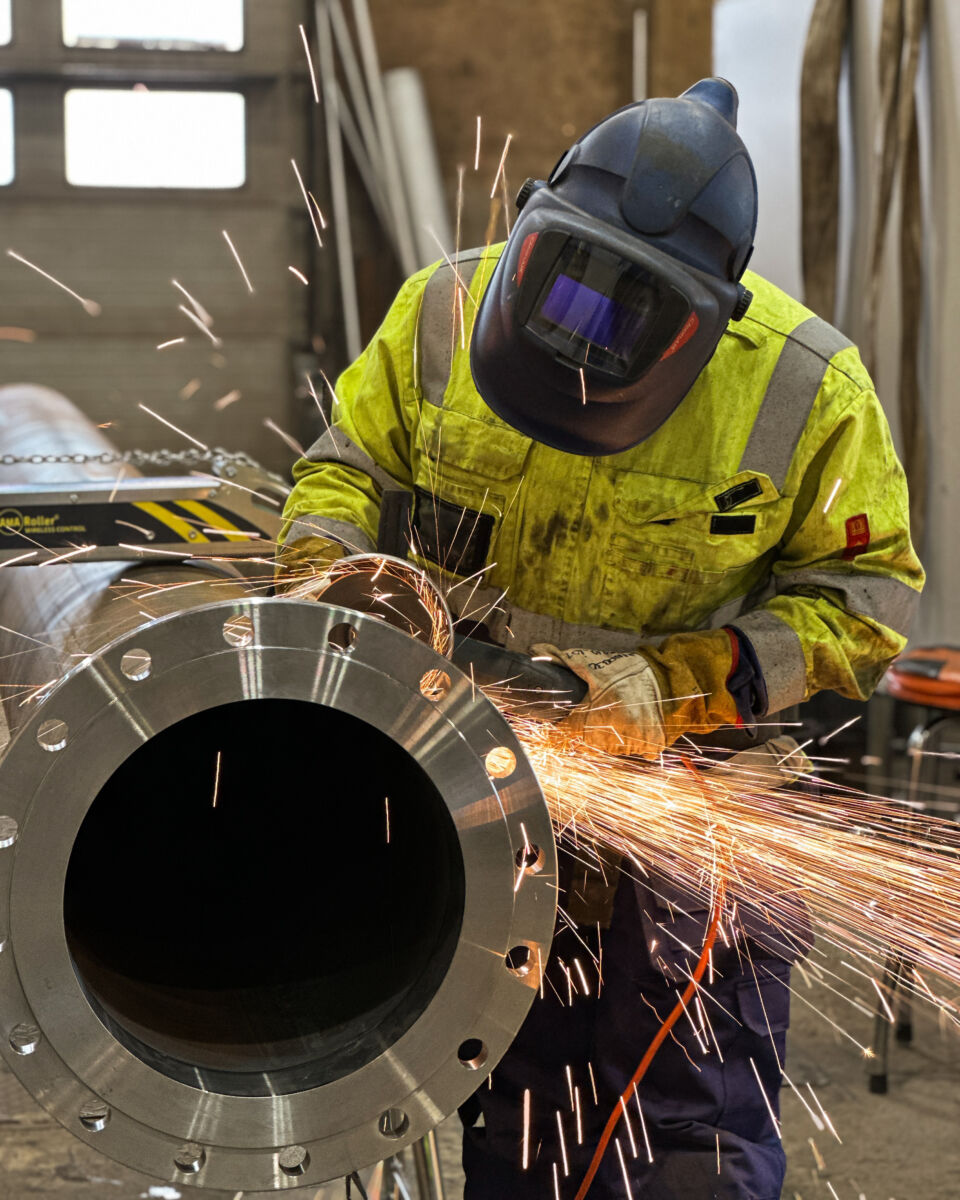
Pipes from around 150 mm (6 inches) in diameter and above are where powered rotation starts delivering real advantages over manual handling. Below that threshold, most welders can reposition a pipe by hand without losing much time or weld quality. Above it, the weight, circumference, and access challenges make manual rotation increasingly impractical and physically demanding.
The exact crossover point depends on pipe wall thickness, material, and how many joints you need to complete in a shift. This article works through the key questions welders, supervisors, and project managers ask when deciding whether powered pipe rotation makes sense for their work.
At what pipe diameter does manual rotation become impractical?
Manual rotation becomes genuinely impractical at around 150 to 200 mm (6 to 8 inches) in diameter, though the tipping point varies by weight and wall thickness. At this size, a pipe section can weigh enough that repositioning it by hand between weld passes is physically tiring, slows down the job, and introduces inconsistency into the weld. Above 200 mm, manual rotation is rarely efficient.
Below 150 mm, an experienced welder can often rotate a pipe by hand or reposition themselves around it without losing rhythm. The pipe is light enough that physical handling is not a significant burden. But as diameter increases, the circumference of the weld joint grows too, meaning each pass takes longer and the welder has to move more to maintain the correct welding angle. That combination of increased weight and a longer weld path is where the argument for powered rotation becomes hard to ignore.
It is also worth noting that even on smaller pipes, powered rotation can still improve consistency and reduce fatigue during long shifts. The question is not always “can I rotate this manually?” but “should I, if a better option is available?”
How does powered rotation improve weld quality on large-diameter pipes?
Powered pipe rotation improves weld quality by keeping the weld pool in the optimal flat or slightly uphill position throughout the entire joint. Instead of the welder constantly repositioning around the pipe or welding overhead and vertical sections, the pipe turns at a controlled speed so the active weld point stays at the top. This produces a more consistent bead, better fusion, and fewer defects.
On large-diameter pipes, the benefits are especially visible because the weld joint is long and the stakes of inconsistency are higher. A weld that starts well in the flat position but finishes in an overhead position introduces variables that even skilled welders struggle to fully control. Powered rotation removes that variable entirely.
There are several specific quality improvements that professional welders and supervisors consistently report:
- More consistent bead geometry across the full circumference of the joint
- Better penetration control because the welder maintains one ergonomic position rather than adapting to awkward angles
- Reduced spatter and rework on materials like stainless steel that are sensitive to heat input variations
- Seams that approach robotic weld appearance in terms of regularity, which matters for inspection and client acceptance
The AMA Roller pipe rotator is built around exactly this principle. It rotates the pipe at an adjustable speed so the welder stays in one ergonomic position for the full weld, whether they are using MIG, MAG, TIG, or covered electrode methods.
Read more about the AMA Roller pipe rotator here: amapipetools.fi/en/tuotteet/ama-roller-en/
What pipe diameters are best suited for pipe turning rolls?
Pipe turning rolls and pipe rotators are most effective across a broad range: from around 30 mm up to 1,000 mm or more, depending on the equipment. The practical sweet spot for standard pipe rotators in prefabrication workshops and on-site work is roughly 100 mm to 500 mm, where the combination of pipe weight and weld complexity justifies powered rotation without requiring heavy-duty industrial equipment.
For smaller pipes in the 30 to 150 mm range, a compact pipe rotator mounted on a pipe stand works well, particularly for stainless steel and other materials where weld quality requirements are high. The rotator handles the pipe gently and keeps it moving at a consistent speed, which matters more than raw load capacity at this size.
For pipes from 100 mm up to 1,000 mm, heavy-duty rotator sets with motorized rollers and hydraulic height adjustment become the right tool. These handle the load safely and allow ergonomic height positioning for welders working on larger assemblies in process industry environments.
Our AMA Roller handles pipe diameters from 30 to 508 mm, while the AMA Roller Premium with wireless Bluetooth control covers the same range with added flexibility for on-site use where the welder needs to work further from the control unit. The AMA HD Rotator Set extends coverage up to 1,000 mm for heavier applications.
Does pipe wall thickness affect the case for powered rotation?
Yes, pipe wall thickness directly affects how useful powered rotation is. Thicker walls mean more weld passes, longer time at the joint, and greater heat input requirements. All of these factors increase the value of keeping the welder in one position with the pipe moving, rather than the welder moving around the pipe repeatedly.
Thin-walled pipes, particularly in stainless steel and acid-resistant materials, present a different challenge. Here, the argument for powered rotation is about precision and heat control rather than physical effort. Thin walls are more sensitive to distortion from uneven heat input, and a rotator that keeps the weld pool consistently positioned helps the welder deliver controlled, repeatable passes without overheating any single zone.
Heavy-wall pipes in carbon steel or alloy materials often require multiple passes with interpass cleaning and temperature checks. Powered rotation makes this workflow much smoother because the welder does not need to reposition for each pass. The pipe turns back to the start position and the next pass begins from the same comfortable angle.
Wall thickness also affects load on the rotator. A large-diameter, thick-walled pipe can be significantly heavier than a thin-walled pipe of the same outer diameter, so it is important to match the rotator’s load capacity to the actual pipe weight, not just the outer diameter.
Which industries most commonly use powered pipe rotation by diameter range?
Powered pipe rotation is used across a wide range of industries, and the diameter ranges tend to align with the type of installation work involved. Process industries, shipbuilding, energy, and construction all use pipe rotators regularly, but the typical pipe sizes differ.
Smaller diameters: 30 to 200 mm
Process industry plants, food and beverage facilities, pharmaceutical manufacturing, and HVAC installations commonly work in this range. Stainless steel and acid-resistant materials are frequent here, and weld quality requirements are high. Prefabrication workshops producing pipe spools for these industries use rotators to improve consistency and reduce rework on inspection-critical joints.
Mid-range diameters: 200 to 500 mm
Oil and gas, petrochemical, and industrial process piping regularly falls into this range. Pipes carry process fluids, gases, or steam under pressure, so weld integrity is non-negotiable. Powered rotation in this range reduces the physical demands on welders during long shifts and helps maintain quality across high volumes of joints.
Large diameters: 500 mm and above
Water infrastructure, power generation, shipbuilding, and large-scale industrial construction work with pipes above 500 mm. At this scale, heavy-duty rotator sets with high load capacity are standard equipment. Manual rotation is simply not feasible, and the cost of weld defects on large-diameter, thick-walled pipe is significant.
What should you look for in a pipe rotator for your diameter range?
The most important factors when choosing a pipe rotator are diameter compatibility, load capacity, speed control, and practical usability on your specific worksite. A rotator that fits your pipe range but cannot handle the weight, or one that is difficult to move between positions, will create more problems than it solves.
Here is what to check before you decide:
- Diameter range: Confirm the rotator handles your smallest and largest pipe sizes, not just the most common ones
- Load capacity: Calculate the actual weight of your heaviest pipe sections, including any fittings or assemblies attached
- Speed control: Adjustable rotation speed matters because different welding methods and materials need different travel speeds
- Control method: Foot pedal operation keeps both hands free for welding; wireless control is valuable when you need to work away from the unit on longer pipes or on-site
- Portability: If you work across multiple stations or on different sites, weight and mobility matter. A unit that is easy to move reduces setup time
- Compatibility with pipe stands: A rotator that integrates with your existing pipe stand system saves time and gives you more flexibility in how you set up
- Welding method compatibility: Make sure the rotator works with MIG, MAG, TIG, or covered electrode as your work requires
For welders and supervisors working across a wide diameter range, having a rotator that covers both smaller precision work and mid-range industrial pipe in one unit is a real practical advantage. If your work regularly involves pipes above 500 mm, a separate heavy-duty solution is worth the investment.
If you are unsure which setup fits your work, contact us directly and we will help you find the right configuration for your pipe sizes, materials, and site conditions.
Finding the right pipe rotation solution for your work
Powered pipe rotation adds real value from around 150 mm upward, and it improves both quality and working conditions across a wide range of pipe sizes and industries. The right choice depends on your pipe diameter range, wall thickness, load requirements, and whether you need a solution for a prefabrication workshop, a job site, or both.
We are Welner Oy, a Finnish manufacturer of professional pipe handling tools sold under the AMA brand. We develop and manufacture pipe rotators, pipe stands, centering collars, and purge equipment for welding professionals across Northern and Western Europe and beyond. Our products are designed for real working conditions, and we back them with genuine product development and support.
To find the closest stockist or dealer in your country, visit our authorized dealers page and see who can supply AMA products in your region. Or if you want to talk through your specific pipe welding needs, get in touch with us directly. We are happy to help.