How do you choose the right pipe alignment method?
Posted onPipe diameter, material, and weld standards determine your best alignment method. Find out which tools deliver consistent results.
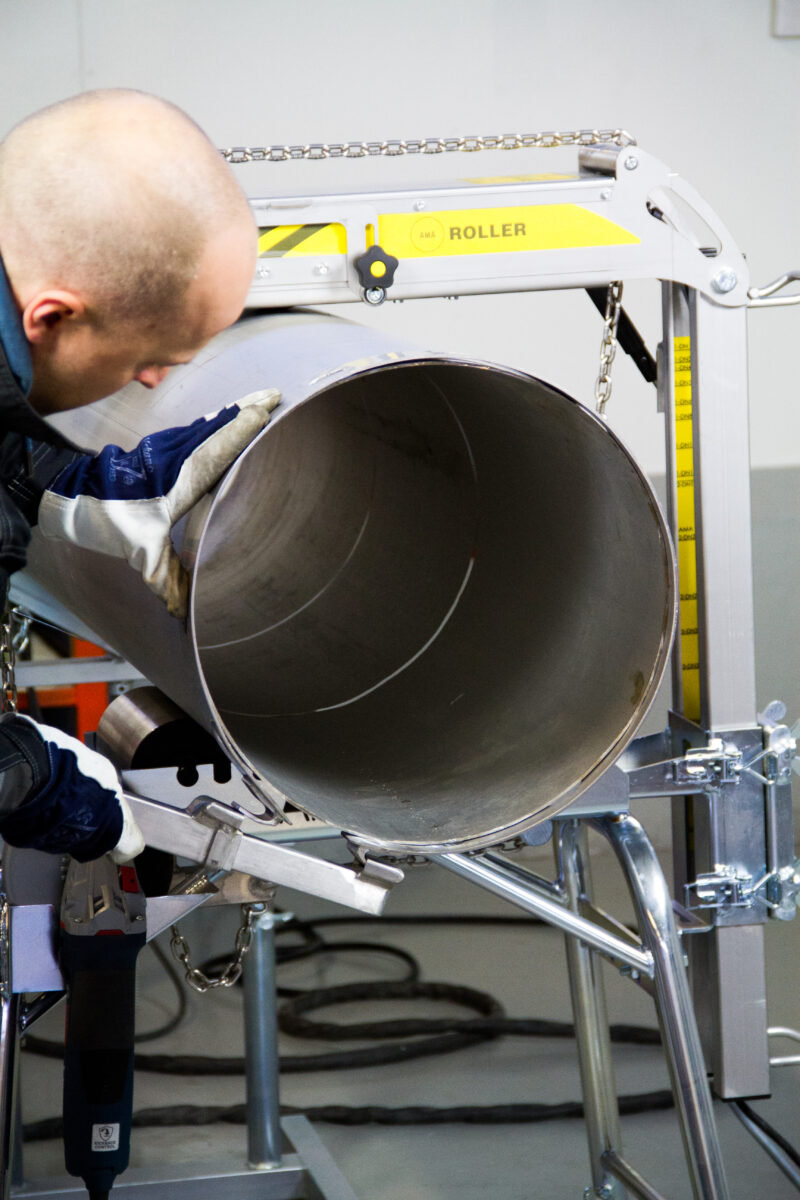
The right pipe alignment method depends on your pipe material, diameter, wall thickness, and the welding standard you need to meet. For most industrial pipe welding applications, the choice comes down to whether you need internal or external alignment, and how much precision the joint requires. Below, we answer the most common questions welders, supervisors, and project managers ask when selecting a pipe alignment method.
What factors determine the best pipe alignment method?
The best pipe alignment method is determined by pipe diameter, wall thickness, material type, joint configuration, and the required weld quality. Access to the pipe interior, available tooling, and whether you are working in a prefabrication workshop or on-site also play a significant role in the decision.
For professional pipe welding, the goal is always to achieve a consistent root gap, minimal high-low (also called misalignment between pipe ends), and a stable fit-up before tack welding begins. If any of these are off, weld quality suffers regardless of the welder’s skill level.
- Pipe diameter: Smaller pipes often allow for internal tooling; larger diameters typically require external alignment clamps or centering collars
- Wall thickness: Thicker walls are less forgiving of misalignment and require more precise fit-up
- Material: Stainless steel and acid-resistant pipes demand tighter tolerances than carbon steel
- Working environment: Workshop prefabrication allows more controlled conditions than field installation
- Weld standard: Process industry requirements often specify maximum allowable high-low, which directly affects which alignment method is acceptable
What are the most common pipe alignment methods used in industry?
The most common pipe alignment methods in industrial pipe welding are external alignment clamps, internal alignment clamps, centering collars, and manual fit-up using tack welds. Each method suits different pipe sizes, materials, and site conditions, and professionals often combine them depending on the job.
In prefabrication workshops, pipe stands and centering collars are widely used because they offer repeatable accuracy and speed up the fit-up process across multiple joints. On construction sites, external clamps are more common because they do not require access to the pipe interior.
Manual fit-up, where the welder positions and tacks the pipe by hand, is still used in smaller operations or when tooling is unavailable. However, manual methods introduce more variation and rely heavily on individual skill, which increases the risk of high-low and uneven root gaps.
What is the difference between internal and external pipe alignment clamps?
Internal alignment clamps are inserted inside the pipe and expand outward to hold both pipe ends in position from the inside, while external alignment clamps wrap around the outside of the joint and pull the pipe ends together from the exterior. The key difference is access: internal clamps require you to reach inside the pipe, while external clamps work entirely from the outside.
Internal alignment clamps
Internal clamps provide excellent control over root gap and high-low because they act directly at the weld zone. They are well suited to pipe spool assembly in workshop prefabrication where both pipe ends are accessible. However, they cannot be used on closed systems or where pipe access is restricted, and they must be removed before the root pass is complete.
External alignment clamps
External clamps, including external alignment collars, are faster to apply and do not require internal pipe access. They work well on-site and for a wide range of pipe diameters. AMA Centering Collars are a practical example of external alignment tooling: stainless steel collars that fit around the pipe joint and are tightened with a collar tightener fitted with thrust bearings, giving you accurate, repeatable alignment without entering the pipe.
When should you use a pipe alignment tool instead of manual fit-up?
You should use a pipe alignment tool whenever the weld quality standard, pipe material, or production volume makes manual fit-up too slow or too inconsistent. For process industry pipe welding, where joints must meet strict inspection criteria, alignment tools significantly reduce the risk of rejection and rework.
Manual fit-up can work for straightforward jobs with wide tolerances, but it becomes a liability when:
- You are welding stainless steel or acid-resistant pipes where surface contamination and distortion are concerns
- The joint requires a precise root gap for TIG or MIG/MAG root passes
- You are producing multiple identical pipe spools in a prefabrication setting
- Different welders are working on the same project and consistency between joints matters
- The pipe diameter is large enough that holding alignment by hand during tack welding is impractical
Alignment tools also make the welder’s job easier and less physically demanding, which matters on long shifts and complex pipe spool assemblies.
Read more about AMA Centering Collars and how they work in practice.
How does pipe material affect alignment method selection?
Pipe material affects alignment method selection because different materials have different tolerances for heat, distortion, and surface contact. Stainless steel and acid-resistant pipes require non-contaminating tooling and tighter fit-up, while carbon steel is generally more forgiving and compatible with a broader range of clamping methods.
For stainless steel pipe welding, you need alignment tools made from stainless steel or materials that will not cause iron contamination. Using carbon steel clamps or improper tooling on stainless pipe can lead to corrosion at the weld zone, which is a serious problem in process industry applications involving food, pharmaceuticals, or aggressive chemicals.
Thin-wall pipes, regardless of material, are more susceptible to distortion during tack welding, which means alignment must be secured before any heat is applied. Thicker walls are more stable but require more clamping force to close gaps, which is why collar tighteners with thrust bearings are useful for larger or heavier pipe dimensions.
What pipe alignment tools are used for large-diameter pipes?
For large-diameter pipes, the most commonly used alignment tools are external centering collars, heavy-duty pipe stands, and motorized pipe rotators. These tools handle the weight and size of large pipe sections while maintaining accurate joint alignment during fit-up and welding.
AMA Centering Collars are available in sizes from DN65 up to DN1500, covering a wide range of pipe dimensions from smaller process lines to large-diameter industrial pipework. For DN600 and above, two collar tighteners are used simultaneously because the collar has two parts, and a large tightener with a longer span provides the additional torsional force needed for heavy-wall pipes.
When it comes to supporting and rotating large pipes during welding, the AMA HD Rotator Set handles pipe diameters from 100 mm to 1,000 mm with a maximum load of 1,500 kg. For pipes on bridges or in elevated positions, AMA Pipe Bridge Stands with stainless steel ball rollers allow smooth rotation and repositioning without removing the pipe from its support structure.
That said, AMA pipe alignment tools are designed for the full range of pipe sizes, not just large-diameter applications. Whether you are fitting DN65 stainless spools in a workshop or aligning large process pipework on site, the right tool exists within the range.
Choosing the right pipe alignment method comes down to knowing your material, your tolerances, and your working conditions. We design and manufacture pipe handling and alignment tools for professional pipe welding across a wide range of industries and pipe sizes, from small stainless spools to large industrial pipework. Find your nearest stockist on our authorized dealers page, or contact us directly if you have questions about which tools fit your application.