What equipment helps when welding difficult materials?
Posted onPipe rotators, purge systems, and heat control gear are essential when welding stainless steel, titanium, or chrome-moly — here's why.
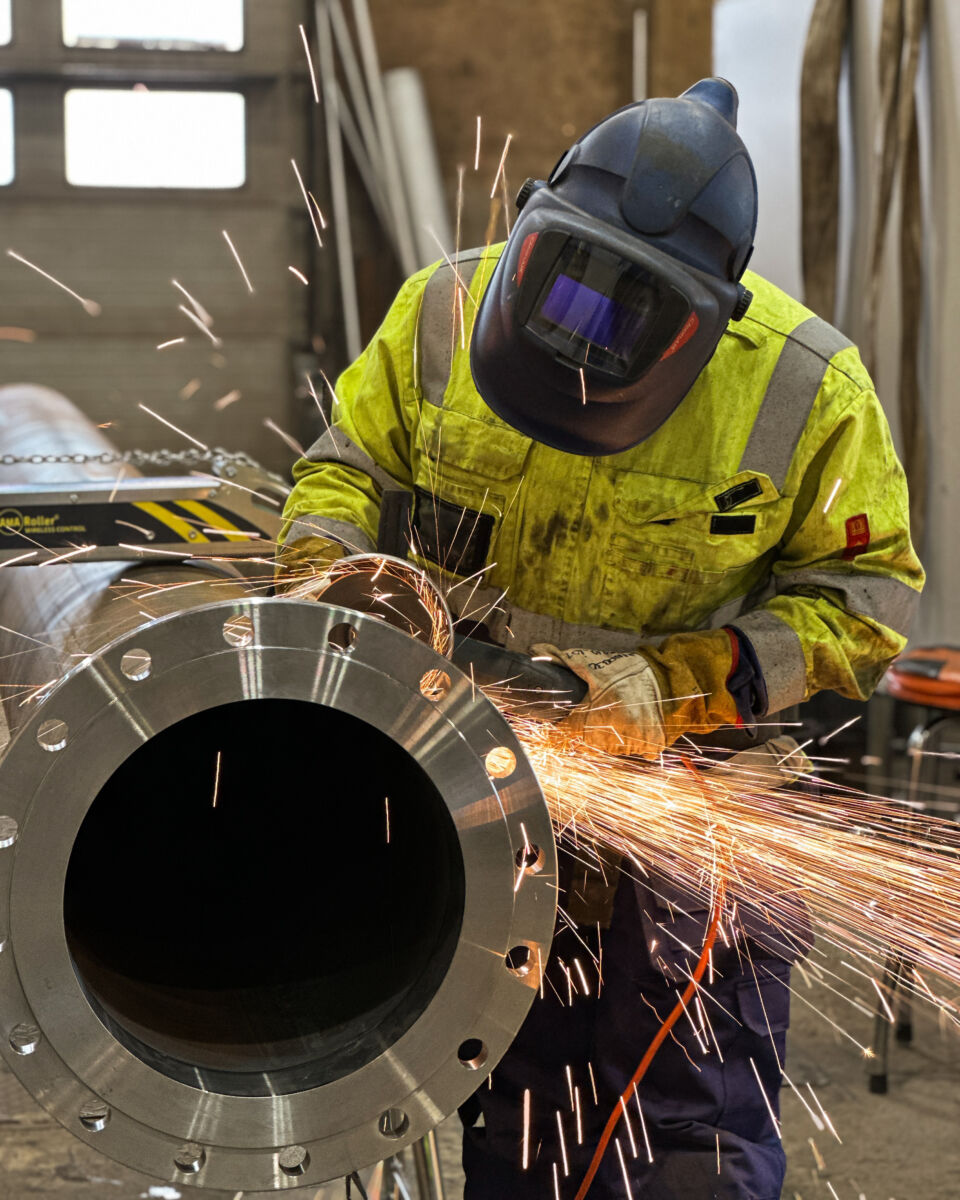
When welding difficult materials, the equipment that makes the biggest difference includes pipe rotators, purge systems, precise alignment tools, and proper heat control gear. These tools help you maintain a consistent technique, control the weld environment, and reduce the risk of defects that are far more likely to appear when working with sensitive or hard-to-weld materials. Below, we answer the most common questions welders and project managers ask when preparing for these challenging jobs.
Which materials are considered difficult to weld?
The most commonly difficult materials to weld are stainless steel, cast iron, high-strength alloy steels, duplex and super duplex stainless steels, titanium, and chrome-molybdenum (chrome-moly) steels. These materials are considered difficult because they require tighter control over heat input, shielding, and joint preparation than standard carbon steel does.
Welding stainless steel, for example, demands careful management of heat to avoid sensitisation, distortion, and oxidation on the weld root. Cast iron is brittle and prone to cracking if it heats or cools too quickly. Duplex stainless steels require precise interpass temperature control to maintain the correct microstructure. Chrome-moly steels typically need preheat and post-weld heat treatment to avoid hydrogen cracking.
What these materials share is a low tolerance for error. Small mistakes in preparation, heat management, or shielding gas coverage can result in defects that are expensive to repair or that compromise the integrity of the finished pipe system entirely.
What causes most failures when welding hard-to-weld materials?
Most weld failures on difficult materials come down to four root causes: poor joint preparation, inadequate shielding or purging, incorrect heat input, and inconsistent technique caused by awkward working positions. Any one of these factors can introduce defects such as porosity, cracking, lack of fusion, or oxidation.
Poor preparation and fit-up
When pipe ends are not cleanly cut, properly bevelled, or accurately aligned, the welder is already working against the material. Gaps that are too wide or too narrow change the heat distribution and make it harder to achieve full penetration. On materials like stainless steel, contamination from carbon steel tools or grinding dust can also cause surface defects and corrosion.
Inconsistent technique and positioning
Difficult materials punish inconsistency more than standard carbon steel does. A welder who has to stop and reposition frequently, or who is working in an uncomfortable posture, will introduce variation in travel speed, arc length, and heat input. That variation shows up as defects. This is one of the main reasons pipe rotators are so useful when welding difficult materials: they keep the weld in the most controllable position throughout the entire joint.
What pipe preparation tools are important for difficult welds?
For difficult welds, the most useful pipe preparation tools are accurate cutting guides, bevelling tools, and pipe alignment collars. These tools ensure that the joint is clean, correctly profiled, and precisely aligned before the arc is struck, which reduces the chance of defects in materials that have little tolerance for poor fit-up.
Centering collars are particularly useful when welding stainless steel or alloy pipes where misalignment creates uneven stress and inconsistent root gaps. AMA’s stainless steel centering collars, available in sizes from DN65 to DN1500, let you align pipes quickly and accurately without introducing contamination from carbon steel contact. The collar tightener system applies consistent clamping force, so the fit-up is repeatable from joint to joint.
Clean, correctly bevelled pipe ends are also important. On materials like duplex stainless steel, an inconsistent bevel angle changes the heat distribution across the root pass and can affect the weld microstructure. Taking the time to prepare joints properly is not just about aesthetics: it directly affects the mechanical properties of the finished weld.
How do pipe alignment and clamping tools improve weld quality?
Pipe alignment and clamping tools improve weld quality by holding pipes in the correct position throughout tacking and welding, eliminating movement that would otherwise cause misalignment, uneven root gaps, or distortion. On difficult materials, even small amounts of movement during welding can introduce stress concentrations or cause cracking as the material cools.
A pipe rotator takes this a step further. Instead of holding the pipe still, a rotator moves the pipe at a controlled speed so the welder can work in a single, optimal position, typically flat or slightly uphill. This keeps technique consistent, which is especially important when welding stainless steel or chrome-moly where travel speed and heat input must stay within a narrow range.
The AMA Roller pipe rotator is designed for exactly this kind of work. It handles pipe diameters from 30 to 508 mm, suits all manual welding methods including TIG, MIG, MAG, and covered electrode, and rotates at adjustable speeds up to 1.25 m/min. The result is a seam that is far more consistent than what most welders can achieve working around a stationary pipe.
Read more about the AMA Roller pipe rotator and see full specifications:
AMA Roller Standard Pipe Rotator
If you work on longer runs or need to control the rotator from a distance, the AMA Roller Premium with wireless Bluetooth control lets you adjust speed and direction from up to 25 metres away, which is useful on larger prefabrication projects or when working in confined pipe bridge environments.
What heat control equipment helps when welding sensitive materials?
When welding sensitive materials, the heat control equipment that matters most includes preheat systems such as resistance or induction heaters, interpass temperature monitors, and post-weld heat treatment equipment. These tools let you apply the right amount of heat at the right time and avoid the rapid temperature changes that cause cracking and microstructural damage in materials like cast iron, chrome-moly, and duplex stainless steel.
Preheat and interpass temperature control
Preheat slows the cooling rate of the weld and surrounding metal, which reduces the risk of hydrogen cracking and brittle fracture in steels that are sensitive to rapid thermal change. For cast iron, preheat is often the difference between a sound weld and one that cracks as it cools. Interpass temperature limits, on the other hand, prevent the weld area from getting too hot between passes, which is particularly important for duplex stainless steels where excessive heat changes the phase balance and reduces corrosion resistance.
Temperature monitoring
Contact thermometers and infrared pyrometers let you verify preheat and interpass temperatures before and during welding. Many welding procedure specifications (WPS) for difficult materials specify minimum preheat and maximum interpass temperatures as mandatory requirements, not recommendations. Using reliable temperature measurement equipment means you can demonstrate compliance with the WPS and catch problems before they become defects.
When should welders use purging and shielding equipment?
Welders should use purging and shielding equipment whenever they are welding materials that oxidise on the root side of the joint when exposed to atmospheric oxygen at welding temperatures. This applies to stainless steel, duplex and super duplex stainless steels, titanium, and other corrosion-resistant alloys. On these materials, an unprotected weld root will oxidise, which damages the corrosion resistance of the finished joint and can cause it to fail in service.
Purging replaces the air inside the pipe with an inert gas, typically argon, so the root pass solidifies in an oxygen-free environment. The quality of the purge directly affects the quality of the root weld: a poor purge produces a sugared or oxidised root that must be ground out and re-welded, which is costly and time-consuming.
The AMA Pipe Purge Kit makes this process faster and more gas-efficient. It uses triple silicone disc plugs to create an airtight seal inside the pipe, isolating just the section around the weld joint rather than purging the entire pipe length. This significantly reduces both purging time and inert gas consumption. The kit covers pipe sizes from DN20 to DN150 and includes a flange welding kit for DN40 to DN150 joints. The silicone seals can be replaced individually, which keeps running costs down over time.
For pipe sizes up to DN200, the AMA DN200 Complete Plug accessory extends the system’s range. On stainless steel pipe systems in process industry applications, using a reliable purge system is not optional: it is what separates a weld that passes inspection from one that fails it.
Beyond purging, shielding gas coverage on the torch side also matters. Trailing shields and gas lenses help maintain inert gas coverage over the weld pool and heat-affected zone as the torch moves forward, which is particularly useful when welding titanium or austenitic stainless steels in positions where the weld cools slowly.
If you want to discuss which tools suit your specific pipe welding setup, contact us directly and we will help you find the right solution.
Getting the right tools for your pipe welding work
Welding difficult materials is manageable when you have the right preparation, positioning, purging, and heat control tools in place. The risk of defects drops significantly when pipe joints are properly aligned, welders can maintain a consistent technique through a full rotation, and the weld environment is protected from oxidation.
We design and manufacture AMA pipe welding tools specifically for professional pipe welding work across process industry applications, covering pipe sizes from small-diameter tubing up to large industrial pipe. Our products are developed and made in Finland, and we supply them through authorised dealers across Northern and Western Europe and beyond.
Find your nearest dealer and see the full AMA product range on our authorised dealers page.