How do you prevent movement during tack welding?
Posted onControl pipe movement during tack welding using alignment tools, proper fit-up, and smart tack sequences.
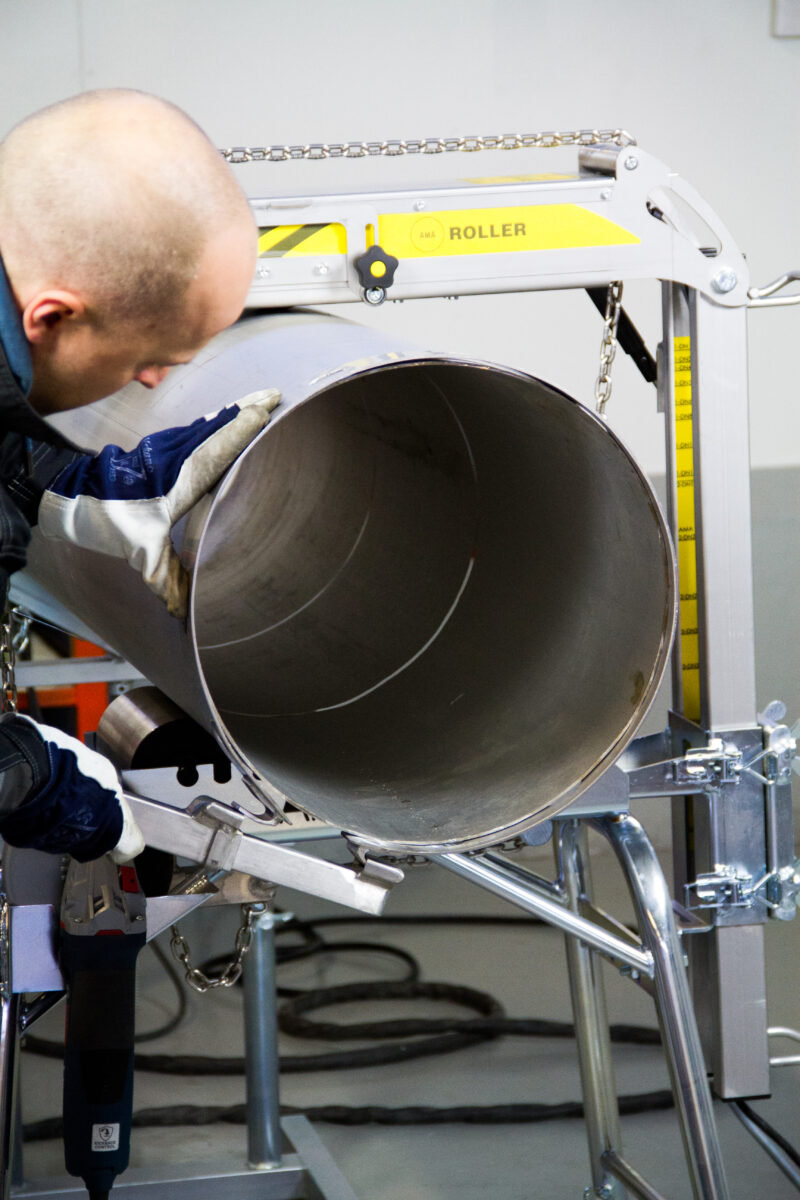
To prevent movement during tack welding, secure pipes with proper alignment tools before applying any heat, place tack welds at evenly spaced intervals around the joint, and ensure the fit-up is tight and consistent before you start. Movement happens when pipes are not properly restrained or when tack welds are too few, too small, or unevenly placed. The sections below cover each factor in detail so you can control alignment from start to finish.
What causes pipes to move during tack welding?
Pipes move during tack welding primarily because of thermal expansion and contraction. When you apply heat to one side of a joint, that side expands briefly and then contracts as it cools, pulling the pipe out of alignment. If the pipe is not firmly held in place before and during tacking, even a single tack weld can introduce angular or axial misalignment that carries through to the final weld.
Other common causes include:
- Poor fit-up: Uneven root gaps or high-low misalignment between pipe ends create stress concentrations that shift when heat is applied.
- Insufficient restraint: Pipes resting loosely on stands or rollers can roll or shift as you weld.
- Unbalanced tack sequence: Placing tack welds on one side before the other introduces asymmetric thermal stress.
- Pipe weight and overhang: Long pipe sections that are not properly supported across their length can sag or rotate under their own weight.
Understanding these causes is the first step. Once you know what drives movement, you can address each factor systematically before striking an arc.
What tools are used to hold pipes in place for tack welding?
The most widely used tools for holding pipes in place during tack welding are external alignment clamps, centering collars, pipe stands, and pipe rotators. Each tool serves a different function, and in most professional pipe welding setups, you will use a combination of them together.
Centering collars
Centering collars are stainless steel bands that wrap around the outside of a pipe joint to align two pipe ends accurately before tacking. They correct high-low misalignment and hold the root gap consistent around the full circumference. AMA Centering Collars are available from DN65 up to DN1500, making them suitable for a wide range of pipe sizes used in the process industry, prefabrication, and on-site installation. A collar tightener with thrust bearings is used to draw the collar tight so centering is as accurate as possible.
Pipe stands and rotators
Pipe stands keep pipes at a consistent working height and prevent them from rolling or sagging during tacking. When combined with a pipe rotator, the welder can rotate the pipe to a comfortable position for each tack without repositioning themselves, which reduces the risk of accidentally nudging the joint out of alignment. The AMA Roller Premium Pipe Rotator with wireless control lets you manage rotation from up to 25 meters away, which is particularly useful when working on longer pipe spools.
How many tack welds does a pipe joint need?
The number of tack welds a pipe joint needs depends on the pipe diameter, wall thickness, and material, but as a general rule, larger diameter pipes require more tack welds placed at closer intervals. For small diameter pipes (under DN50), two to three tacks placed symmetrically are often enough. For larger diameters, four or more tacks evenly distributed around the circumference are standard practice.
The goal is to prevent any section of the joint from opening up or shifting as thermal stress builds during welding. Evenly spaced tacks distribute restraint around the full joint, so no single area is left free to move. Many welding procedures and codes specify minimum tack weld counts and placement based on pipe size, so always check the applicable welding procedure specification for your project.
When using a pipe rotator, you can rotate the pipe to a flat or overhead position for each tack, which helps you place them more consistently and with better fusion than awkward positional tacking.
Does tack weld size affect pipe movement?
Yes, tack weld size directly affects how well the joint resists movement. Tack welds that are too small may crack or break under the thermal stress of subsequent welding passes, allowing the joint to shift. Tack welds that are too large can be difficult to tie into the root pass cleanly and may cause defects if they are not properly incorporated.
A tack weld should be large enough to hold the joint firmly but small enough to be fully fused into the root pass without creating a stress riser or cold lap. In practice, tack length is typically two to three times the pipe wall thickness, though your welding procedure specification will define the exact requirements for your material and process. For thicker-walled pipes or high-strength materials, larger tacks with proper preheat are often required to prevent cracking.
If a tack weld cracks during welding, remove it completely before continuing. Welding over a cracked tack is a common source of weld defects and joint movement.
How does joint fit-up quality affect movement during tacking?
Poor joint fit-up is one of the biggest contributors to pipe movement during tack welding. When the root gap is inconsistent or there is significant high-low between the two pipe ends, the joint is already under mechanical stress before any heat is applied. Tack welds placed on a poor fit-up lock in that stress, and as the joint heats and cools during welding, it tends to pull toward the side with the tightest contact or the largest weld deposit.
Consistent root gap and minimal high-low misalignment give tack welds something solid and even to bridge across. This means:
- Tacks fuse more evenly into both pipe ends
- Thermal stress is distributed symmetrically around the joint
- The risk of one side pulling away from the other during root pass welding is reduced
Achieving good fit-up before tacking is far easier than correcting alignment problems after tacks are in place. Tools like centering collars are specifically designed to correct high-low and hold the root gap before any tacking begins. Taking the time to get fit-up right at this stage saves significant rework later in the pipe spool assembly process.
Read more about the AMA Centering Collar Set and how it helps you achieve accurate pipe alignment before tacking.
Should you preheat pipes before tack welding to reduce movement?
For many materials, preheating before tack welding is not just about reducing movement but about preventing cracking in the tack weld itself. When you tack weld cold pipe, the rapid heat input and fast cooling rate can cause hydrogen-induced cracking in the heat-affected zone, particularly in carbon steel, alloy steel, and thicker-walled pipes. Preheating slows the cooling rate, reduces hardness in the heat-affected zone, and helps the tack weld fuse properly.
Whether you need to preheat depends on:
- Material type: Carbon steels with higher carbon equivalent values require preheat. Stainless steels and austenitic alloys generally do not, though interpass temperature limits apply.
- Wall thickness: Thicker walls act as a heat sink, increasing the risk of rapid quenching and cracking without preheat.
- Ambient temperature: Cold working environments increase the effective cooling rate, which can make preheat necessary even for materials that would not require it in warmer conditions.
- Welding procedure specification: Your WPS defines preheat requirements for your specific material, thickness, and process combination.
From a movement control perspective, preheating also helps by reducing the thermal gradient between the weld zone and the surrounding pipe. A more gradual temperature distribution means less abrupt expansion and contraction, which translates to less distortion and joint movement during tacking.
Always follow your project’s welding procedure specification for preheat requirements. Applying preheat when it is not required, or skipping it when it is, both carry risks that go beyond joint movement.
Getting tack welding right comes down to preparation: good fit-up, the right alignment tools, a sensible tack sequence, and correct preheat where your materials demand it. At Welner, we design and manufacture pipe handling tools specifically to support this kind of precise, repeatable work, from centering collars that lock in accurate pipe alignment to pipe rotators that let you reach every tack position without disturbing the joint. If you want to see which tools are available through a dealer near you, find your local authorized dealer on our website. And if you have questions about which products suit your setup, get in touch with us directly and we will help you find the right solution.