What pipe diameter range should a pipe stand support?
Posted onMost pipe stands should cover 15–720 mm — but diameter is just the start. Here's what else matters.
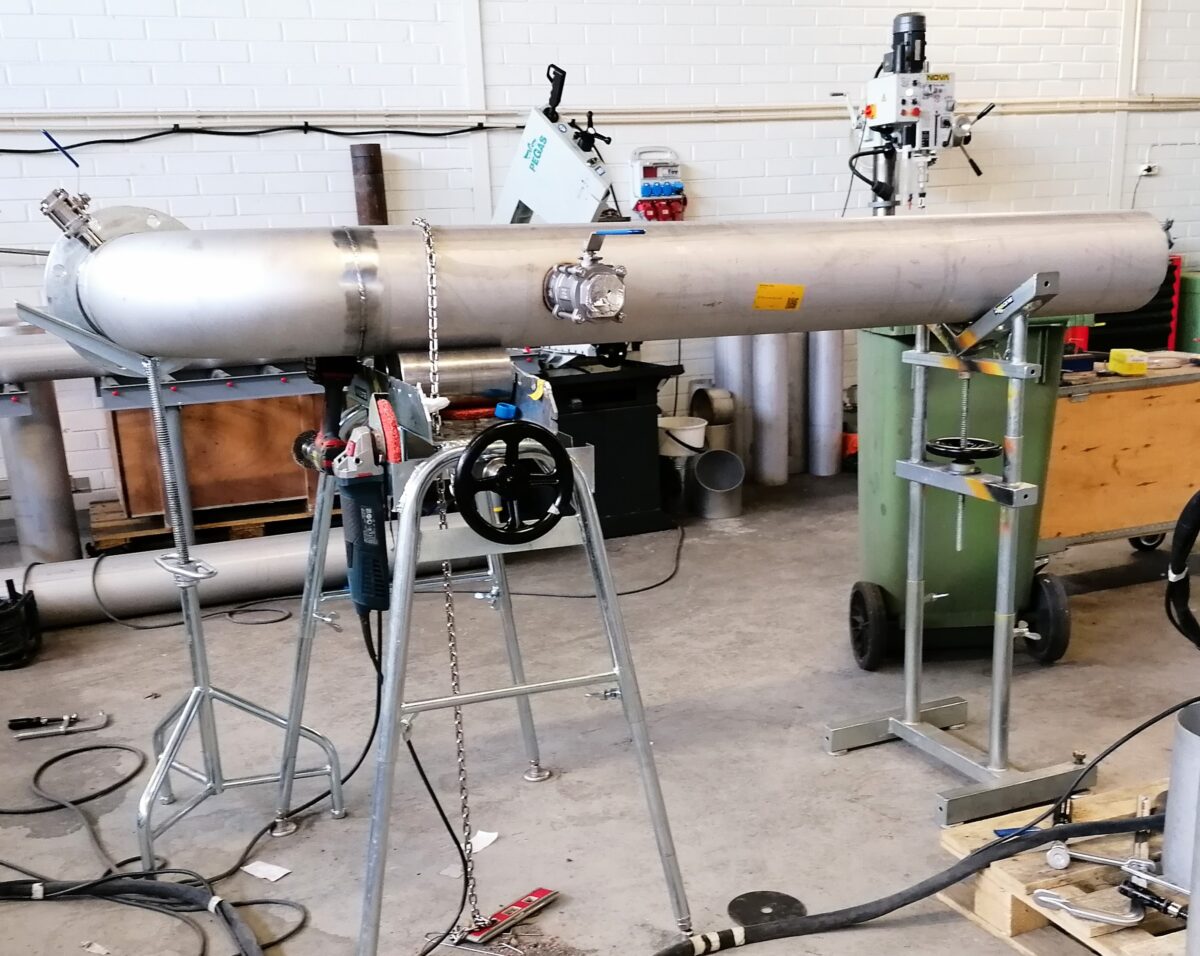
A pipe stand should support a pipe diameter range that matches the work you actually do. For most professional pipe welding and pipe handling applications, a stand that covers diameters from around 15 mm up to 720 mm handles the vast majority of industrial piping work. The exact range you need depends on the pipe sizes in your projects, the materials you work with, and whether you work in a prefabrication workshop or on site.
Below, we answer the most common questions about pipe diameter ranges and pipe stand capacity so you can make a confident decision for your team.
What pipe diameters are considered standard in welding work?
In professional pipe welding, standard pipe diameters typically range from DN15 (around 15 mm outer diameter) up to DN500 or larger, depending on the industry. Process industries such as oil and gas, chemical plants, and power generation regularly work with pipes from DN25 up to DN300 or DN400. Smaller diameters are common in HVAC, plumbing, and food-grade piping systems.
In practice, most pipe welding workshops handle a mix of sizes rather than a single diameter. A prefabrication workshop preparing pipe assemblies for industrial installation might run DN50 stainless steel pipes in the morning and DN200 carbon steel spools in the afternoon. This is exactly why pipe stand capacity and diameter range matter so much when you choose your equipment.
For reference, the DN (Diameter Nominal) system is the standard sizing convention across Europe, while the US uses NPS (Nominal Pipe Size). The outer diameters do not always match exactly between the two systems, so always check the actual outer diameter when selecting a pipe stand.
How does pipe diameter affect the stability of a pipe stand?
Pipe diameter directly affects how a pipe sits in the stand, how the load is distributed across the rollers or support surface, and how stable the pipe is during welding or rotation. A larger diameter pipe sits higher in the stand’s V-rollers and spreads its weight across a wider contact arc, while a smaller pipe sits deeper and contacts a narrower surface area.
When the pipe diameter is well within the stand’s rated range, the pipe rests securely and stays centered. This matters during tack welding, alignment, and rotation because any unwanted movement introduces errors in the joint and makes the welder’s job harder. Good pipe support keeps the pipe steady so the weld quality stays consistent.
Weight also plays a role here. A larger diameter pipe is heavier per unit length, which increases the load on each stand. This is why pipe stands have both a diameter range and a maximum load rating. Both numbers matter, not just one.
What happens if a pipe is too small or too large for a stand?
If a pipe is too small for the stand, it drops too far into the roller cradle or sits unevenly, making it difficult to control during welding or rotation. The pipe may rock or shift, which creates alignment problems and increases the risk of weld defects. In extreme cases, a very small pipe can slip through the support entirely.
If a pipe is too large, it sits too high in the cradle and the contact points become too narrow to support it safely. The pipe becomes unstable and can roll or tip, which is a safety risk and makes accurate welding nearly impossible. Overloading the stand beyond its maximum diameter also risks damaging the rollers or the stand frame itself.
Neither situation is acceptable in a professional environment. Using a pipe stand outside its rated diameter range compromises both safety and weld quality. Always match the stand’s specified diameter range to the actual pipes you are working with.
Should you use one pipe stand model for all diameter ranges?
For many workshops, one versatile pipe stand model covers most of the diameter range you need. A stand rated for 15 mm to 720 mm handles everything from small-bore stainless steel tubing to large industrial pipe spools without needing to switch equipment. This flexibility is especially useful in prefabrication workshops where pipe sizes vary from job to job.
That said, there are situations where a second stand type adds real value:
- Very large diameter pipes above 720 mm benefit from heavy-duty support systems with higher load capacity and hydraulic height adjustment.
- Pipe rotation on large pipes requires a motorized rotator stand rather than a standard support stand.
- Auxiliary support for long pipes often calls for a lighter, more portable secondary stand alongside the main support.
In our AMA Pipe Stand Set, Stand A and Stand B both cover 15 to 720 mm, but they serve different roles. Stand A is the primary, heavy-duty stand with a 1500 kg load capacity, while Stand B is a lighter auxiliary stand with a 560 kg capacity. Using them together gives you stable support for long pipes across the full diameter range without overcomplicating your setup.
Want to see the full pipe stand range? Explore the AMA Pipe Stand Set here.
What other pipe stand specifications matter besides diameter range?
Diameter range is the starting point, but several other specifications determine whether a pipe stand actually works for your application. Before you choose, check these factors:
Load capacity
The maximum load rating tells you how much weight the stand can safely carry. A stand rated for 15 to 720 mm but with a low load limit may not safely support a heavy-walled large pipe even if the diameter fits. Always check the actual weight of your heaviest pipes against the stand’s load rating.
Height adjustment range
Pipe stands need to be set at a comfortable working height for the welder. A stand with a wide height adjustment range, for example 840 to 1100 mm, gives you flexibility across different pipe sizes and working positions. This reduces strain and helps maintain consistent weld quality throughout a shift.
Other specifications worth checking include:
- Roller material: Stainless steel rollers are better for acid-resistant and stainless steel pipes because they do not contaminate the pipe surface. Rubber or polyurethane wheels reduce surface marks on sensitive materials.
- Portability: Workshop stands are often heavier and more stable, while site stands need to be lighter and easier to move. Weight matters when your team is moving equipment between positions throughout the day.
- Compatibility with accessories: If you plan to add a pipe rotator, check that the stand is designed to accept one. Not all stands are compatible with motorized rotation systems.
- Frame material and finish: Galvanized frames resist corrosion better in outdoor or humid environments.
Getting the diameter range right is only the first step. A pipe stand that fits your pipes but does not match your load, height, or surface requirements will still slow your team down.
We design and manufacture pipe handling tools at Welner Oy in Oulu, Finland, for professional pipe welding teams working across process industries, prefabrication workshops, and installation sites. Our AMA pipe stands, pipe rotators, and centering tools are built to work together so your team can handle any pipe size efficiently and safely, from small-bore tubing to large industrial spools.
If you are ready to find the right pipe stand for your diameter range, check with your nearest authorized dealer for local availability and support. Find your local AMA dealer here.
Have a specific question about pipe stand capacity or need help choosing the right setup for your project? Contact us directly and we will help you find the right solution.