What causes pipe misalignment during welding?
Posted onDiscover why pipes misalign during welding — from thermal expansion to bad fit-up — and how to prevent it.
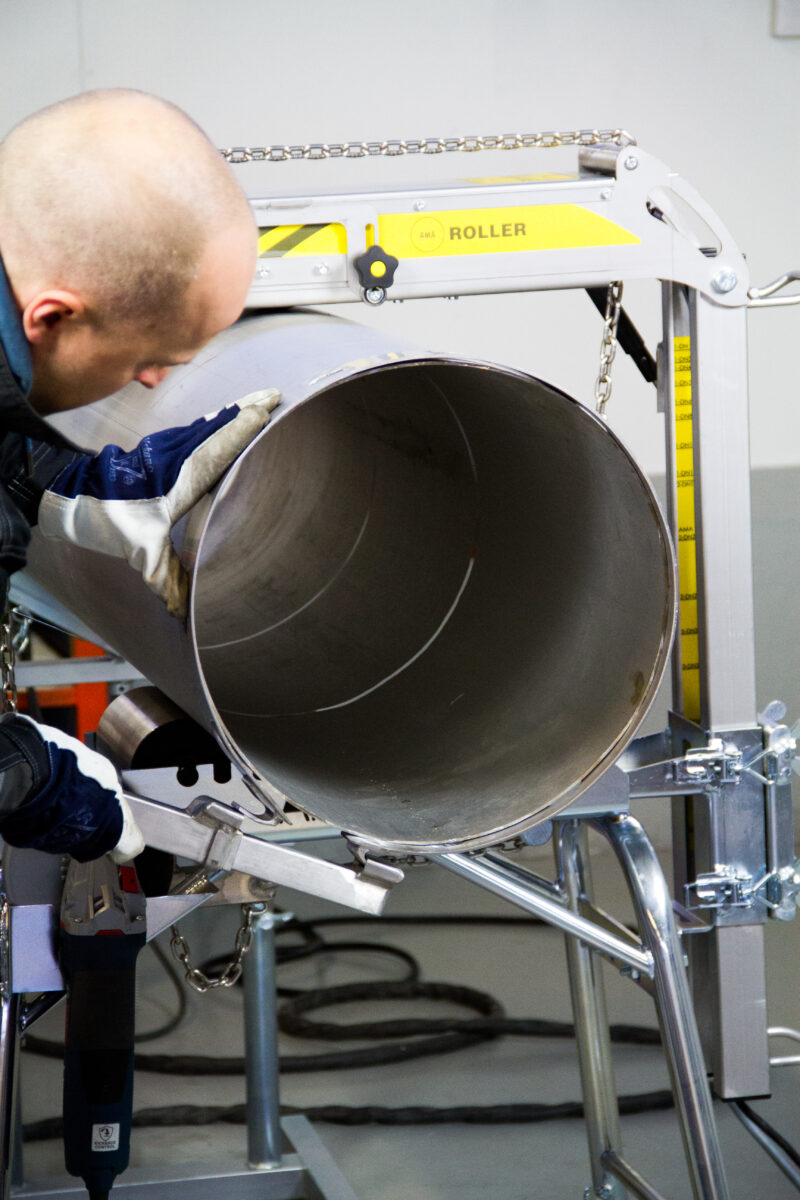
Pipe misalignment during welding happens when two pipe ends fail to line up correctly at the joint, creating angular, lateral, or axial offset between them. The most common causes are thermal expansion during the welding process, poor fit-up before welding begins, incorrect pipe positioning, and differences in pipe material properties. Understanding what drives misalignment helps you prevent it before it becomes a costly repair or rejection.
What are the most common types of pipe misalignment in welding?
The most common types of pipe misalignment in welding are high-low (also called hi-lo), angular misalignment, lateral offset, and axial misalignment. High-low occurs when the inner walls of two pipe ends sit at different heights at the joint. Angular misalignment means the pipes meet at an angle rather than straight. Lateral offset is a sideways shift between pipe centerlines, and axial misalignment refers to rotation around the pipe axis.
Each type creates different problems at the weld joint. High-low, for example, is one of the most frequently flagged defects during inspection because it directly affects wall thickness consistency at the root. Even a small hi-lo gap can cause incomplete fusion or stress concentrations that reduce joint integrity over time.
- High-low (hi-lo): Inner wall height difference between two pipe ends at the joint
- Angular misalignment: Pipes meet at an angle instead of being collinear
- Lateral offset: Sideways shift between the centerlines of the two pipes
- Axial misalignment: Rotational offset around the pipe axis, often seen when pipe spools are assembled without checking seam orientation
In pipe spool assembly and prefabrication work, all four types can appear simultaneously if pipes are not properly supported and centered before tack welding. Catching and correcting these issues before the first tack is placed is far easier than dealing with them after.
How does thermal expansion cause pipe misalignment?
Thermal expansion causes pipe misalignment because heat from the welding arc causes the pipe material to expand unevenly. As the weld pool cools and contracts, it pulls the surrounding material with it. If the pipes are not firmly secured, this movement shifts the joint out of alignment, creating angular or lateral offset that was not present during fit-up.
This effect is stronger in materials with high thermal expansion coefficients, such as austenitic stainless steels, compared to carbon steel. The longer the pipe run and the thicker the wall, the more significant the cumulative movement can be across multiple welds in a pipeline.
How weld sequence affects thermal movement
Welding sequence plays a direct role in how much thermal movement occurs. Welding the full circumference in one continuous pass without interruption concentrates heat on one side, which pulls the joint toward that side as it cools. Using a balanced, symmetrical tack welding pattern before completing the full weld helps distribute thermal stress more evenly and keeps the joint stable.
How pipe restraint reduces thermal misalignment
Proper pipe restraint during welding is one of the most effective ways to control thermally driven movement. Pipe stands, rollers, and external alignment tools hold the pipe in position while the weld cools. Without adequate support, even well-fitted joints can drift out of tolerance during welding, particularly on longer pipe runs or when welding in a fixed position without rotating the pipe.
Why does improper pipe fit-up lead to misalignment?
Improper pipe fit-up leads to misalignment because the joint geometry is already incorrect before welding begins. If the root gap is uneven, the pipe ends are not square, or there is a high-low condition at the inner wall, the weld simply locks in that misalignment permanently. No amount of skill during welding can fully compensate for a bad fit-up.
Pipe fit-up problems often come from a combination of factors: pipe ends that are not cut square, pipes that have been stored or transported in ways that cause ovality, or simply rushing the setup process. In prefabrication workshops, where multiple pipe spools are assembled in sequence, a small fit-up error on an early joint can compound into a larger alignment problem further down the assembly.
The root gap is particularly important. A gap that varies around the circumference means the welder has to compensate constantly, which affects heat input and penetration consistency. Controlling the root gap with proper fit-up tools before tacking is a straightforward way to avoid these problems. AMA Centering Collars are designed specifically to hold pipe ends in accurate alignment during fit-up, reducing the chance of high-low and angular errors before the first tack is placed.
What role do pipe handling and positioning tools play in preventing misalignment?
Pipe handling and positioning tools prevent misalignment by holding pipes in the correct position throughout fit-up, tack welding, and the full weld pass. Without proper support, pipes can shift under their own weight, move due to thermal expansion, or rotate out of position. The right tools keep everything stable so the welder can focus on weld quality rather than constantly checking and correcting joint position.
In practice, this means using a combination of tools depending on the pipe size, material, and working environment:
- Pipe stands and rollers support the pipe at the correct working height and allow controlled rotation
- Centering collars align pipe ends precisely before tack welding, minimizing high-low and angular offset
- Pipe rotators rotate the pipe at a consistent speed so the welder can weld in a fixed, ergonomic position rather than moving around the pipe
- Counterweight systems balance pipes with elbows or heavy fittings that would otherwise pull the joint out of alignment
For external alignment specifically, centering collars are one of the most direct tools available. They clamp around the outside of both pipe ends simultaneously, pulling them into coaxial alignment and holding them there while tacks are applied. This is especially useful when working with stainless steel or acid-resistant pipe where surface marking and distortion must be avoided.
Read more about AMA Centering Collars and find the right size for your pipework.
For pipe rotation during welding, the AMA Roller pipe rotator series supports pipe diameters from 30 mm to 508 mm and allows the welder to stay in one ergonomic position throughout the full weld. If you need wireless control on larger sites, the AMA Roller Premium with Bluetooth control lets you operate the rotator from up to 25 meters away.
How do pipe material properties affect alignment during welding?
Pipe material properties affect alignment during welding primarily through thermal expansion rate, stiffness, and how the material responds to heat. Materials with higher thermal expansion coefficients, like austenitic stainless steel, move more during welding than carbon steel pipes of the same dimensions. Thinner-walled pipes are also more susceptible to distortion because they have less rigidity to resist thermal movement.
Stainless steel and duplex stainless steel are particularly challenging from an alignment perspective. They conduct heat less efficiently than carbon steel, which means heat stays concentrated near the weld zone for longer, increasing the risk of distortion and misalignment. Duplex grades are also more sensitive to heat input levels, so maintaining consistent weld parameters matters not just for metallurgical reasons but for keeping alignment stable.
Pipe ovality is another material-related factor. Pipes that are not perfectly round, whether due to manufacturing tolerances or handling damage, create uneven contact at the joint face. This makes it harder to achieve a consistent root gap around the full circumference, which in turn makes high-low more likely. Using centering collars with a collar tightener and thrust bearings allows you to apply even clamping force around the pipe, which helps compensate for minor ovality during fit-up.
When should pipe misalignment be corrected before versus after welding?
Pipe misalignment should almost always be corrected before welding. Once a weld is complete, the joint is fixed, and correcting misalignment typically requires cutting out the weld, re-fitting the joint, and re-welding, which is costly and time-consuming. Correcting alignment before tack welding takes a fraction of that effort and produces a better result.
There are a few practical guidelines for when correction is possible at different stages:
- Before fit-up: The best time to address misalignment. Check pipe ends for squareness, ovality, and surface condition. Use centering collars to align pipe ends before any tacks are placed.
- After fit-up but before tacking: Still straightforward to correct. Adjust pipe position, recheck root gap and high-low, and re-clamp before tacking.
- After tack welding: Limited correction is possible by breaking individual tacks and re-fitting, but this requires care to avoid damaging the pipe material, particularly on stainless steel.
- After full welding: Correction is rarely practical without cutting out the weld. In some cases, minor angular misalignment can be addressed with heat straightening, but this is material-dependent and not always permitted by the applicable welding procedure.
In pipe fabrication and prefabrication work, the cost of rework after welding is significantly higher than the time invested in proper fit-up and alignment before welding begins. Building a consistent fit-up routine, including the use of external alignment tools and centering collars, is the most reliable way to avoid misalignment reaching the welding stage at all.
Pipe misalignment during welding comes down to preparation, support, and the right tools at the right stage of the process. At Welner, we design and manufacture AMA pipe handling tools specifically for professionals working in pipe prefabrication and installation, from centering collars and pipe stands to pipe rotators and counterweight systems. Our products are used across the Nordic countries and Europe by welders, project managers, and fabrication teams who need reliable, accurate results on every joint.
If you want to find the nearest stockist or dealer in your region, find your local AMA authorized dealer here. And if you have a specific question about which tools fit your pipe sizes or application, get in touch with us directly and we will help you find the right solution.