Why is proper pipe support important during fit-up?
Posted onPoor pipe support risks costly weld defects and job site injuries — here's what every welder must know.
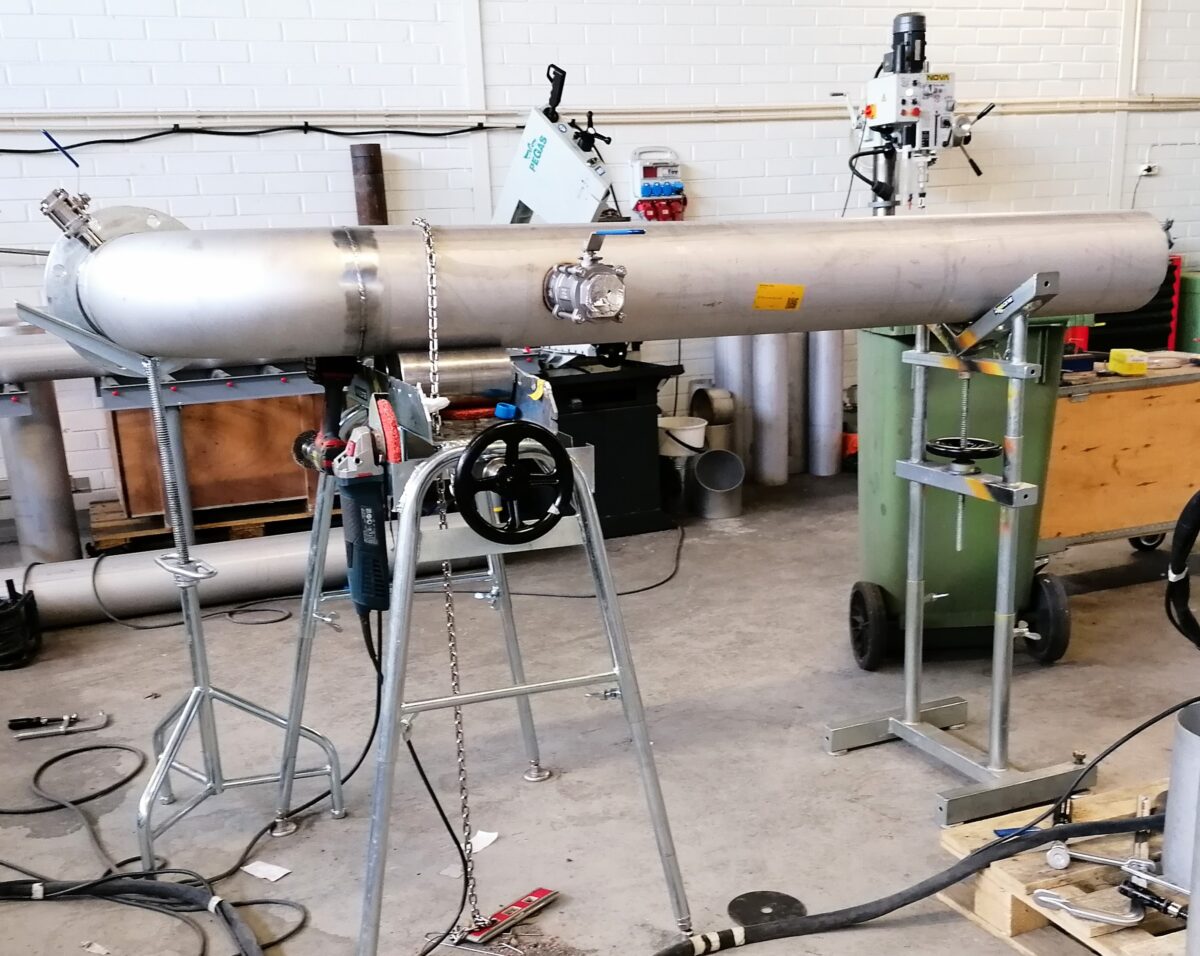
Proper pipe support during fit-up directly affects weld quality, joint alignment, and job site safety. When pipes are not held securely in position, even small shifts in alignment can lead to defective welds that fail inspection or require costly rework. The sections below cover the most common questions welders, supervisors, and project managers ask about pipe support during fit-up.
What happens to weld quality when pipes are poorly supported during fit-up?
Poor pipe support during fit-up leads to misalignment, uneven root gaps, and stress in the joint before welding even begins. These problems translate directly into weld defects such as incomplete fusion, cracking, and distortion. In process industry pipework, where pressure ratings and material integrity matter, a compromised weld joint can mean failed inspections and expensive repairs.
When a pipe shifts even slightly during tack welding, the root gap becomes inconsistent around the circumference. This forces the welder to compensate by adjusting technique, which rarely produces a uniform result. On materials like stainless steel or duplex, where heat input must be tightly controlled, any additional passes to fix misalignment add unwanted heat and can affect the material properties of the joint.
Distortion is another direct consequence. If one side of the pipe is unsupported, gravity pulls it down during tacking, introducing angular misalignment that locks into the joint permanently once the tack welds cool. No amount of corrective welding fully removes that built-in stress.
What forces act on a pipe joint during fit-up?
During pipe fit-up, the joint is subject to gravitational load, pipe weight distribution, spring-back forces from pipe curvature, and any mechanical forces applied by alignment tools. Understanding these forces helps you set up supports in the right positions to keep the joint stable throughout the fit-up and tacking process.
Gravity is the most constant force. Heavier pipes and longer pipe runs create significant bending moments at the joint, particularly when the pipe is only supported at one end or at points far from the joint. This causes the pipe ends to sag or deflect, opening or closing the root gap unevenly.
Spring-back is a less obvious but equally important factor. Pipes that have been bent, stored incorrectly, or cut from curved stock carry residual curvature. When you bring two pipe ends together, this residual shape tries to push the joint out of alignment. Proper support holds the pipe in its intended position against this tendency.
Mechanical forces from clamps, centering collars, and alignment tools also act on the joint. These are intentional forces designed to correct misalignment, but they only work correctly when the pipe is supported at enough points to prevent the pipe body from flexing under the clamping load.
How does proper pipe support improve alignment accuracy?
Proper pipe support improves alignment accuracy by holding each pipe section in a fixed, controlled position so that centering tools can work as intended. When the pipe is stable, centering collars and alignment clamps can close the gap between pipe ends precisely and consistently around the full circumference, giving you a uniform root gap and correct bore alignment.
Alignment accuracy starts with stable pipe stands positioned at the right intervals. If stands are too far apart, the pipe sags between them, and the joint ends up lower than intended. If stands are too close to the joint, they may interfere with the welder’s access. The goal is to support the pipe close enough to the joint to eliminate deflection without blocking the welding position.
Centering collars, like the AMA Centering Collars available in sizes from DN65 to DN1500, work most effectively when the pipe is already held at the correct height and angle by the stands beneath it. The collar then fine-tunes the concentricity of the two pipe ends, reducing bore misalignment to a minimum. Without stable support underneath, the collar has to fight both the misalignment and the pipe’s own weight, which limits how accurately it can center the joint.
For workshop prefabrication, pipe rotators add another layer of alignment benefit. Rotating the pipe during tacking allows the welder to work in the most comfortable position throughout the joint, which produces more consistent tack welds and reduces the chance of distortion locking in angular misalignment.
What are the safety risks of unsupported pipes during fit-up?
Unsupported pipes during fit-up create serious safety risks, including pipe rolling, sudden dropping, and uncontrolled movement when alignment tools are applied or released. These hazards put welders and nearby workers at risk of crush injuries, and they can also damage surrounding equipment or pipe assemblies already in place.
A pipe resting on an unstable surface or balanced on a single support point can roll without warning, especially when a welder applies lateral force to bring the joint into alignment. Larger diameter pipes carry more mass and create greater impact if they fall or roll. Even smaller pipes can cause injuries if they drop onto feet or hands during fit-up.
Tack welding itself introduces a safety dimension. When a tack weld cools and contracts, it pulls the joint, which can cause a poorly supported pipe to shift suddenly. If the welder is in close contact with the pipe at that moment, the movement can cause burns or impact injuries.
Proper pipe stands with fastener chains, like those in the AMA Pipe Stand Set, hold the pipe securely in place throughout the fit-up process and prevent unexpected rolling or dropping. This is not only good practice for weld quality but a basic requirement for a safe working environment.
What tools are used to support and position pipes during fit-up?
The main tools used to support and position pipes during fit-up are pipe stands, centering collars, pipe rotators, and counterweight systems. Each tool addresses a specific aspect of the fit-up challenge, and they are typically used in combination to achieve stable, accurate joint preparation.
Pipe stands
Pipe stands hold the pipe at the correct working height and prevent sagging along the pipe length. Adjustable stands like the AMA Stand A and Stand B can be set to the right height for the pipe diameter and the welder’s working position. Stands with stainless steel rollers allow the pipe to be repositioned lengthwise without lifting it off the stand, which saves time and reduces manual handling.
Centering collars
Centering collars fit around the outside of both pipe ends at the joint and pull them into concentricity. They are particularly useful for thin-wall stainless and acid-resistant pipes where bore misalignment causes stress concentrations in service. A collar tightener applies even clamping force around the full circumference of the collar.
Pipe rotators
Pipe rotators allow the pipe to be turned to the most convenient welding position without the welder repositioning. For tack welding during fit-up, a rotator lets you place tacks at consistent intervals around the joint without awkward overhead or vertical positions. The AMA Pipe Stand Set is designed to work together with AMA Roller pipe rotators, combining stable support with controlled rotation in one setup.
Counterweight systems
When a pipe assembly includes elbows or projecting parts, the centre of gravity shifts away from the pipe axis. A counterweight system balances the assembly so that it sits stably on the pipe stands without tipping. This is especially useful during prefabrication of complex pipe spools.
Explore the full AMA Pipe Stand Set and see how it supports your fit-up workflow: AMA Pipe Stand Set
When should pipe supports be repositioned during the fit-up process?
Pipe supports should be repositioned whenever the pipe is extended, when additional pipe sections are added to the assembly, and after tack welding is complete if the assembly needs to be moved for full welding. The goal is to keep support points close enough to the active joint at every stage so that the pipe does not sag or shift during any part of the process.
At the start of fit-up, position stands to support both pipe ends being joined, with at least one stand close to each side of the joint. As tack welds are placed and the joint becomes partially fixed, you can sometimes move the stand on the shorter pipe end slightly farther from the joint to improve welder access, as long as the pipe remains stable.
When you add a new pipe section to an already-tacked assembly, reposition the stands to support the new section before you bring it into contact with the existing assembly. Never let the weight of a new section hang off a completed joint during fit-up. The joint is not yet strong enough to carry that load, and the bending moment can crack tack welds or distort the joint.
After full welding is complete and the spool is ready for handling or transport, stands should be repositioned to balance the weight of the finished assembly evenly, taking into account any fittings, elbows, or flanges that shift the centre of gravity.
Pipe support is not a one-time setup. It is an active part of the fit-up and welding process that you adjust as the work progresses.
Getting pipe support right during fit-up protects weld quality, keeps your team safe, and reduces the time lost to rework and corrections. At Welner, we design and manufacture AMA pipe handling tools specifically for the demands of professional pipe welding in process industry environments, from compact centering collars for small-diameter work to heavy-duty rotator sets for large pipe assemblies. Our tools are built to help welders, supervisors, and project managers get consistent, reliable results on every joint. Find the AMA dealer closest to you at our authorized dealers page, or contact us directly if you have questions about which tools fit your application.