Why is continuous pipe rotation important during welding?
Posted onContinuous pipe rotation improves weld quality, reduces distortion, and boosts productivity — here's exactly how it works.
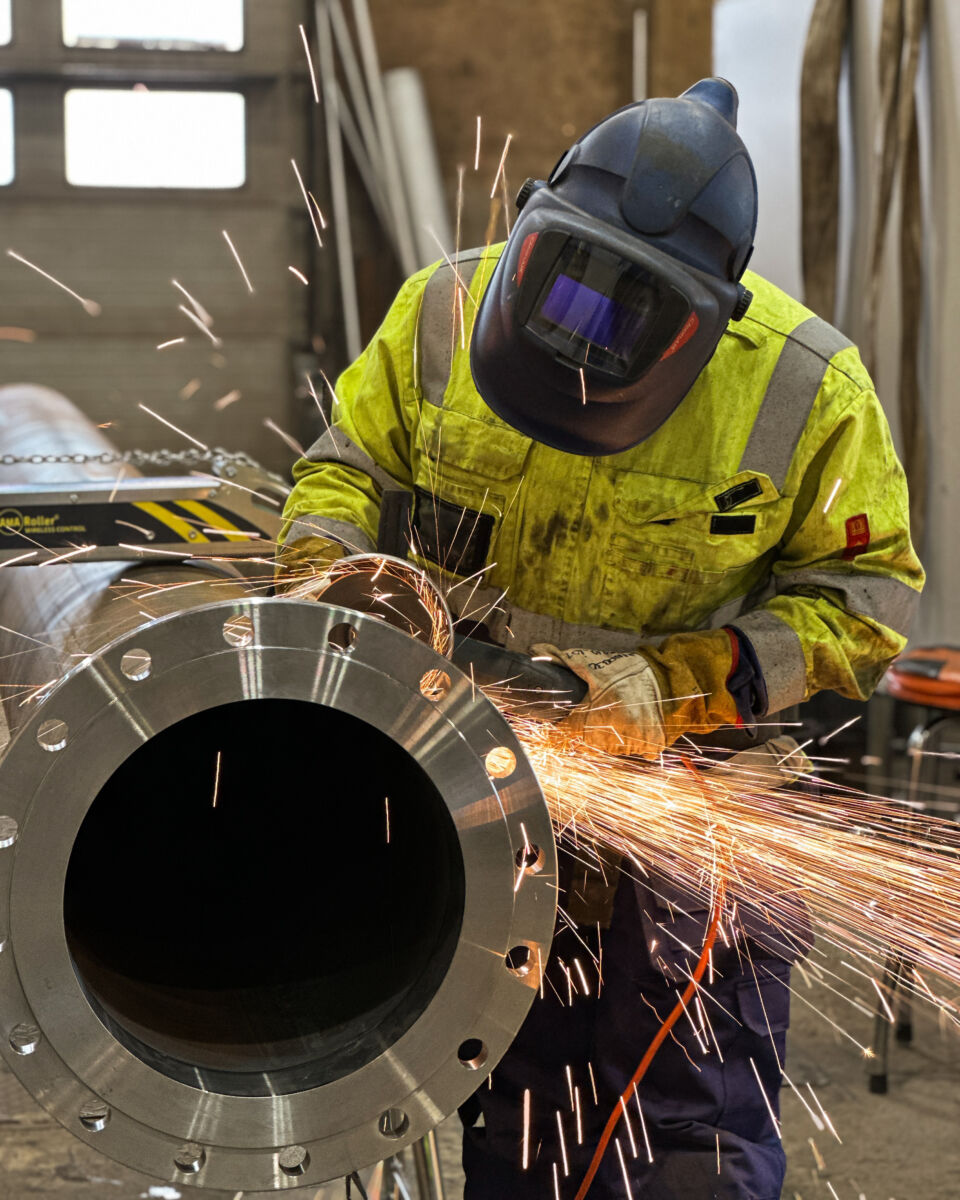
Continuous pipe rotation during welding produces more consistent, higher-quality welds by keeping the weld pool in the optimal flat or slightly downhill position throughout the entire joint. Rather than the welder repositioning around a fixed pipe, the pipe moves to the welder. This approach reduces human error, improves heat control, and significantly speeds up the work. Below, we break down exactly why this matters and how it works in practice.
How does continuous pipe rotation affect weld quality?
Continuous pipe rotation during welding improves weld quality by allowing the welder to work consistently in the flat (1G) position, which is the easiest and most controllable welding position. When the pipe rotates steadily, the welder deposits metal at the same point on the joint throughout the entire pass, resulting in a uniform, repeatable bead with fewer defects.
In fixed-pipe welding, the welder must work through multiple positions, including vertical, overhead, and flat, each requiring a different technique and torch angle. Switching between these positions introduces variation. With pipe rotation welding, that variation disappears. The welder holds one ergonomic position, the torch angle stays consistent, and the travel speed remains steady. The result is a weld seam that looks and performs like a robot weld, even when done by hand.
This consistency matters especially when working with demanding materials such as stainless steel, duplex, or other alloys where small deviations in technique can lead to porosity, lack of fusion, or discoloration. Rotating the pipe during welding gives every welder, regardless of experience level, a better chance of meeting the required quality standard on the first pass.
What happens to heat distribution when a pipe rotates during welding?
When a pipe rotates during welding, heat is distributed more evenly around the circumference of the joint. Because the welder applies heat at the same point while the pipe turns, each section of the weld zone receives a consistent heat input rather than the uneven heating that occurs when a welder moves around a stationary pipe.
Uneven heat input is one of the main causes of weld defects. If one section of the joint gets too much heat and another too little, you risk incomplete fusion, cracking, or excessive oxidation. Rotating the pipe at a controlled speed keeps the heat input per unit length of weld uniform, which is particularly important for materials with strict interpass temperature requirements.
Consistent heat distribution also protects the surrounding pipe material. Localized overheating can weaken the heat-affected zone or cause grain growth in stainless steel, reducing corrosion resistance. By keeping the heat input steady and controlled through continuous rotation, you preserve the mechanical and chemical properties of the base material right next to the weld.
How does pipe rotation help prevent welding distortion?
Pipe rotation during welding reduces distortion by distributing thermal stress evenly around the joint. When a pipe is welded in a fixed position, heat accumulates unevenly, causing one side to expand and contract more than the other. This imbalance creates bending, angular distortion, or ovality in the finished pipe. Rotating the pipe spreads the thermal load symmetrically, which significantly reduces these effects.
Distortion is a particular concern in thin-walled pipes and in long pipe assemblies where even small angular deviations at one joint multiply into large misalignments further down the line. In prefabrication workshops, where pipe spools are assembled before site installation, distortion control is a priority because any rework on a finished spool is costly and time-consuming.
Rotating the pipe also makes it easier to apply balanced tack welds before the final pass. When you can position the pipe freely, you can place tack welds at equal intervals around the joint, which holds the pipe in alignment and resists the pulling forces that develop as the weld cools. This preparation step, combined with continuous rotation during welding, gives you the best chance of a straight, round, correctly aligned joint.
What are the productivity benefits of rotating a pipe during welding?
Rotating a pipe during welding directly increases productivity by eliminating the time a welder spends repositioning around a fixed pipe. The welder stays in one place, the arc stays lit, and the weld progresses without interruption. This means fewer stops, less fatigue, and a faster overall cycle time per joint.
The productivity gains show up across several stages of the work, not just during the weld pass itself:
- Tack welding is faster because the welder can place tacks around the full joint without moving
- Cutting and grinding are easier when the pipe rotates to the tool rather than the other way around
- Back weld cleaning and seam brushing take less time because the welder can work from a fixed, comfortable position
- Rework is reduced because the first-pass quality is higher, meaning fewer rejected joints and less repair welding
There is also a less obvious productivity benefit: fatigue reduction. Welding in awkward positions, especially overhead, is physically demanding. A welder who spends less energy fighting gravity and repositioning their body can maintain focus and technique for longer. Over the course of a shift, this translates into more joints completed and a lower error rate toward the end of the day.
For project managers and supervisors, pipe rotation welding also makes output more predictable. When every welder works in the same ergonomic position using the same technique, the variation between individual welders shrinks. Skill level differences matter less, which is useful when managing mixed-experience teams on large pipe projects.
Want to see how a pipe rotator works in practice?
Read more about the AMA Roller® pipe rotator
What tools are used to rotate pipes during welding?
The main tool used to rotate pipes during welding is a pipe rotator, also called a pipe turning roll or pipe positioner. A pipe rotator holds the pipe on motorized rollers and turns it at a controlled speed while the welder works from a fixed position. Pipe rotators are used in both prefabrication workshops and on job sites.
Motorized pipe rotators for standard pipe diameters
For pipes ranging from 30 mm to 508 mm in diameter, a compact motorized rotator mounted on a pipe stand is a practical solution. The AMA Roller® pipe rotator is one example: it mounts on the AMA A pipe stand, supports all common manual welding methods including MIG, MAG, TIG, and covered electrode, and runs from a foot pedal so the welder can start and stop rotation without putting down the torch. The rotation speed and direction are both adjustable, which is useful when switching between materials or joint configurations.
For teams working on larger sites or handling long pipes, a wireless-controlled version removes the need for cables on the floor and lets the welder operate the rotator from up to 25 meters away. The AMA Roller® Premium with wireless control uses Bluetooth and includes both a wireless foot pedal and a manual speed control knob, giving the welder full flexibility in how they manage rotation.
Heavy-duty rotators for larger pipes
For larger pipes up to 1,000 mm in diameter, heavy-duty rotator sets with motorized rollers and hydraulic height adjustment handle the increased weight and size. These systems typically include a motorized drive unit and one or more passive roller stands to support the pipe along its length. Battery operation means they can be used where mains power is not available.
In pipe bridge installations, purpose-built pipe bridge stands with stainless steel ball rollers let the pipe rotate inside the bridge structure during welding, without needing to move the pipe out of position.
When is continuous pipe rotation not possible, and how is quality maintained?
Continuous pipe rotation is not always possible. Fixed pipework that is already connected to a system, pipes in confined spaces, large-diameter pipes that exceed the capacity of available equipment, or site conditions that prevent setting up a rotator all require the welder to work around a stationary pipe. In these situations, quality is maintained through careful position control, technique discipline, and proper preparation.
When welding a fixed pipe, the joint is typically divided into segments, and the welder moves around the pipe to complete each segment in the most favorable position possible. This requires a higher level of skill, particularly for the overhead and vertical sections, and it is where the difference between experienced and less experienced welders becomes most visible in the finished weld.
Several practices help maintain quality on fixed pipes:
- Correct joint preparation with accurate fit-up and an even root gap reduces the difficulty of each position
- Centering collars keep the pipe ends aligned before welding begins, preventing angular misalignment that becomes worse during the weld
- Controlled interpass temperature is more important on fixed pipes because heat accumulates unevenly and is harder to manage
- Purge gas protection on the inside of the weld joint prevents oxidation on the root pass, which is especially important for stainless steel and other corrosion-sensitive materials
The honest answer is that fixed-pipe welding is more demanding than rotating-pipe welding, and the quality ceiling is lower for the same welder. Where rotation is possible, even partial rotation using a pipe bridge stand or manual roller stand, it is worth using. The improvement in consistency and speed is real and measurable.
At Welner, we design and manufacture pipe handling tools that make the work of pipe welding professionals easier and more consistent, from pipe rotators and centering collars to pipe stands and purge kits. Our products are used in prefabrication workshops and on job sites across Northern and Western Europe, and we have authorized dealers in several countries so you can get local support and service.
If you are looking for the right pipe rotation solution for your work, find your nearest authorized dealer to see our products and get advice suited to your specific pipe sizes and welding methods. You are also welcome to contact us directly and we will help you find the right tool for the job.